
Apple's Vision Pro Chief Joins OpenAI Hardware Unit
Paul Meade, Apple's VP for the Vision Pro and smart glasses, is joining OpenAI's io hardware division - the most senior hardware engineering defection yet in a two-year talent war that is reshaping who builds the next computing platform.
 6 min read
Paul Meade spent seven years building the most expensive consumer device Apple has ever sold. Starting next month, he will help OpenAI build whatever comes after the smartphone.
Meade, the vice president who oversaw hardware engineering for the Vision Pro headset and led Apple's smart glasses development, is joining OpenAI's hardware unit - the team assembled around designer Jony Ive after OpenAI picked up his startup io Products for $6.5 billion in May 2025. The move was first reported by Bloomberg and confirmed by multiple outlets on June 26.
TL;DR
- Paul Meade, Apple VP for Vision Pro and smart glasses, is leaving Apple by next week to join OpenAI's io hardware unit
- He is the most senior Apple hardware engineering executive to defect to OpenAI's device project to date
- OpenAI has recruited more than 40 Apple hardware engineers in recent months, targeting camera, silicon, audio, and wearables talent
- OpenAI's first consumer device - screenless and voice-first - is targeting a launch no earlier than early 2027, with Foxconn contracted for 40-50 million units
The Revolving Door Gets More Expensive
Meade is not the first Apple veteran to cross over to OpenAI's device effort. He is just the most expensive signal yet that OpenAI is serious about building hardware from scratch.
| Executive | Apple Role | Moved to OpenAI | Area |
|---|---|---|---|
| Jony Ive | Chief Design Officer | May 2025 (io acquisition) | Chief creative lead |
| Evans Hankey | VP Industrial Design | May 2025 (io acquisition) | Industrial design |
| Tang Tan | VP Hardware Product Design | May 2025 (io acquisition) | Hardware product design |
| Scott Cannon | VP Operations | May 2025 (io acquisition) | Operations |
| Janum Trivedi | iOS interface engineer | Early 2026 | UI and interaction design |
| Paul Meade | VP Vision Products Group | June 2026 | Hardware engineering |
The io acquisition brought Ive and his founding team directly onto OpenAI's books. But Meade's hire is different in kind - he was not a founder and he wasn't swept in by a deal. He left on his own, at the peak of his tenure, after leading the Vision Pro's hardware engineering for seven years and building Apple's smart glasses program from the ground up.
Why Apple's Talent Is Walking
Meade's departure is partly strategic and partly structural. Apple CEO John Ternus - who replaced Tim Cook on September 1 - elevated Johny Srouji from chip lead to Chief Hardware Officer, which flattened the organizational hierarchy beneath him. Several vice presidents who previously reported up through Ternus found themselves reporting to a new layer of management. Meade, who had run the Vision Products Group with significant autonomy, will now have his former responsibilities assumed by Fletcher Rothkopf, his longtime deputy.
Apple's talent drain to AI labs isn't new. But losing the person who built the Vision Pro's hardware at the exact moment its smart glasses deadline - late 2027 - is approaching is a significant operational blow, whatever the company says publicly.
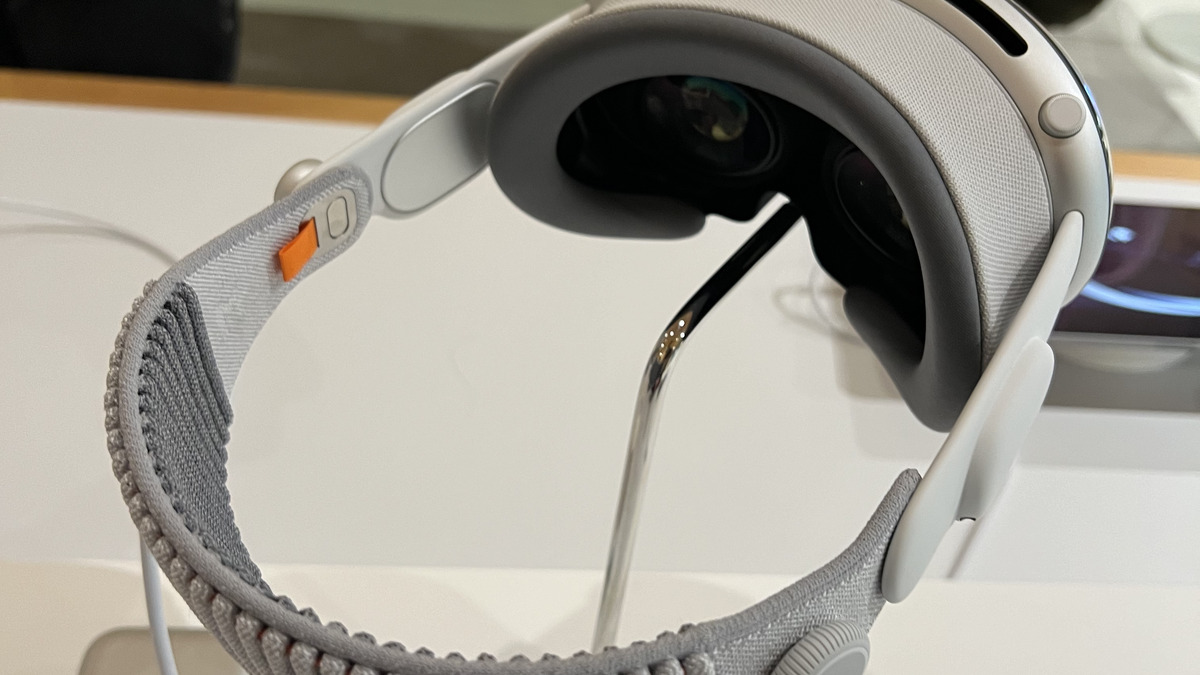 The Apple Vision Pro, the product Paul Meade oversaw for seven years at Apple.
Source: commons.wikimedia.org
The Apple Vision Pro, the product Paul Meade oversaw for seven years at Apple.
Source: commons.wikimedia.org
What OpenAI Is Actually Building
OpenAI hasn't published product specifications. What is known, from reporting across Bloomberg, Axios, and 9to5Mac, is that the io device is screenless and voice-first - closer to a wearable or ambient device than a smartphone replacement, by design.
The company has multiple form factors under development. A device codenamed Sweetpea resembles an earbud-style wearable. One called Gumdrop is described as a pen-like device. Manufacturing partner Foxconn is contracted for an initial run of 40 to 50 million units - a target that signals OpenAI expects mainstream adoption, not a niche launch.
"This product will be more peaceful and calm than an iPhone. We want you to be shocked at how simple it is."
- Sam Altman, on OpenAI's forthcoming device
The original target was a device reveal in the second half of 2026, confirmed by OpenAI's chief global affairs officer at Davos in January. That timeline has since slipped - MacRumors reported in February that the launch would be no earlier than early 2027. Building a new consumer hardware category from scratch doesn't move quickly, regardless of how many Apple veterans you recruit.
What Meade specifically adds to that effort is the thing the team was most visibly missing: someone who has shipped a wearable computing product at Apple's tolerance level for quality. The Vision Pro was imperfect and expensive, but it was also one of the most technically complex consumer devices ever manufactured. Running that program for seven years builds a very specific kind of knowledge - supplier relationships, manufacturing tolerance management, optics engineering - that cannot be hired for easily elsewhere.
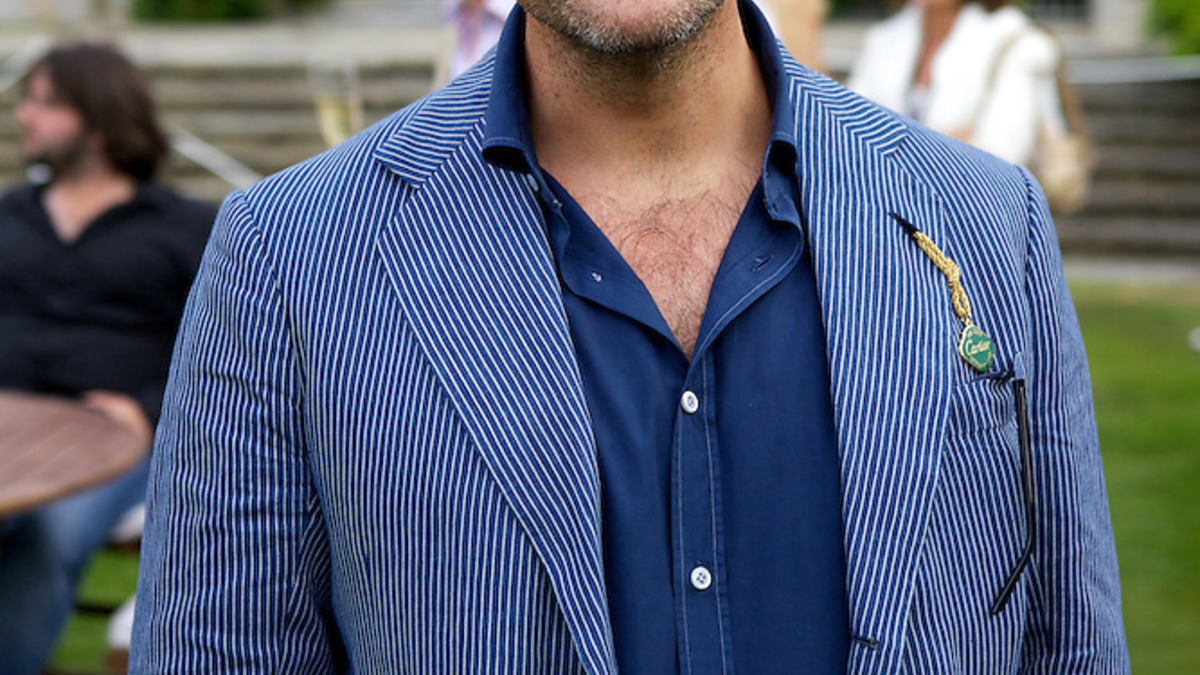 Jony Ive, whose design firm LoveFrom leads the creative direction of OpenAI's hardware effort.
Source: commons.wikimedia.org
Jony Ive, whose design firm LoveFrom leads the creative direction of OpenAI's hardware effort.
Source: commons.wikimedia.org
Counter-Argument: Is Hardware a Distraction?
There's a reasonable case that OpenAI should not be building hardware at all.
The company's core business - API access and the ChatGPT subscription - is a software and inference play. Hardware is capital-intensive, operationally complicated, and has a long and well-documented graveyard of AI-hardware attempts: Google Glass, the Amazon Echo Show's early experiments, the Amazon Fire Phone, the Humane AI Pin. Even Apple's own Vision Pro has sold in the low hundreds of thousands while the company retrenches toward lower-cost smart glasses.
The $6.5 billion paid for io Products was an all-stock transaction, so it didn't drain cash. But the management bandwidth required to recruit, retain, and coordinate 40-plus hardware engineers while launching a new device category is real overhead for a company still building its own silicon and managing a contested IPO process.
OpenAI isn't a hardware company. It's betting that it needs to become one, and that's a different thing entirely.
What the Market Is Missing
The actual bet OpenAI is making isn't about devices. It's about who controls the default interface between humans and AI models five years from now.
If the smartphone remains the primary interface, Apple controls what AI users can access through iOS, what integrations are allowed, and what defaults are set. Apple's CEO transition to John Ternus hasn't resolved the company's fundamental tension between building its own AI stack and licensing from OpenAI and Google - it has only delayed it. OpenAI cannot be certain that Apple will remain a willing distribution partner.
A device OpenAI controls - even a simple, ambient one - sidesteps that dependency entirely. It doesn't need to be the primary device. It needs to be the device people reach for when they want an answer, a task completed, or a conversation continued without picking up their phone.
Paul Meade's hire is, in that reading, less about the product he'll ship and more about what his presence signals: that OpenAI is treating this as a core strategic platform, not a side project. When you pay to recruit the person who built the most ambitious wearable in Apple's history, you are not building a gadget. You're building a new front end for AI.
The market has had nine months to assess OpenAI's hardware bet since the io acquisition. It has mostly shrugged. That may prove to be the right response. Or it may prove to be the kind of scepticism that looks very expensive in retrospect.
Sources:
- Apple Vision Pro exec is reportedly leaving for OpenAI - TechCrunch
- OpenAI poaches Apple Vision Pro and smart glasses chief - 9to5Mac
- OpenAI aims to ship its first device in 2026, and it could be earbuds - TechCrunch
- Jony Ive's AI hardware is delayed to 2027 and won't be called io - 9to5Mac
- Jony Ive to lead OpenAI's design work following $6.5B acquisition - TechCrunch
- OpenAI teases hardware unveil as Jony Ive's team hires more Apple alumni - 9to5Mac

