
Apple's Next CEO Is the Engineer Who Built Its Chips
Tim Cook becomes executive chairman and John Ternus, the hardware engineer behind Apple Silicon, takes the CEO role on September 1 - a clear bet that chips beat software in the AI race.
 7 min read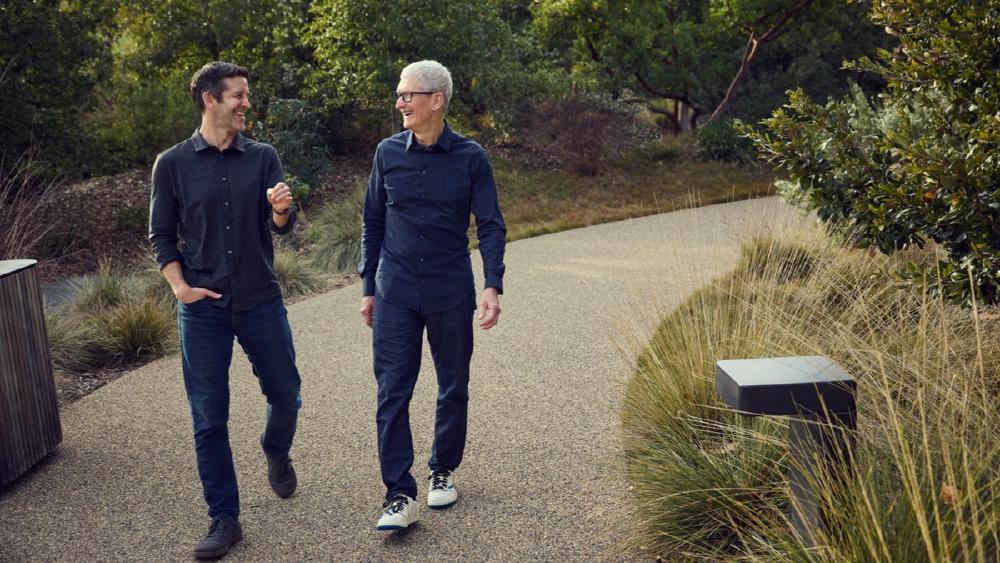
Tim Cook will step down as Apple's chief executive on September 1, 2026, ending a fifteen-year tenure that turned the company from a premium consumer brand into the world's most valuable public company. His successor is John Ternus - the mechanical engineer who led the transition to Apple Silicon, shipped every M-chip from M1 through M5, and quietly made on-device AI the centerpiece of Apple's hardware roadmap.
The board voted unanimously to approve the transition. Cook moves to executive chairman, where he'll focus on policy engagement with governments worldwide. Arthur Levinson, Apple's non-executive chairman for fifteen years, becomes lead independent director. Ternus, 51, joins the board on the same day he becomes CEO.
TL;DR
- Tim Cook steps down as CEO on September 1, 2026 and becomes executive chairman
- John Ternus, the architect of Apple Silicon, takes over as chief executive
- Johny Srouji is elevated to a new role - Chief Hardware Officer - absorbing Ternus's engineering brief
- The appointment is Apple's most explicit statement yet that it intends to win in AI through silicon, not software
The Engineer in the Keynote Slot
Ternus joined Apple in 2001 as a product designer working on external Mac monitors. He spent the next two decades rising through hardware engineering, becoming SVP of Hardware Engineering in January 2021. Unlike many Apple executives who cultivate a high public profile, Ternus kept an unusually low one. He has given almost no external interviews and has zero posts on LinkedIn.
What he built is impossible to miss.
From M1 to M5
When Apple announced the transition from Intel to its own silicon in 2020, Ternus was the executive standing at the podium explaining the architecture. The M1 was the first chip to show that an ARM-based design could match and then beat Intel in CPU throughput while consuming a fraction of the power.
Every subsequent generation - M2, M3, M3 Ultra, M4, M5 - came from the engineering organization he ran. The M5 Pro and M5 Max now shipping in MacBook Pro and Mac Studio configurations can run 70B parameter models entirely in local memory without offloading a single token to the cloud. That was not an accident. The memory bandwidth, unified memory architecture, and Neural Engine capacity were deliberate architectural choices made under Ternus's direction.
The Neural Engine's Quiet Climb
Apple integrated its first Neural Engine into the A11 Bionic chip in 2017. By the A17 Pro, it was running 35 trillion operations per second. The M5 series pushed that further with dedicated hardware for matrix multiplication - the bottleneck in transformer inference.
None of this was driven by software teams lobbying for features. It was a silicon roadmap, planned years in advance, that Ternus owned.
What Cook Built - and What He Left Unfinished
Cook took the CEO role in August 2011, three weeks before Steve Jobs died. Apple's market capitalization was roughly $350 billion. By the time he hands over to Ternus, it sits at around $4 trillion - a more than ten-fold increase built on iPhone dominance, the App Store ecosystem, and the expansion into wearables with AirPods and Apple Watch.
His supply-chain execution was unmatched in the industry. His political relationships insulated Apple during repeated trade tensions between the US and China.
The AI Gap
Where Cook's tenure leaves obvious question marks is AI. When OpenAI released ChatGPT in late 2022, Apple had no competitive response. Siri, launched in 2011, had barely advanced in real-world capability despite a decade of development.
Apple Intelligence, launched in 2024, was a meaningful step forward but shipped with a significant caveat: its most capable features required routing requests to OpenAI's servers. The Apple-Google partnership that put Gemini behind parts of Siri's cloud processing was a frank acknowledgment that Apple's own models were not yet competitive at every task. Work on distilling Gemini capabilities into Apple's on-device Neural Engine continues, but the timeline for genuine parity remains unclear.
These are the problems Ternus inherits. Cook's successor will be judged largely on whether he can close the gap.
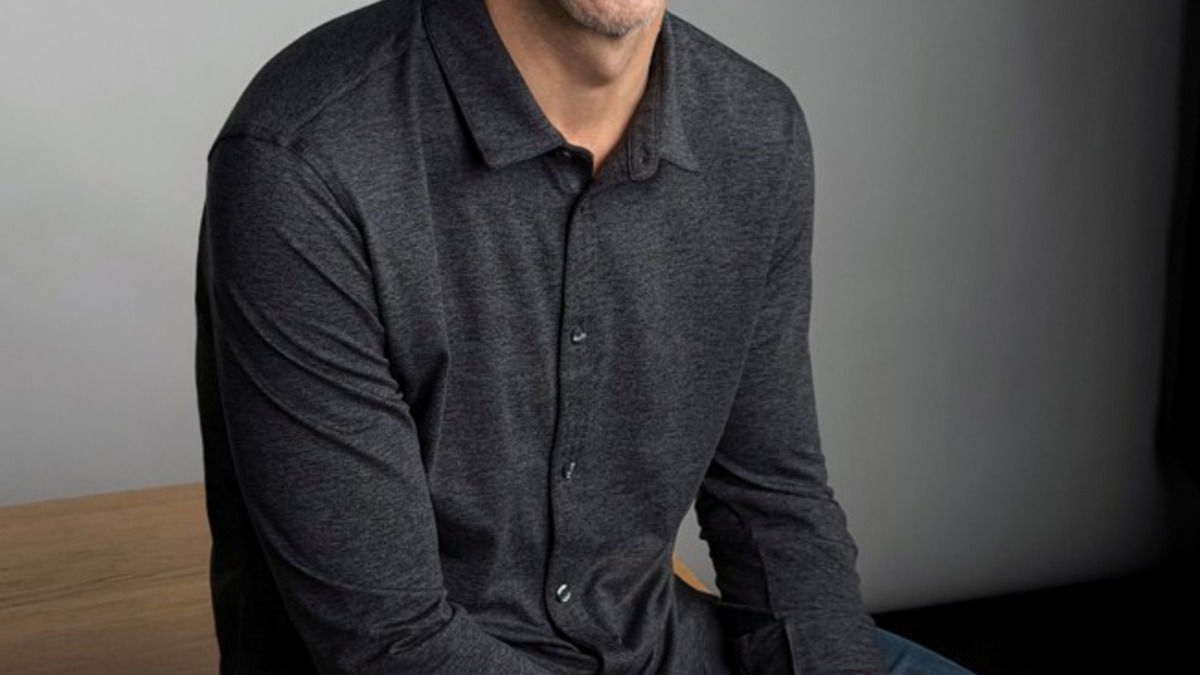 John Ternus photographed in April 2026, shortly after Apple announced his appointment as the company's next chief executive.
Source: apple.com
John Ternus photographed in April 2026, shortly after Apple announced his appointment as the company's next chief executive.
Source: apple.com
The Reshuffle Beneath the Headlines
Apple made a second announcement on the same day: Johny Srouji, who has run hardware technologies and is responsible for every chip Apple has designed since the A4 in 2010, was elevated to a newly created role - Chief Hardware Officer. He now oversees both Hardware Engineering (Ternus's old brief) and Hardware Technologies.
A Title That Has Not Existed Before
Chief Hardware Officer isn't a role Apple has historically had. Its creation with Ternus's elevation to CEO is a deliberate signal: hardware leadership will not diffuse or be deprioritized as Ternus moves into the CEO seat. Srouji joining the C-suite with a dedicated chip mandate gives Apple an executive whose sole responsibility is silicon strategy.
Tom Marieb, previously VP of Hardware Engineering, takes on more direct day-to-day engineering oversight within Srouji's expanded organization.
The structure that emerges on September 1 will have Ternus setting overall company direction, Srouji owning the chips and hardware engineering pipeline, and Cook in the room for major policy and geopolitical conversations as executive chairman.
"John Ternus has the mind of an engineer, the soul of an innovator, and the heart to lead with integrity and with honor." - Tim Cook, April 20, 2026
Apple's Bet in the AI Race
The choice of a hardware engineer as CEO carries an explicit thesis about where AI competition will actually be decided.
Google, Microsoft, and OpenAI have built cloud-first AI platforms. Their models run on data centers, delivered over APIs, monetized by subscription. The cost per query is real and falling, but the architecture means data leaves the device.
Apple's bet is the inverse: models on device, on Apple Silicon, no data leaving the phone or laptop.
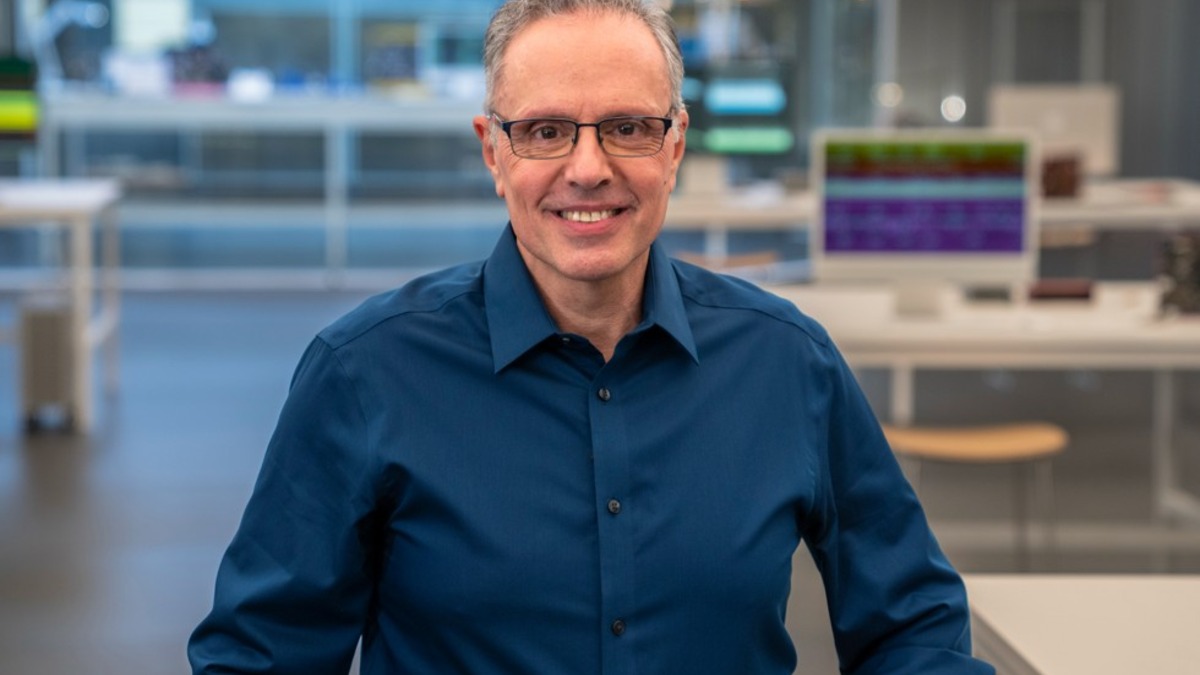 Johny Srouji, elevated to Chief Hardware Officer on April 20, will oversee all chip design and hardware engineering as Ternus steps into the CEO role.
Source: apple.com
Johny Srouji, elevated to Chief Hardware Officer on April 20, will oversee all chip design and hardware engineering as Ternus steps into the CEO role.
Source: apple.com
On-Device as a Privacy Moat
The privacy argument is not only marketing. Apple's Private Cloud Compute - which handles AI requests that can't be processed locally - is architecturally designed so that Apple itself can't access the content of those requests. That guarantee isn't possible with a conventional cloud API.
For enterprise customers with data-sovereignty requirements, and for users in jurisdictions with strict privacy regulation, on-device inference isn't a compromise but a compliance requirement. Ternus's chips are the only way to deliver that at consumer-grade speed.
What Investors Will Watch
Apple's stock was broadly flat on the announcement, which analysts read as confidence rather than uncertainty. Ternus is a known quantity. The harder question is whether he can close the perception gap with AI-first competitors - not in raw benchmark numbers, but in the visible daily utility that consumers associate with AI assistants.
The Siri problem is still unsolved. Apple Intelligence still relies on external servers for its most capable features. The Neural Engine in the iPhone is powerful, but the capability gap between what it can do and what a frontier model delivers in a browser tab remains real.
Ternus's appointment is not a departure from Apple's strategy. It is a reinforcement of it. Cook built the company that could afford to make this bet. Ternus has to prove the bet was right. That means shipping AI products that are genuinely better because they run on Apple chips - not despite running on them. If he succeeds, Apple Silicon will be looked back on the way the App Store is today: not as a supporting product but as the engine that made everything else possible.
Sources:
- Tim Cook to become Apple Executive Chairman, John Ternus to become Apple CEO - Apple Newsroom
- Johny Srouji named Apple's Chief Hardware Officer - Apple Newsroom
- Apple names John Ternus CEO, Tim Cook becomes executive chairman - CryptoBriefing
- Apple's pick to replace Tim Cook hints at its plans for the AI era - CNN
- Johny Srouji taking over as Apple's Chief Hardware Officer as Ternus transitions to CEO - MacRumors
- Tim Cook stepping down, John Ternus confirmed as next Apple CEO - 9to5Mac
- Johny Srouji appointed as Apple's Chief Hardware Officer - AppleOsophy

