
Apple Agrees to $250M Settlement Over Delayed Siri
A California federal court has granted preliminary approval to a $250M class-action settlement against Apple for advertising AI features that still don't exist.
 Updated
7 min read
Updated
7 min read
Apple has agreed to pay $250 million to settle a class-action lawsuit accusing it of selling 37 million iPhones on the promise of AI capabilities that didn't exist. Judge Noel Wise of the Northern District of California granted preliminary approval on May 5. A final approval hearing is scheduled for June 17, 2026.
The case, Landsheft v. Apple Inc., centers on the "more personalized Siri" Apple unveiled at WWDC in June 2024 as the centerpiece of Apple Intelligence. The features - on-screen awareness, deep system integration, personal context pulled from messages and calendar - were marketed in television spots, pre-order pages, and App Store banners across the fall iPhone 16 launch cycle. None of it shipped.
"Apple promoted AI capabilities that did not exist at the time, do not exist now, and will not exist for two or more years."
That language, from the original complaint, hasn't aged out. As of May 2026, the promised Siri enhancements are still unavailable. Apple is expected to show them at WWDC on June 8 - two years after the initial announcement.
TL;DR
- $250M settlement covers roughly 37 million Apple Intelligence-capable iPhones sold between June 10, 2024 and March 29, 2025
- Eligible users get $25 per device as base; up to $95 per device if claim volume is low
- Apple admits no wrongdoing, says it "acted in good faith"
- A separate South Korean class action from the National Pension Service is still active
- Final approval hearing set for June 17; claims open within 45 days of that date
What Apple Promised
The WWDC 2024 Pitch
At its June 2024 developer conference, Apple announced Apple Intelligence as a suite of AI capabilities baked into iOS 18 and iPhone 16. The headline feature was a rebuilt Siri that could read and act on the context of your actual life: understand your emails, see what's on your screen, remember past conversations, and reach into third-party apps. Apple called it "intelligence for the rest of us."
The launch advertising leaned hard into specifics. One widely aired ad showed Siri pulling details from a text message thread to help a user prepare for a meeting. Another showed it producing personalized images from photos stored in the user's library. Apple ran these spots through the fall 2024 iPhone 16 launch and into the holiday quarter. Pre-order pages listed the features as coming in a software update.
The Delivery Gap
iOS 18.0 shipped in September 2024 with writing tools and basic image generation but no personal context Siri. A limited rollout of basic Apple Intelligence features followed in 18.1. The deeper personalization layer - the actual product shown in the ads - remained on the roadmap. By the time the class covered by the settlement closed (March 29, 2025), it still hadn't arrived.
Apple's typical response was that features were "coming in a future software update." The plaintiffs' attorneys argued that wasn't good enough for a product marketed at the point of sale.
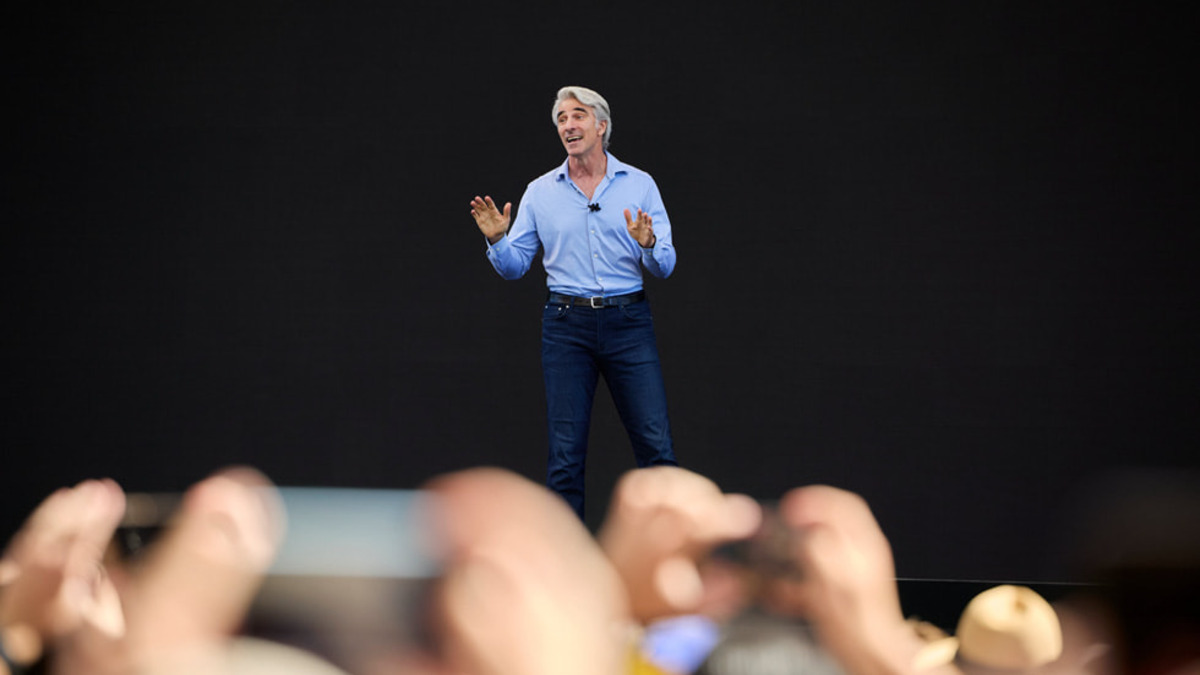 Craig Federighi on stage at WWDC 2024, announcing the Siri overhaul that became the center of the lawsuit.
Source: apple.com/newsroom
Craig Federighi on stage at WWDC 2024, announcing the Siri overhaul that became the center of the lawsuit.
Source: apple.com/newsroom
The Settlement Terms
Who Is Covered
The settlement class includes U.S. purchasers of:
- iPhone 15 Pro and iPhone 15 Pro Max
- iPhone 16, 16 Plus, 16 Pro, and 16 Pro Max
- iPhone 16e
Purchased between June 10, 2024 and March 29, 2025. The class window starts on the date Apple announced Apple Intelligence at WWDC and closes when the lawsuit was certified. Devices bought outside the U.S. are not included in this settlement.
How Much You Can Claim
Each eligible device earns $25. If total claims come in below the fund's breakeven, the per-device amount scales up to a maximum of $95. Claimants need a device serial number, their Apple Account credentials, and proof of purchase. Notices go out within 45 days of final court approval. The $250 million pool covers both consumer payouts and attorney fees.
| Stakeholder | Impact | Timeline |
|---|---|---|
| iPhone 15 Pro/Max and 16 owners | $25-$95 per device | Claims open ~Aug 2026 |
| Apple | $250M payout, no admission | Hearing June 17, 2026 |
| Big Tech AI marketers | Precedent for vaporware litigation | Immediate |
| South Korean investors | Separate NPS lawsuit still active | Undetermined |
| Apple Intelligence features | Expected at WWDC June 8, 2026 | Two years delayed |
Ripple Effects
For Companies
This is the first major class-action settlement tied specifically to AI feature overpromising. The playbook Apple followed in 2024 - announce ambitious AI capabilities at a developer conference, market them in product launches, and ship them late or partially - isn't unique to Apple. Google previewed Gemini features at I/O that took months to arrive. Samsung pushed Galaxy AI in its S24 marketing before half the features were live. OpenAI has shipped some product under announced names and held back others.
The Landsheft settlement gives plaintiff attorneys a template and a dollar figure. Any Big Tech company that ran advertising for an AI product before it shipped now has a live precedent to consider. Law firms that specialize in consumer class actions are already watching.
Apple's own legal exposure doesn't stop here. South Korea's National Pension Service filed a separate class action alleging that Apple's Siri delays caused significant losses to shareholders who bought Apple stock based on the Apple Intelligence announcement. That case is still active.
For Users
American iPhone 15 Pro and 16 owners have a fairly straightforward claim to file. The per-device amount isn't large - $25 base is less than one month of Apple One - but the process is simple and the class is broad. With 37 million eligible devices, even a 10% claim rate would mean 3.7 million payouts. Apple has set aside enough in the settlement fund to cover that volume at the full $95 rate.
The deeper user-side implication is what it says about the relationship between AI marketing and the products actually being sold. Apple's customers bought specific hardware partly based on AI features Apple knew, at the time, it couldn't ship on schedule.
For Competitors
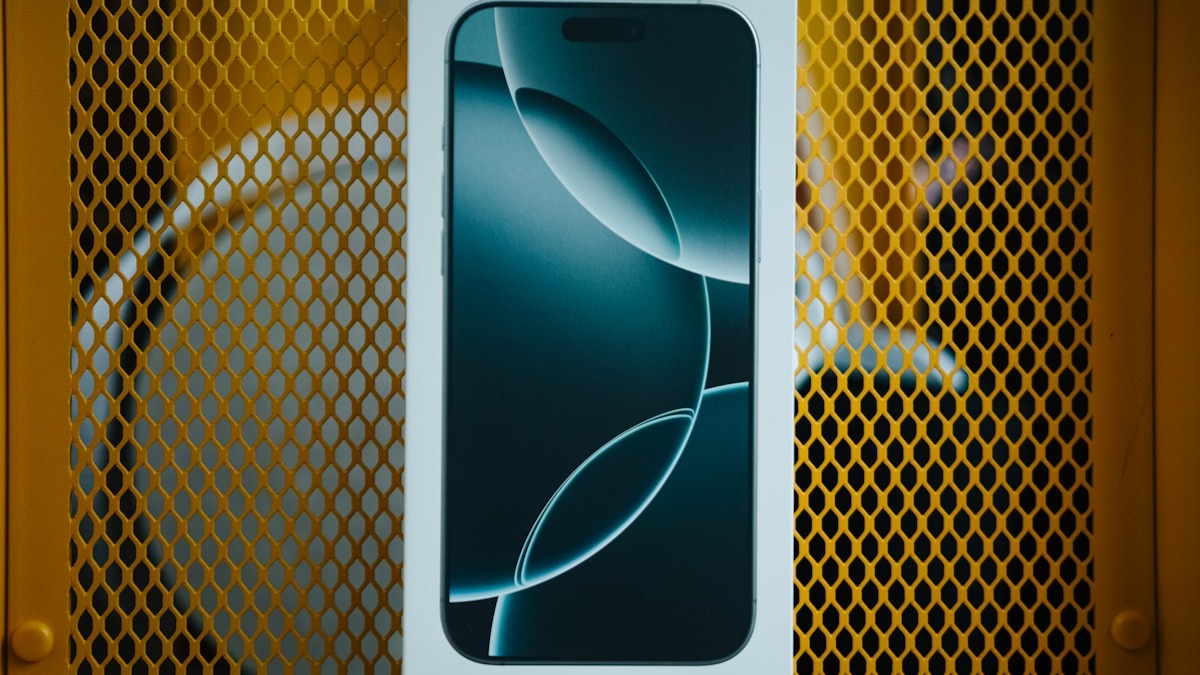 The iPhone 16 Pro Max was one of the devices marketed with Apple Intelligence features that hadn't shipped.
Source: unsplash.com
The iPhone 16 Pro Max was one of the devices marketed with Apple Intelligence features that hadn't shipped.
Source: unsplash.com
The competitors most exposed to similar claims aren't the ones who made the most grandiose promises - it's the ones whose promises were specific enough to appear in advertising. A press release predicting "AGI by 2030" is hard to turn into a consumer fraud complaint. An ad showing Siri scheduling a meeting by reading your email thread is a different kind of exposure. Apple crossed into the second category.
Google and Samsung both ran campaigns for AI features that came with asterisks. Whether either face litigation depends on how specifically those features were tied to product purchase decisions - exactly what Landsheft tested against Apple.
What Happens Next
Judge Wise's final approval hearing on June 17 is expected to go smoothly. Settlements of this structure - large fund, no admission of wrongdoing, broad class - usually clear final approval without significant objections. Claims will open roughly 45 days after that, putting the filing window around early August 2026.
The more consequential date is June 8: WWDC 2026. That's when Apple is expected to finally show the personal context features it promised in 2024. If it ships them in iOS 27, the narrative flips from "Apple lied" to "Apple was late." If WWDC 2026 comes and goes without the core features again, the settlement math looks cheap relative to the continued legal exposure.
Apple has already signaled a major Siri strategy shift: rather than building everything in-house, it's reportedly asking Google to power Siri's cloud inference for the most demanding tasks. That pivot is an implicit acknowledgment that the original Apple Intelligence promise required capabilities Apple didn't yet have.
The $250 million Apple is paying represents roughly six days of its quarterly net income. The reputational cost of being the company that settled the first major AI vaporware lawsuit is harder to price.
Sources:
- TechCrunch: Apple to pay $250M to settle lawsuit over Siri's delayed AI features
- 9to5Mac: Apple reaches $250M settlement over Siri delays
- MarketScreener: Apple settles lawsuit over late Siri AI features for $250 million
- Reuters/TradingView: Apple reaches $250mn settlement over delayed AI Siri
- EWN: Apple agrees to $250mn settlement over AI Siri claims
Last updated

