
Apple Asks Google to Run Siri After Cloud Bet Fails
Apple has asked Google to host next-gen Siri on its cloud servers after Private Cloud Compute hit just 10 percent utilization, with some servers still sitting in warehouses.
 7 min read
Apple has quietly asked Google to set up servers in its data centers to run a future version of Siri powered by Gemini, according to a report by The Information. The move signals that Apple's own AI cloud infrastructure - built around modified M2 Ultra processors - cannot handle the workloads required by modern large language models.
TL;DR
- Apple asked Google to investigate hosting servers for a Gemini-powered Siri inside Google's data centers
- Apple's Private Cloud Compute runs at roughly 10% average utilization, with some servers still sitting in warehouses
- The deal is reportedly worth around $1 billion per year for Gemini licensing alone
- Google is building a custom 1.2 trillion parameter Gemini model for Apple
- Apple already uses Google Cloud for iCloud storage and some AI model training
The Infrastructure Problem
The numbers tell a stark story. Apple's Private Cloud Compute - the system it built to process Apple Intelligence requests off-device while maintaining its privacy guarantees - is running at approximately 10 percent average capacity. Some of the servers Apple ordered have never been installed and remain on warehouse shelves.
The core issue is architectural. The chips powering Private Cloud Compute are modified M2 Ultra processors, designed originally for consumer Macs, not for the kind of dense AI inference workloads that frontier models like Gemini 3.1 Pro demand. They lack the computational density needed to run trillion-parameter models at the throughput required for a voice assistant serving hundreds of millions of users.
 Apple's Private Cloud Compute servers, built around modified M2 Ultra processors, are running at just 10 percent capacity on average.
Fragmented Systems, Departing Talent
The hardware problem is compounded by organizational dysfunction. Different Apple teams reportedly operate independent cloud systems rather than sharing a centralized resource pool. The result: some departments lack access to available compute capacity while other servers sit idle. Apple's finance team has expressed frustration over the duplicate infrastructure costs, but the company has been reluctant to invest in consolidating its cloud architecture.
Key personnel have also walked. Patrick Gates, the engineer who pioneered bringing Apple Silicon to data centers, has departed. At the time Apple began focusing on cloud AI support, its internal infrastructure was reportedly "beginning to decay," with decommissioned Nvidia-powered servers creating capacity gaps that consumer-grade M2 chips could not fill.
The Deal on the Table
| Detail | Value |
|---|---|
| Annual licensing fee | ~$1 billion |
| Custom model | 1.2 trillion parameter Gemini |
| Hosting arrangement | Google servers in Google data centers |
| Privacy requirement | Must meet Apple's data-handling standards |
| Existing relationship | Apple already uses Google Cloud for iCloud storage and AI training |
| Deal structure | Multi-year, non-exclusive |
Apple and Google announced a multi-year AI collaboration in January 2026 under which the next generation of Apple Foundation Models will be based on Google's Gemini models and cloud technology. The new reporting from The Information reveals that the partnership is going deeper than originally understood - Apple isn't just licensing Gemini, it is asking Google to run Siri's inference stack on Google hardware completely.
"Apple's commitment to on-device processing and minimal data transmission conflicts with traditional cloud-based AI architectures," noted one analysis of the deal, highlighting the tension central to the arrangement.
Apple previously banned its AI engineers from using Google Cloud over privacy concerns. That ban was lifted only after Google implemented security improvements in 2023 that satisfied Apple's requirements. Now Apple is contemplating handing over one of its most sensitive workloads - the voice assistant that millions of people use to send messages, set reminders, and search personal data - to Google's infrastructure.
Who Benefits
The deal confirms Google's position as the default AI infrastructure provider for the mobile industry. Samsung is already rolling out Gemini across 800 million devices in 2026, up from 400 million in 2025. Adding Apple's Siri to the portfolio gives Google distribution across essentially every major smartphone platform on earth.
Financially, a $1 billion annual licensing fee is meaningful but not transformative for Alphabet's $350 billion annual revenue. The strategic value is far larger. Every query that Siri routes through Gemini reinforces Google's models, creates training signal, and deepens Apple's dependency on Google's AI stack - a dynamic that echoes the estimated $20 billion per year Google already pays Apple to remain the default search engine in Safari.
Apple Users
If the deal goes through, Siri could finally become competitive with ChatGPT and Google Assistant. Apple's own models have struggled to match the capabilities of frontier systems, and the M2 Ultra chips in Private Cloud Compute simply cannot run models at the scale required. Outsourcing to Google's infrastructure means access to a custom 1.2 trillion parameter model that Apple could not deploy on its own hardware.
Who Pays
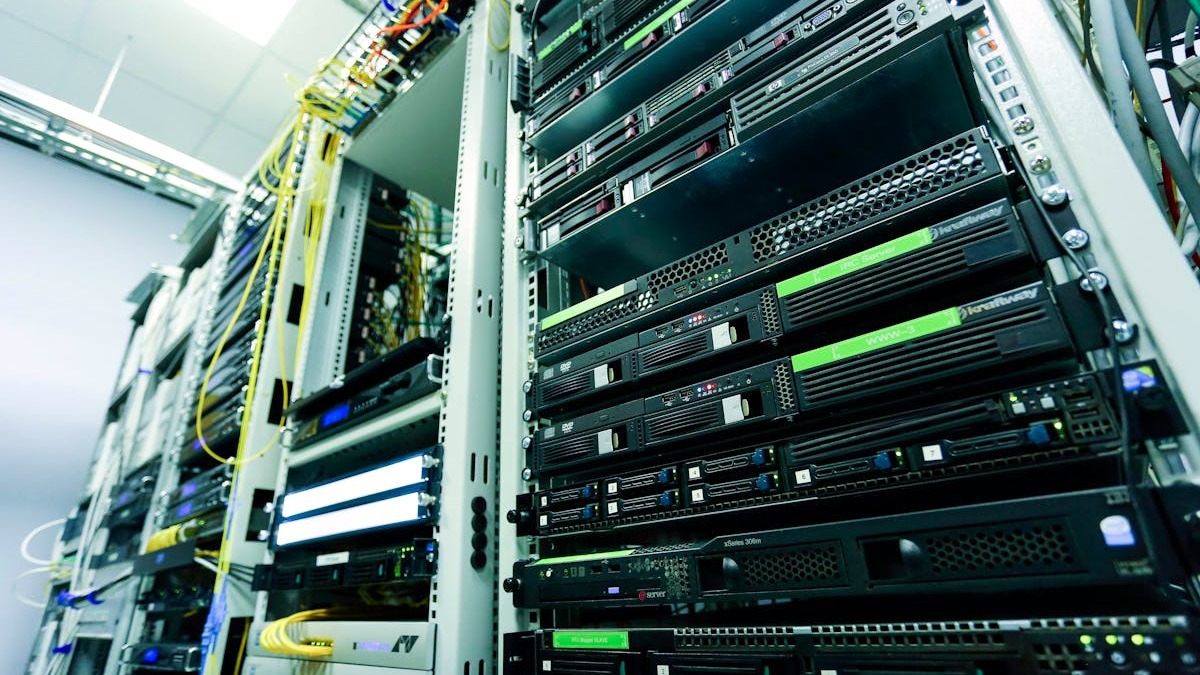 Google's data center infrastructure handles AI workloads at a scale that Apple's consumer-grade silicon can't match.
Apple's Privacy Brand
Apple has built a decade-long marketing narrative around on-device processing and data minimization. The company told customers their data never leaves their device, or if it does, it runs on Apple-designed silicon in Apple-controlled data centers. Hosting Siri on Google's servers - even with contractual privacy protections - undercuts that story.
Apple Intelligence currently processes simple requests on-device and routes more complex ones to Private Cloud Compute servers running Apple Silicon. Under the proposed arrangement, the most capable version of Siri would instead run on Google's hardware, in Google's facilities, managed by Google's operations teams. The privacy guarantees become contractual rather than architectural.
Apple's Long-Term AI Independence
Every dollar Apple sends to Google is a dollar not invested in building its own competitive AI infrastructure. The company has already demonstrated that it underinvested for years - its cloud systems were described as "beginning to decay" before the AI boom. The risk is that a multi-year dependency on Google makes it progressively harder for Apple to bring these capabilities in-house, creating the same kind of structural lock-in that Apple has historically worked to avoid.
Apple's recent M5 Pro and Max chips show the company still believes in on-device AI. But there is a growing gap between what a MacBook can run locally and what a cloud-hosted voice assistant serving a billion users demands. The M5 can handle a 70 billion parameter model on a laptop. Siri needs access to something 17 times that size.
 The infrastructure gap between consumer silicon and data center GPUs is central to Apple's cloud woes.
OpenAI
OpenAI previously integrated ChatGPT with Siri and Apple Intelligence under a deal announced at WWDC 2024. Google's deepening partnership with Apple likely squeezes OpenAI out of one of the largest distribution channels in consumer technology. With Apple's foundation models now built on Gemini rather than GPT, the path back for OpenAI narrows sharply.
The deal has not been finalized, and Apple hasn't publicly commented on the infrastructure arrangement. A timeline for the enhanced Siri remains uncertain - original targets pointed to spring 2026 alongside iOS 26.4, but current estimates have slipped to May at the earliest, with a comprehensive rollout more likely in September.
Apple asking its biggest rival to run its most personal product isn't a partnership of choice. It's an admission that consumer chips can't do the job of data center GPUs, that years of cloud underinvestment can't be fixed in a quarter, and that the AI infrastructure race has a price of entry that even a $3.5 trillion company was not prepared to pay.
Sources:
- Report: Apple Asks Google to Run Siri on Its Servers - MacRumors
- Some Apple AI servers are reportedly sitting unused on warehouse shelves - 9to5Mac
- Apple Eyes Google Cloud for AI-Powered Siri Infrastructure - CtrlAltNod
- Apple picks Google's Gemini to run AI-powered Siri - CNBC
- Google wins in AI deal that highlights Apple's own AI struggles - Fortune
