
Apple Can Distill Google Gemini for On-Device Siri
New details reveal Apple has full data center access to Gemini and can create smaller on-device derivative models - far more control than the original deal disclosed.
 6 min read
When Apple and Google announced their AI partnership in January, it looked like a straightforward cloud services agreement: Google's Gemini would power a smarter Siri, Apple would pay Google roughly $1 billion a year, and iOS 27 would be better for it. That was the story.
Reporting from The Information published March 25 suggests the real story is substantially different - and far more valuable to Apple.
TL;DR
- Apple has "complete access" to Gemini running inside Google's own data centers, not just API calls
- Apple can use that access for model distillation - creating smaller, Apple-owned models for on-device use
- Distilled models can mimic Gemini's internal reasoning steps, not just its outputs
- New Siri capabilities built on this arrangement are expected at WWDC in June 2026
- Apple's internal Foundation Models team continues development independently
What Was Known - and What Wasn't
The January announcement described a multi-year partnership under which Google's infrastructure and Gemini models would back a revamped Siri debuting with iOS 27. Bloomberg put the annual value at around $1 billion, with analysts modeling the lifetime deal around $5 billion. Apple dropped OpenAI as its primary AI partner for Google.
What the announcement didn't describe - and what The Information now reports - is the depth of Apple's technical access.
Apple didn't just buy API access to Gemini. It got something much closer to the keys to the house.
| Aspect | What January Disclosures Suggested | What The Information Now Reports |
|---|---|---|
| Access level | Cloud API integration | Complete access to Gemini inside Google's data centers |
| Model usage | Call Gemini for responses | Distill Gemini into smaller, Apple-owned derivative models |
| On-device capability | Cloud-dependent features | Models sized to run fully on-device, no internet required |
| Reasoning access | Output responses | Full reasoning chains and internal computations |
| Autonomy | Google hosts, Apple queries | Apple trains and owns the resulting student models |
Who Benefits
Apple's Strategic Position Gets Much Stronger
The distillation rights transform the deal from a dependency into a capability transfer. Apple isn't just paying Google to answer questions on its behalf - it's using access to a frontier model to build its own, smaller versions that run locally on iPhones and Macs.
The mechanics matter here. Apple instructs Gemini to perform specific tasks, then captures both the outputs and the full reasoning traces. A smaller "student" model is trained on that combined data. Critically, the student learns to imitate Gemini's internal computations, not just its final answers - a technique that tends to produce better results than training on outputs alone. For a primer on how this process works in practice, see our developer guide to finetuning and distilling language models.
The end products are compact models Apple can deploy directly on device hardware, removing cloud round-trips for supported features. For users, that means faster responses, offline capability, and less data leaving the device - all of which play well with Apple's longstanding privacy positioning.
Apple's move into on-device AI runs in parallel with its Core AI framework replacing Core ML in iOS 27, which creates the runtime infrastructure these distilled models would actually run on.
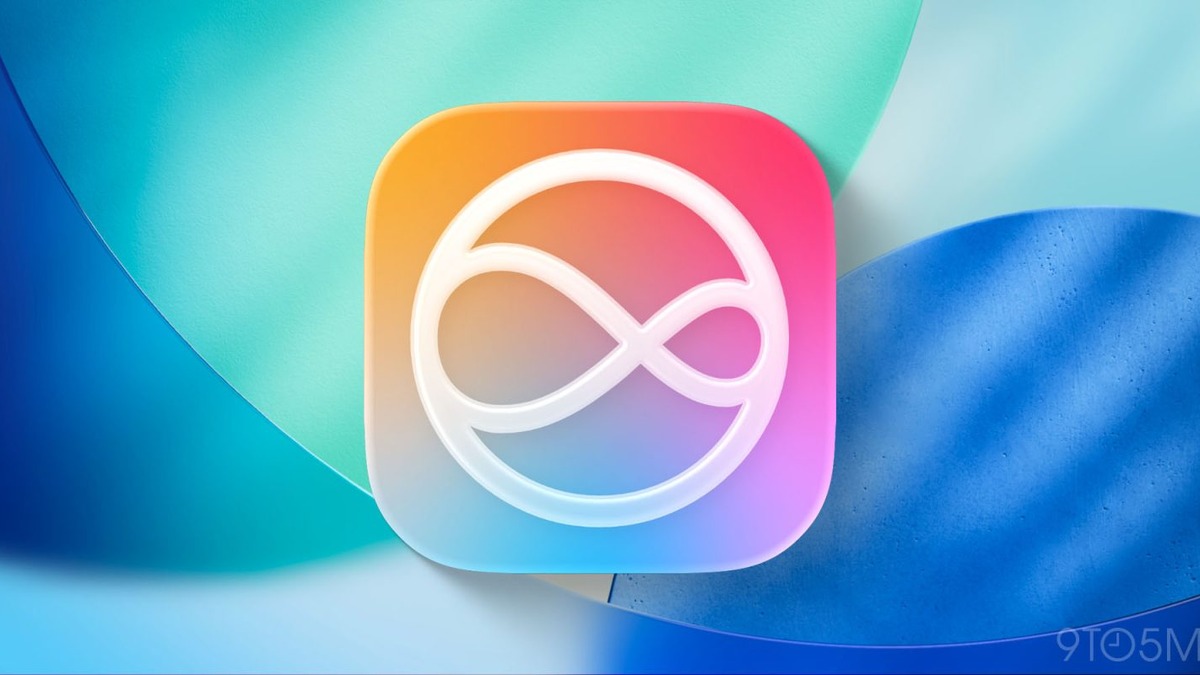 Apple's redesigned Siri app, codenamed Campo, is expected to debut at WWDC in June. The Liquid Glass interface marks the assistant's biggest visual overhaul since its 2011 launch.
Source: 9to5mac.com
Apple's redesigned Siri app, codenamed Campo, is expected to debut at WWDC in June. The Liquid Glass interface marks the assistant's biggest visual overhaul since its 2011 launch.
Source: 9to5mac.com
Google Collects a Billion Dollars and a Reference Customer
For Google, the deal is straightforward revenue. Apple is one of the few companies on earth that can write a $1 billion annual check without a committee meeting. Having Apple build on Gemini also forms a public endorsement that no marketing budget could purchase - the company that spent years insisting on building everything in-house chose Gemini.
The deal also gives Google distribution at a scale no other partnership could match. Gemini-powered features will reach hundreds of millions of iPhones by the end of 2026.
Who Pays
Apple's Foundation Models Team Faces an Awkward Question
Apple's internal AI research group continues working on its own models, per The Information's reporting. But the value proposition of that effort just got murkier. If distilled Gemini models can match or exceed what Apple builds from scratch - at a fraction of the training cost - the case for a large, independent Foundation Models team becomes harder to make internally.
The deal also introduces an alignment problem that doesn't resolve easily. Gemini was optimized for chatbots and coding tasks. Apple needs a model that handles calendar queries, photo organization, and contextual device actions. Those objectives don't always overlap cleanly, which means Apple's engineers spend time not just distilling Gemini but adapting and correcting for misalignment. That overhead cost doesn't show up in the deal's price tag.
Google Cedes More Than It May Have Intended
The full extent of what Google granted Apple may not have been fully visible to anyone outside the negotiating room in January. Giving Apple distillation rights and full data center access means Apple can capture substantial knowledge from Gemini without paying per inference forever. As Apple's on-device models mature, its cloud dependency on Google shrinks. The $1 billion annual fee may taper over time as Apple's student models improve.
 Apple's hardware advantage - the Neural Engine in M-series and A-series chips - makes on-device deployment of distilled models commercially viable in a way competitors can't easily reproduce.
Source: unsplash.com
Apple's hardware advantage - the Neural Engine in M-series and A-series chips - makes on-device deployment of distilled models commercially viable in a way competitors can't easily reproduce.
Source: unsplash.com
The Competitive Picture
This deal doesn't exist in isolation. Apple previously approached Google to run the next-generation Siri on Google's cloud infrastructure after its own Private Cloud Compute hit just 10 percent use. The distillation rights, then, are the outcome of a negotiation Apple entered from a position of weakness.
The fact that Apple secured them anyway says something about what Google was willing to pay to lock in the partnership.
The distillation rights also put Apple in a different competitive category than AI companies that license models at arm's length. Apple isn't just a customer of Gemini - it's building a parallel fleet of derived models that, over time, could reduce the deal's value to Google while preserving all the value to Apple. For a deeper look at Gemini's current capabilities, see our model profile.
New Siri features built on this arrangement are scheduled for preview at WWDC on June 8. That's the first public test of whether the distillation strategy produces something users notice.
The real price of this deal isn't $1 billion a year. It's whatever Google's Gemini advantage is worth once Apple has distilled it into hardware running in a billion pockets.
Sources:
- MacRumors: Apple Can Distill Google Gemini Models (reporting on The Information)
- 9to5Mac: New Details on Apple-Google AI Deal
- 9to5Mac: Apple Planning Standalone Siri App for iOS 27
- TechCrunch: Google's Gemini to Power Apple's AI Features Like Siri
- 9to5Google: Gemini Will Power Apple's Siri AI Features in 2026

