
Anthropic Sues Pentagon Over Supply Chain Blacklist
Anthropic will challenge the Pentagon's unprecedented supply chain risk designation in court, calling it legally unsound and a dangerous precedent for any American company that negotiates with the government.
 7 min read
Less than 24 hours after President Trump ordered every federal agency to stop using its technology, Anthropic announced it'll take the Pentagon to court.
The company said Friday it intends to challenge Defense Secretary Pete Hegseth's designation of Anthropic as a "supply chain risk to national security" - a classification historically reserved for entities tied to foreign adversaries like China and Russia, never before publicly applied to an American company.
TL;DR
- Anthropic will file a legal challenge against the Pentagon's supply chain risk designation, calling it "legally unsound" and unprecedented
- The designation bars every Pentagon contractor from doing business with Anthropic - far more damaging than losing the $200M contract itself
- Legal experts say the Pentagon faces an uphill battle: the statute (10 USC 3252) requires exhausting less intrusive alternatives first, and the Defense Production Act has never been used to force a tech company to modify its product
- The OpenAI paradox looms large: hours after blacklisting Anthropic, the Pentagon accepted identical red lines from OpenAI
The Legal Arguments
Anthropic's statement was direct: "We believe this designation would both be legally unsound and set a dangerous precedent for any American company that negotiates with the government."
The company is challenging the designation on multiple fronts.
10 USC 3252 - Supply Chain Risk
The statute that Hegseth invoked to blacklist Anthropic was designed to protect the defense supply chain from foreign threats. Lawfare's analysis found that the law requires the Pentagon to exhaust less intrusive alternatives before applying it. Given that Hegseth escalated from ultimatum to blacklisting in under four days, legal scholars question whether the government can credibly claim it tried other options first.
There's also a scope problem. Anthropic argues the designation can only apply to Pentagon contracts, not be extended to bar military contractors from using Claude in their non-defense business. The Pentagon's interpretation - that any company with a defense relationship must sever all ties with Anthropic - goes well beyond what the statute was built for.
Defense Production Act
The administration threatened to invoke this Cold War-era law to compel Anthropic to produce an unrestricted version of Claude. Legal experts are broadly skeptical. The DPA's compulsion powers were designed for steel mills and tank factories - ordering priority production of goods a company already makes. Forcing a company to retrain an AI model without safety guardrails would be, as Lawfare put it, "without precedent under the history of the DPA."
A company can resist DPA orders if the product being demanded isn't something it already produces. Anthropic doesn't produce a guardrail-free version of Claude. Multiple legal analysts told DefenseScoop they "don't expect the government to prevail in litigation" over a DPA order because "it seems very out of bounds under the text of the law."
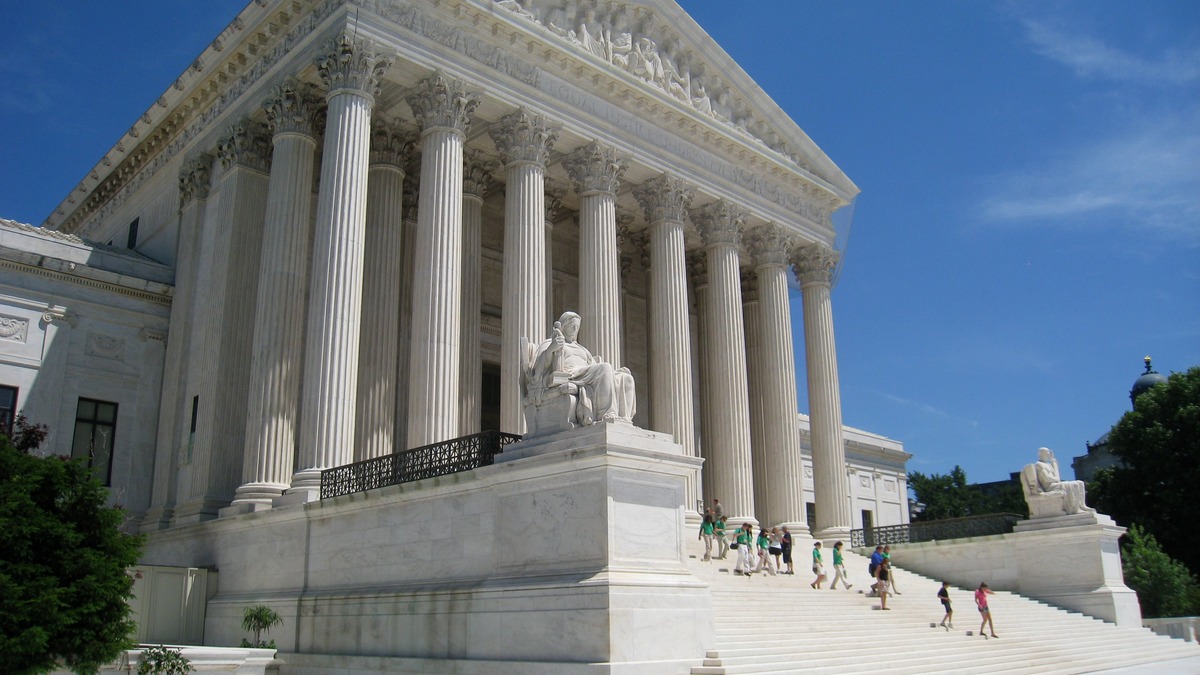 Anthropic's legal challenge will test whether the government can weaponize supply chain risk designations against domestic companies over policy disagreements.
The Contradictions
Anthropic's CEO Dario Amodei pointed out what he called an inherent contradiction in the government's position: "Those latter two threats are inherently contradictory - one labels us a security risk; the other labels Claude as essential to national security."
You cannot simultaneously argue a company is too dangerous to work with and too important not to conscript.
The bigger contradiction is the one playing out across the Potomac. Hours after Trump blacklisted Anthropic for refusing to drop its two red lines - no mass domestic surveillance, no fully autonomous weapons - OpenAI struck a deal with the Pentagon containing the same red lines. Sam Altman publicly stated: "Two of our most important safety principles are prohibitions on domestic mass surveillance and human responsibility for the use of force, including for autonomous weapon systems. The DoD agrees with these principles."
The Pentagon accepted from OpenAI what it punished Anthropic for demanding. Senator Mark Warner, vice chair of the Senate Intelligence Committee, alleged the whole episode could be a "pretext to steer contracts to a preferred vendor."
The Real Financial Damage
The $200 million Pentagon contract represents roughly 1.4% of Anthropic's $14 billion in annual revenue. Losing it barely registers.
The supply chain designation is a different beast completely. It's a secondary boycott: every company in the defense supply chain - contractors, subcontractors, suppliers, partners at any tier - must now prove it has no commercial relationship with Anthropic. For a company whose enterprise business depends on large corporations, many of which hold defense contracts, this is the mechanism with teeth.
| Impact | Direct Loss | Cascade Risk |
|---|---|---|
| Pentagon contract | $200M (1.4% of revenue) | Low |
| Defense contractor relationships | Unknown | High - secondary boycott effect |
| Enterprise clients with DoD ties | Unknown | Medium to high |
| Planned 2026 IPO | $0 immediate | Significant - complicates S-1 filing |
Anthropic raised $30 billion in its Series G at a $380 billion valuation. Whether the supply chain designation spooks investors or rallies them around a company standing on principle will depend largely on how the court challenge plays out.
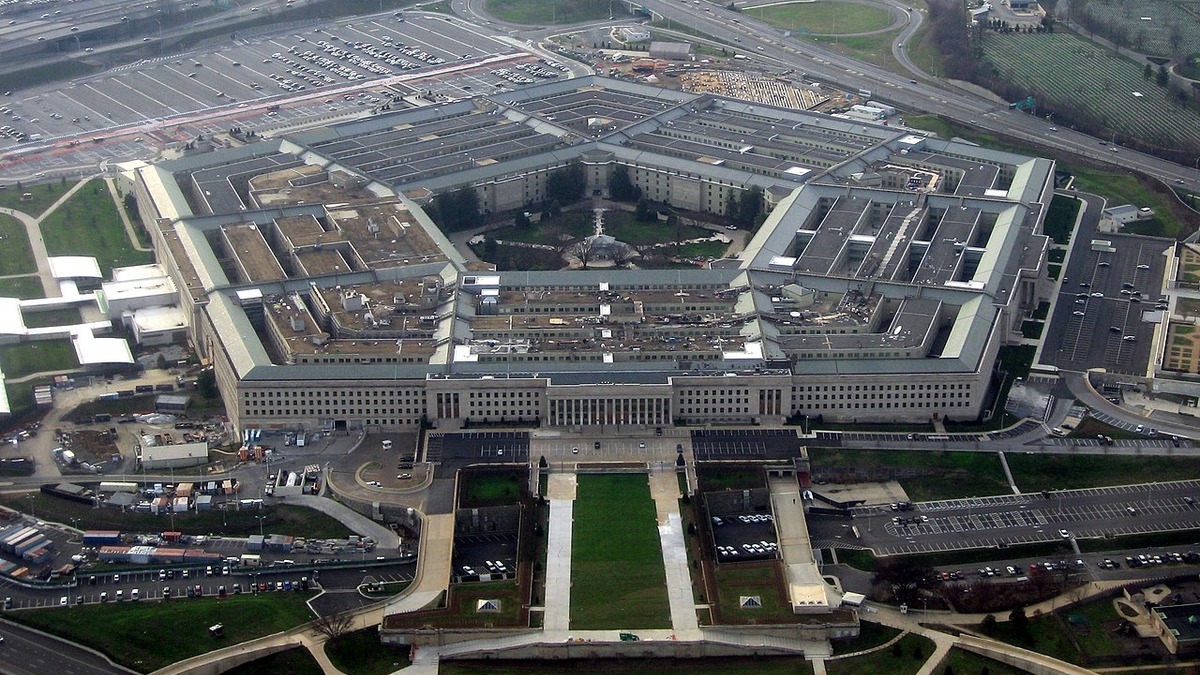 The Pentagon's supply chain risk designation forces every defense contractor to sever ties with Anthropic - a far broader impact than canceling the $200M contract alone.
Public Opinion Cuts Against the Pentagon
An ITIF/Morning Consult survey of 1,976 U.S. adults, published February 26, found that 67% of Americans believe private tech companies have a responsibility to set limits on how their products are used - even when the government disagrees. Fifty percent viewed penalizing Anthropic as government overreach, versus 35% who called it necessary for national security.
This isn't the polling distribution the administration wanted. Framing AI safety as "woke" hasn't landed with the public the way it landed in Hegseth's press conferences.
The Bipartisan Warning That Came Too Late
Before the blacklisting, Senate Armed Services Committee Chair Roger Wicker (R-MS), Ranking Member Jack Reed (D-RI), Defense Appropriations Chair Mitch McConnell (R-KY), and Ranking Member Chris Coons (D-DE) sent a private bipartisan letter urging both sides to extend the deadline and negotiate further.
The letter arrived after the deadline passed. Whether the Senate will take legislative action - potentially limiting the Pentagon's ability to use supply chain risk designations against domestic companies over policy disagreements - is now the open question on Capitol Hill.
Warner went further, warning that the administration's moves "pose an enormous risk to U.S. defense readiness and the willingness of the U.S. private sector and academia to work with the IC and DoD, consistent with their own values and legal ethics."
What the Lawsuit Means
If Anthropic prevails, it would establish that the government can't weaponize supply chain risk designations to punish American companies for contractual disagreements. The precedent matters well beyond AI - any defense contractor that negotiates terms the Pentagon dislikes could face the same treatment.
If the government prevails, it establishes that a company's internal safety policies can be overridden by national security designation - effectively giving the Pentagon veto power over how private companies design their products.
The broader AI safety exodus already had the industry on edge. This lawsuit will determine whether AI companies retain the right to set guardrails on their own technology, or whether the government can force them to ship whatever the military requests.
Anthropic's legal team has not disclosed a filing timeline, but the company's statement left no ambiguity: "When we receive some kind of formal action, we will look at it, we will understand it and we will challenge it in court."
The formal action arrived Thursday night. The challenge is coming.
Sources:
- Anthropic to take Trump's Pentagon to court over AI dispute - Axios
- Anthropic to challenge Pentagon's supply chain risk designation in court - BusinessToday
- What the Defense Production Act can and can't do to Anthropic - Lawfare
- Scaling laws: the Pentagon goes to war with Anthropic - Lawfare
- Anthropic, the Pentagon, and the Defense Production Act - Reason/Volokh Conspiracy
- Pentagon threat to blacklist Anthropic raises expert concerns - DefenseScoop
- Most Americans say tech companies should be allowed to set AI limits - ITIF
- Warner condemns Pentagon pressure campaign targeting Anthropic
- Senate defense leaders urge Anthropic-Pentagon resolution - Axios
- OpenAI strikes deal with Pentagon hours after rival Anthropic blacklisted - CNBC
- Statement from Dario Amodei on our discussions with the Department of War - Anthropic
