
Anthropic Eyes Samsung 2nm Chip as Labs Race to Go Custom
Anthropic is in early talks with Samsung to develop its first custom AI chip on a 2nm process, making it the last major frontier lab to enter the custom silicon race.
 Updated
6 min read
Updated
6 min read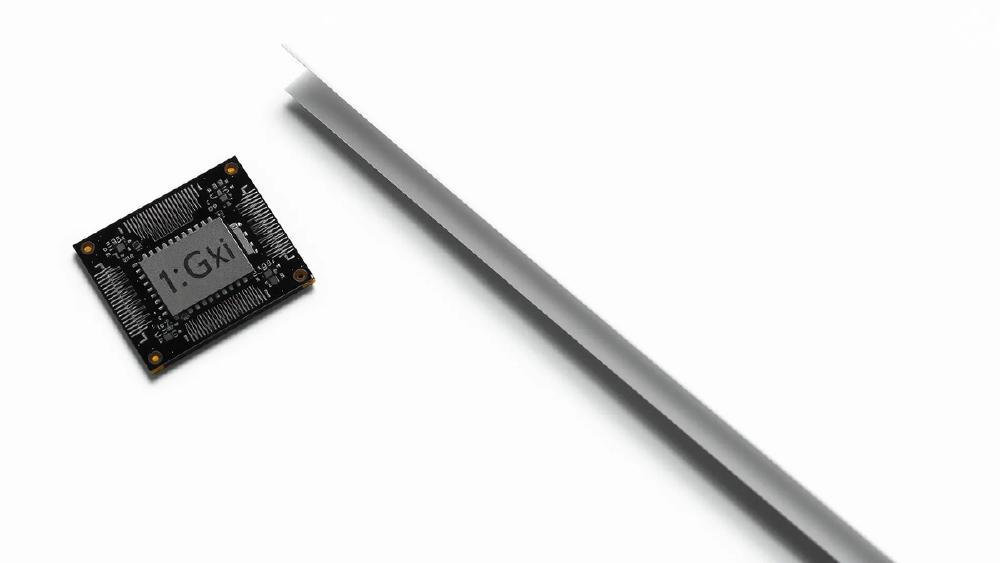
Every major AI lab now builds its own silicon - or is trying to. Anthropic, until this week, was the exception. A report from The Information on Thursday says that's changing: the company is in early talks with Samsung to develop a custom AI chip, putting it on the same path as Google, Amazon, Microsoft, Meta, and OpenAI.
TL;DR
- Anthropic is exploring Samsung's 2nm manufacturing process for a first custom chip
- No specs, timeline, or budget have been set - the company hasn't decided what the chip should do
- Clive Chan, an early member of OpenAI's chip team, recently joined Anthropic
- Samsung participated in Anthropic's $65 billion May funding round, making it both investor and prospective manufacturer
- All other major frontier labs already have custom silicon in production or deployment
The Silicon Race Has a New Entrant
Every frontier lab now has a chip story. Anthropic, until this week, didn't.
| Company | Chip | Fab Partner | Node | Status |
|---|---|---|---|---|
| TPU Ironwood (v6e) | TSMC | 3nm | In production, 100K+ deployments | |
| Amazon | Trainium 3 | TSMC | 3nm | Generally available (Dec 2025) |
| Microsoft | Maia 200 | TSMC | 3nm | Deployed Jan 2026 |
| Meta | MTIA 300-series | TSMC | 3nm | In development |
| OpenAI | Jalapeño | Broadcom | TBD | Rolling out end of 2026 |
| Anthropic | TBD | Samsung (proposed) | 2nm | Early-stage talks |
OpenAI moved fastest. It unveiled Jalapeño in June, nine months after starting design - reportedly the fastest custom AI accelerator development cycle on record for a chip at this scale. Anthropic is much further back: according to The Information, the company hasn't decided what the chip should do, how powerful it should be, or how it'd fit into a server rack. That's a significant gap in program maturity.
The motivations are consistent across the industry. NVIDIA holds an estimated 74% of the AI chip market. At inference scale, every major lab pays billions annually in compute costs that flow to Jensen Huang's balance sheet. Custom silicon, even if it only handles specific inference workloads, can meaningfully reduce that dependency over time.
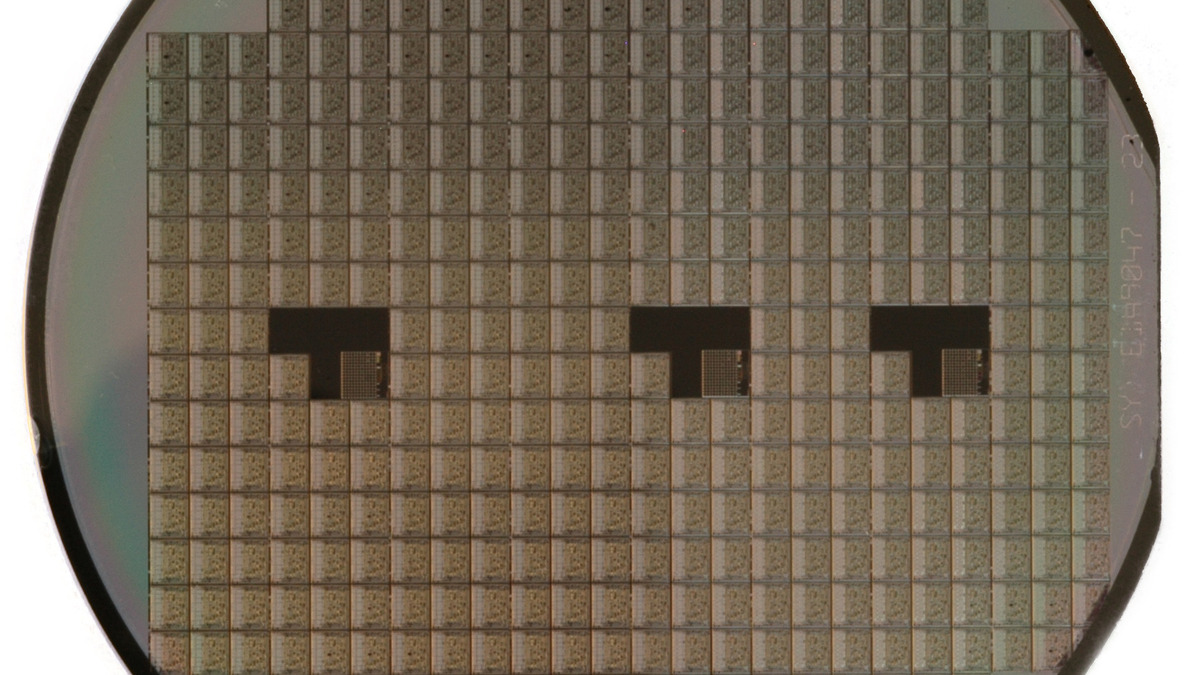 Silicon wafers are the starting point for all advanced chip manufacturing. Anthropic is exploring Samsung's second-generation 2nm process for its first custom design.
Source: commons.wikimedia.org
Silicon wafers are the starting point for all advanced chip manufacturing. Anthropic is exploring Samsung's second-generation 2nm process for its first custom design.
Source: commons.wikimedia.org
Why Anthropic Is Moving Now
Two signals clarify the timing.
The first is the hire. Anthropic recently brought on Clive Chan, an early member of OpenAI's custom chip team, as part of a deliberate engineering buildout. Chip development is a multi-year investment that requires specialized talent before the first spec sheet exists. The hire came before the Samsung talks were publicly reported, which suggests Anthropic has been building toward this longer than this week's news implies.
The second is the investor relationship. Samsung, SK Hynix, and Micron all participated in Anthropic's $65 billion May fundraising round. Samsung's involvement wasn't incidental - the company manufactures chips for NVIDIA and runs a foundry business competing with TSMC for advanced-node contracts. Having Samsung as a financial partner creates a working relationship that a cold manufacturing negotiation wouldn't produce.
Anthropic was direct about what isn't changing:
"Amazon Web Services's Trainium chip, Google tensor processing units and Nvidia graphic processors will remain central to our compute strategy." - Anthropic, in a statement to press
AWS Trainium, Google TPUs, and NVIDIA GPUs stay. A custom chip adds a fourth option, not a replacement. This matters because Amazon's $25 billion commitment to Anthropic came with the understanding that Trainium chips would see real adoption. A Samsung chip deal that competes with AWS hardware could eventually test that relationship.
 Samsung operates one of the world's two leading advanced semiconductor foundries, with TSMC. Its involvement with Anthropic spans both investment and potential manufacturing.
Source: commons.wikimedia.org
Samsung operates one of the world's two leading advanced semiconductor foundries, with TSMC. Its involvement with Anthropic spans both investment and potential manufacturing.
Source: commons.wikimedia.org
Samsung's Technical Case
Samsung's pitch involves its 2nm GAA (Gate-All-Around) process, called SF2P. The company began mass production on SF2P in 2025 - the Exynos 2600, which powers the Galaxy S26, is the first high-volume product on that node. A Taylor, Texas fab is scheduled for 2nm production by late 2026, though customer production there's expected to begin in 2027.
Advanced packaging matters as much as node geometry. Modern AI chips aren't just about transistor density - they require sophisticated stacking to place memory close to compute at high bandwidth. Samsung's packaging capabilities are part of the pitch, and the company is in separate talks with Google about future tensor processing units, which suggests it's actively courting multiple frontier AI clients.
There's also a South Korean national interest dimension. Samsung and SK Hynix are jointly committed to a $518 billion decade-long investment in domestic chip infrastructure. Winning Anthropic's business would strengthen Samsung Foundry's argument that it can serve frontier AI demand, not just consumer and mobile markets.
Counter-Argument: Samsung Isn't TSMC
The yield problem is real. Samsung's advanced node track record has been inconsistent. Its 3nm and 4nm processes suffered lower yields than TSMC equivalents all through 2024 and 2025 - which is why Apple, NVIDIA, AMD, and Qualcomm manufacture on TSMC. OpenAI chose Broadcom as the design partner for Jalapeño in part because of Broadcom's deep knowledge of TSMC's production environment.
TSM gained 3.5% on the Anthropic news, while NVIDIA rose 0.7%. That market reaction tells a readable story: investors see the Samsung talks as potential business that TSMC may not capture, and implicitly recognize that Samsung is bidding for a contract it doesn't yet have a proven right to win.
The investor relationship with Anthropic adds alignment, but alignment doesn't solve yield. A chip manufactured at Samsung with inferior yields would cost more per working unit than the same design at TSMC - negating some of the cost savings that justify building custom silicon in the first place. Whether Samsung's SF2P yields match what TSMC delivers at 3nm is a question the industry hasn't yet answered.
What the Market Is Missing
The Anthropic-Samsung story isn't really about NVIDIA. Anthropic will keep buying NVIDIA GPUs for training. The larger labs don't use custom silicon to replace NVIDIA on training - they use it to reduce inference costs, which now account for roughly two-thirds of total AI compute spend across the industry.
At scale, even a 10% reduction in per-token inference cost compounds into hundreds of millions in annual savings. That's the business logic, and it's the same calculation that sent Google, Amazon, Microsoft, and Meta down this path years before OpenAI or Anthropic moved.
The Clive Chan hire is the real news. A single engineer who ran parts of OpenAI's chip program carries institutional knowledge about how to start a chip team from scratch - what to get right early, what mistakes cost years of schedule. Samsung talks can be discontinued. Chip engineering talent is the durable investment.
If the program proceeds on a realistic schedule, Anthropic's first custom chip wouldn't reach production volumes until 2028 or 2029 at the earliest. By then, Google will be on its eighth or ninth generation of TPUs, and Amazon will be deploying Trainium 4. The gap isn't closing quickly. What Anthropic is doing this week is planting a flag - and hiring the people who know how to build toward it.
Sources:
- The Information via Yahoo Finance - Anthropic explores Samsung 2nm chip partnership
- TechCrunch - Anthropic is discussing a new custom chip with Samsung
- Bloomberg - Anthropic in Talks With Samsung for Custom AI Chip
- Tom's Hardware - The custom AI ASIC state of play (May 2026)
- OpenAI - Jalapeño inference chip announcement
- SamMobile - Samsung 2nm chip production
Last updated

