
Anthropic Safety Overseer Gets Board Majority at Last
Anthropic's Long-Term Benefit Trust appointed Novartis CEO Vas Narasimhan to the board, giving its independent safety overseers a board majority for the first time.
 6 min read
The mechanism was always meant to reach this point. When Anthropic created the Long-Term Benefit Trust in 2023, the agreement gave the Trust escalating board-election rights - one director at first, then two, then a majority. Three years on, that majority has arrived.
On April 14, Anthropic announced that the Long-Term Benefit Trust had appointed Vas Narasimhan, CEO of Novartis and a physician-scientist with a Harvard MD and a Kennedy School public policy degree, to the company's Board of Directors. With Narasimhan's addition, Trust-appointed directors now hold a majority of board seats.
TL;DR
- Anthropic's Long-Term Benefit Trust (LTBT) appointed Novartis CEO Vas Narasimhan to the board on April 14
- Trust-appointed directors now hold a board majority - the milestone the LTBT structure was designed to reach
- Narasimhan brings experience overseeing the approval of 35+ novel medicines in a heavily regulated global industry
- Critics point out the Trust Agreement has never been fully published, and major investors may retain override rights
What the Long-Term Benefit Trust Actually Is
Anthropic is structured as a Public Benefit Corporation. That creates a legal obligation to consider public interest alongside returns, but it doesn't bind specific decisions. The LTBT goes further - or is at least designed to.
The unusual mechanics
The Trust is an independent body of five members who hold Class T Common Stock. Unlike ordinary equity, Class T shares carry board-election rights that grow over time. The Trust members are explicitly required to have no financial stake in Anthropic, which means they can't profit from decisions that favor shareholders at the expense of the safety mission.
Current trustees include Neil Buddy Shah, former CEO of iNGO, international public health and development executive; Richard Fontaine, CEO of the Center for a New American Security; and Mariano-Florentino Cuéllar, former President of the Carnegie Endowment for International Peace. None of them are venture capitalists or technologists with Anthropic equity at stake.
The board now includes Dario Amodei, Daniela Amodei, Yasmin Razavi, Jay Kreps, Reed Hastings, Chris Liddell, and Narasimhan. The Trust-appointed slice of that group is now a majority.
What a Trust majority actually enables
With majority control, LTBT-appointed directors can, in theory, override decisions that prioritize growth over safety. They can vote against partnerships, deployment decisions, or governance changes that the Trust believes conflict with Anthropic's public benefit mission. That's the theory. The practice depends heavily on legal fine print that Anthropic hasn't made fully public - a point we'll return to.
Why Narasimhan?
The appointment of a pharmaceutical CEO might seem like an odd choice for an AI safety board. It isn't, once you look at the logic.
Narasimhan has guided the development and regulatory approval of more than 35 novel medicines during his tenure at Novartis. That work runs through agencies with the authority to halt, recall, or conditionally approve products - the FDA chief among them. Anthropic's Daniela Amodei put it directly:
"Vas brings something rare to our board. He's overseen the development and approval of more than 35 novel medicines across a highly regulated industry."
The parallel is clear. Drug development operates under a framework where internal ambition is externally checked: clinical trials must meet safety thresholds before deployment at scale. Narasimhan has spent decades inside that system, managing the tension between commercial pressure and evidence standards.
Narasimhan framed his interest in terms of the mission:
"Anthropic is setting the standard for how AI should be developed to benefit humanity."
He also brings credibility beyond pharmaceuticals. He serves on the US National Academy of Medicine, sits on Harvard Medical School's board of fellows, and in 2026 joined the Council on Foreign Relations. Earlier in his career he worked on HIV/AIDS, tuberculosis, and malaria programs across sub-Saharan Africa and South Asia.
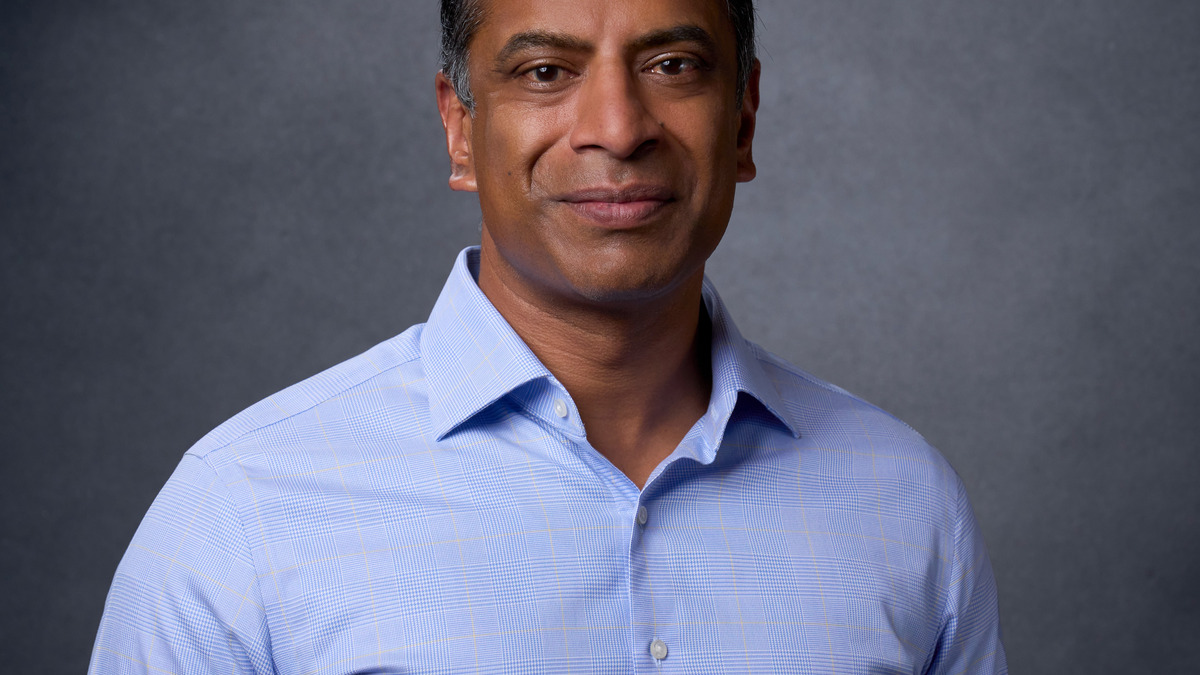 Vas Narasimhan, CEO of Novartis, brings more than two decades of experience deploying breakthrough technology in regulated healthcare settings.
Source: novartis.com
Vas Narasimhan, CEO of Novartis, brings more than two decades of experience deploying breakthrough technology in regulated healthcare settings.
Source: novartis.com
The Milestone With Caveats
The appointment matters as a structural milestone. It's also worth noting what we don't know.
The unpublished agreement
Anthropic has never released the full Trust Agreement. The company has disclosed the Trust's broad mandate - elect directors, escalate to a board majority - but the specific conditions, voting thresholds, and enforcement mechanisms aren't public. That gap matters because the Trust's power is only as strong as the agreement that defines it.
A detailed analysis posted on LessWrong argued that stockholders may retain the ability to modify or abrogate the Trust through supermajority votes, without trustee consent. If that reading is correct, the Trust's majority is subject to override by major investors who disagree with its decisions.
Anthropic's major investors include Amazon, which committed $8 billion in 2024, and Google, which has invested comparable sums. If those two holders coordinated, they could potentially reach a supermajority threshold. The precise threshold isn't disclosed. Anthropic hasn't responded to requests to clarify whether supermajority override clauses exist and, if so, at what threshold.
The IPO dimension
This governance question becomes more complicated in a few months. Anthropic is targeting an October 2026 listing on the Nasdaq, with Goldman Sachs and JPMorgan leading the process. The company is seeking a valuation in the $400-500 billion range, with an annual revenue run rate that crossed $30 billion in April 2026 - up from $9 billion at the end of 2025.
Public equity markets impose their own pressures. Anthropic has previously revised its Responsible Scaling Policy in ways that critics characterized as weakening the binding commitments it was built around. Whether the LTBT can hold its position facing IPO pressure - from underwriters, institutional investors, and the quarterly reporting cycle - is a genuinely open question.
Anthropic launched the Anthropic Institute in March to consolidate its red team and societal research functions. That move, combined with today's board milestone, suggests the company is at least trying to build visible institutional accountability before going public.
 With Trust-appointed directors now in the majority, Anthropic's board has, for the first time, an independent supermajority with no financial stake in the company's equity performance.
Source: pexels.com
With Trust-appointed directors now in the majority, Anthropic's board has, for the first time, an independent supermajority with no financial stake in the company's equity performance.
Source: pexels.com
What the Trust Was Always Supposed to Be
The LTBT was described, when Anthropic created it, as a governance innovation - a way to keep the company's long-term mission intact even as it raised billions and grew. The idea was that a group of financially disinterested people would hold the swing votes on the board, accountable not to investors but to the company's stated mission of developing AI safely for humanity's benefit.
That's an unusual design in tech. Most governance structures in the sector either concentrate power in a founder (Google's dual-class structure, for instance) or cede it completely to traditional fiduciaries once the company goes public. Anthropic's LTBT is something different: a standing body of non-investors with real board authority that's supposed to persist through fundraising, growth, and eventually a public listing.
Whether it actually works that way depends on clauses in a trust agreement nobody outside the company has read.
Narasimhan's appointment, on its face, is the milestone the structure was designed to hit. The Trust holds its majority. The question that's been hanging over this governance experiment since 2023 - whether it's real or theater - won't be answered by the appointment itself. It'll be answered the first time a Trust-appointed majority votes against something that investors want.
Sources:
- Anthropic: Long-Term Benefit Trust appoints Vas Narasimhan
- Blockchain.news: Anthropic Board Update - Narasimhan Joins via LTBT
- Vasant Narasimhan - Wikipedia
- LessWrong: Maybe Anthropic's Long-Term Benefit Trust is powerless
- Harvard Law: Anthropic Long-Term Benefit Trust
- Anthropic and OpenAI IPO timelines and valuations
- ainvest: Anthropic's Long-Term Benefit Trust - A Structural Shift for AI Governance

