
Inside Anthropic's $200B Google Cloud Compute Bet
Anthropic has committed $200 billion to Google Cloud over five years - the largest cloud contract in AI history - alongside a 3.5 GW TPU capacity deal with Google and Broadcom coming online in 2027.
 7 min read
The number is $200 billion. Five years. One counterparty: Google. Anthropic's compute commitment, reported Tuesday by The Information, is the largest cloud contract in AI history - and the structure behind it shows what happens when a company's revenue growth outpaces its ability to provision hardware fast enough.
TL;DR
- Anthropic commits $200B to Google Cloud and chips over 5 years - more than 40% of Google's disclosed cloud revenue backlog
- A separate Broadcom SEC filing confirms 3.5 GW of next-gen TPU capacity reserved for Anthropic, coming online 2027 (tripling the 1 GW deal signed in October 2025)
- Anthropic's run-rate revenue has gone from $9B at year-end 2025 to roughly $40B by late April 2026 - demand is the easy part; supply is the problem
- Anthropic trains across AWS Trainium, Google TPUs, and NVIDIA GPUs simultaneously - a three-hardware strategy at a scale very few companies have ever attempted
The Compute Math
$200B over five years
Spread evenly, that is $40B per year in cloud spend. Anthropic's late-April run rate sits at roughly $40B in revenue, which means the company is committing to a compute bill that could consume most of a year's revenue over the next five years. That isn't a hedge - it's a strategic bet that demand will continue to outpace compute availability, and that locking capacity now is cheaper than scrambling for it later.
Anthropic CFO Krishna Rao framed it explicitly:
"This groundbreaking partnership with Google and Broadcom is a continuation of our disciplined approach to scaling infrastructure: we are building the capacity necessary to serve the exponential growth we have seen in our customer base while also enabling Claude to define the frontier of AI development."
The "exponential growth" claim isn't marketing copy this time. Run-rate revenue went from $9B at year-end 2025, to $19B by March 2026, to $30B by the time the April Broadcom deal closed, to an estimated $40B by late April. The company also crossed 1,000 enterprise customers spending $1 million or more annually in the same period - doubling from the 500 reported in February.
3.5 gigawatts
The raw capacity deal is a separate agreement, disclosed in a Broadcom SEC filing and first reported by TechCrunch in April. Anthropic is reserving 3.5 GW of compute capacity from Google and Broadcom, tripling the 1 GW deal it signed in October 2025. This capacity comes online starting in 2027, which means the company is making long-horizon infrastructure bets that extend well beyond its current model generation.
The hardware behind the 3.5 GW reservation is almost certainly Google's eighth-generation TPU family, which Google unveiled at Cloud Next on April 22. The TPU 8t (training) and TPU 8i (inference) are two specialized chips built for the agentic era.
 Google announced its eighth-generation TPU 8t and 8i chips on April 22 at Cloud Next. Anthropic's 3.5 GW reservation is widely expected to run on this generation, which delivers 121 exaflops per superpod.
Source: pexels.com
Google announced its eighth-generation TPU 8t and 8i chips on April 22 at Cloud Next. Anthropic's 3.5 GW reservation is widely expected to run on this generation, which delivers 121 exaflops per superpod.
Source: pexels.com
The Hardware: TPU 8t and TPU 8i
The TPU 8t is a training-focused chip. A single TPU 8t superpod scales to 9,600 chips, delivers 121 exaflops of FP4 compute, and holds two petabytes of shared high-bandwidth memory. Google says it delivers nearly 3x the compute performance of the previous Ironwood generation for the same price, and targets over 97% "goodput" - the fraction of compute time actually producing useful work rather than waiting on memory or network transfers.
The TPU 8i handles inference. It ships with 288 GB of high-bandwidth memory per chip and 384 MB of on-chip SRAM (triple the previous generation), plus a Collectives Acceleration Engine that cuts on-chip latency by 5x. Performance-per-dollar improves 80% versus Ironwood for inference workloads. At production scale - where Claude serves millions of requests across consumer and enterprise products - inference efficiency compounds into hundreds of millions of dollars in saved compute costs per year.
| Spec | TPU 8t (Training) | TPU 8i (Inference) |
|---|---|---|
| Per-superpod chips | 9,600 | Not yet disclosed |
| Compute (FP4) | 121 ExaFlops | Not yet disclosed |
| HBM per chip | 2 PB (shared) | 288 GB |
| On-chip SRAM | Not yet disclosed | 384 MB (3x prev gen) |
| Latency improvement | - | 5x (vs Ironwood) |
| Performance/dollar | 2.8x vs Ironwood | 1.8x vs Ironwood |
| General availability | Later 2026 | Later 2026 |
Both chips are expected to be generally available to cloud customers later in 2026 - just in time to inform the infrastructure that'll come online for Anthropic in 2027.
Anthropic's Three-Cloud Strategy
Despite the scale of the Google commitment, Anthropic doesn't run on a single cloud. It trains and deploys Claude across three hardware families simultaneously.
Google Cloud TPUs
The primary training partner for Claude's most recent model generations. Google has been Anthropic's anchor investor since 2023, and the relationship has deepened with each funding round. The new $200B commitment and 3.5 GW capacity reservation cement Google's position as Anthropic's compute spine.
AWS Trainium
Amazon remains the primary cloud and deployment partner. Claude is available on AWS Bedrock, and Anthropic has a separate multi-gigawatt capacity agreement with Amazon chips (nearly 1 GW, expected by year-end). Amazon was Anthropic's first major hyperscaler partner and continues to process the majority of production inference traffic.
NVIDIA GPUs
Anthropic uses NVIDIA hardware for workloads that benefit from the CUDA ecosystem - fine-tuning, research runs, and tasks where software tooling availability outweighs raw hardware efficiency. NVIDIA's H100 and H200 clusters remain the most widely available high-performance compute globally, which gives Anthropic flexibility.
| Cloud | Role | Hardware | Status |
|---|---|---|---|
| Google Cloud | Primary training + storage | TPU 8t, TPU 8i | $200B, 5-year commitment |
| AWS | Primary deployment + inference | Trainium, NVIDIA | Nearly 1 GW by year-end |
| Azure | Enterprise distribution | Mixed | Available on Azure Foundry |
| NVIDIA (colocation) | Research, fine-tuning, flex | H100, H200 | Ongoing |
What This Means for Broadcom
The financial math for Broadcom is striking. Mizuho analysts estimate that Broadcom will recognize $21 billion in AI revenue from Anthropic in 2026, rising to $42 billion in 2027 when the 3.5 GW capacity comes online. Broadcom manufactures the custom silicon central to Google's TPU line - effectively, every dollar Anthropic spends on Google TPUs flows partly through Broadcom's fabrication agreements with TSMC.
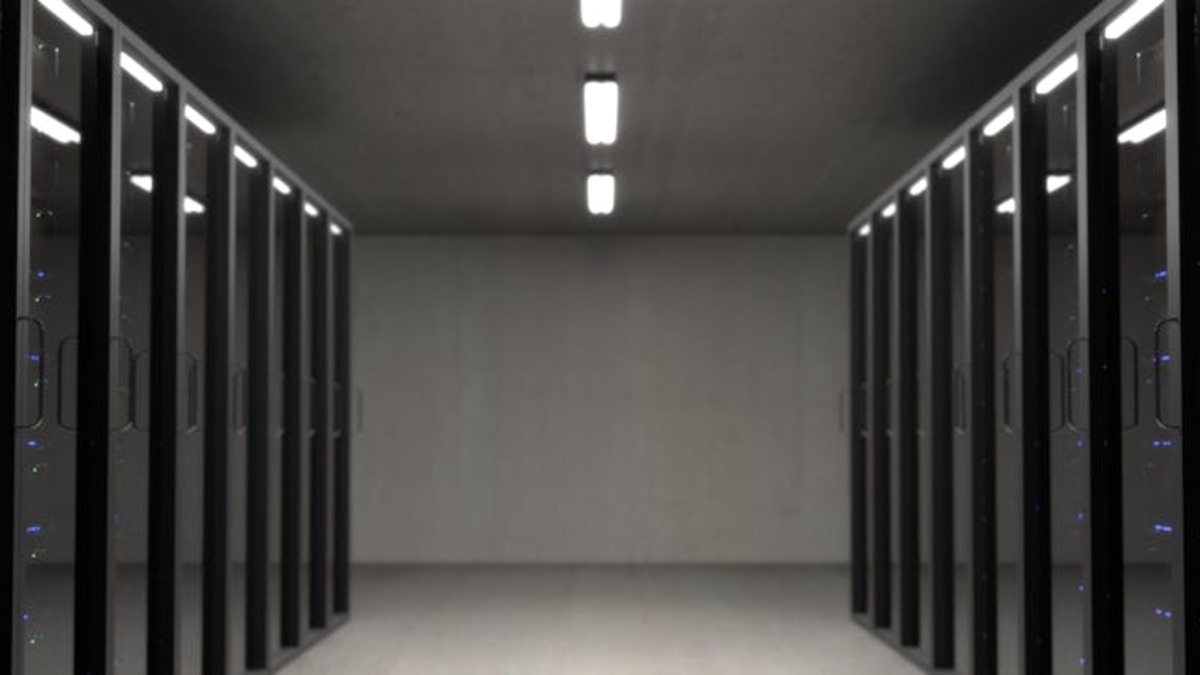 Anthropic trains Claude across AWS Trainium, Google TPUs, and NVIDIA GPUs - a three-hardware strategy that requires managing massive, distributed data center infrastructure.
Source: pexels.com
Anthropic trains Claude across AWS Trainium, Google TPUs, and NVIDIA GPUs - a three-hardware strategy that requires managing massive, distributed data center infrastructure.
Source: pexels.com
For context on the scale of the AI capex supercycle, Anthropic alone is creating more revenue for Broadcom next year than most mid-cap technology companies create in total. The AI accelerator market is concentrating around a small number of hyperscale buyers, and Anthropic is now clearly in that tier.
Where It Falls Short
Regulatory exposure
In March 2026, the US Defense Department labeled Anthropic a supply-chain risk - a designation that triggered a wave of enterprise concern before Anthropic won an injunction against the Trump administration's classification. A $200B cloud commitment concentrated in a single US-domiciled provider creates a single point of legal and regulatory exposure. If that designation resurfaces, or if export control regimes tighten around AI compute, the concentration boosts the risk.
Vendor lock-in at scale
Three-cloud training sounds like resilience. In practice, the $200B Google commitment will pull engineering investment disproportionately toward TPU-native tooling, optimization, and deployment patterns. JAX, XLA, and the TPU software stack aren't portable. The code written to squeeze performance out of TPU 8t superpods does not run cleanly on Trainium or H100s without significant re-engineering. The diversification is real, but the $200B tilts the gravity well toward Google in ways that'll compound over years.
The revenue assumption
The commitment assumes Anthropic's revenue arc continues. The company is projecting $70 billion in revenue by 2028 - a number that would make the $40B annual compute spend manageable. If enterprise demand for AI coding agents, which currently drives most of Anthropic's growth, plateaus or shifts to open-weight competitors, a $200B cloud bill becomes a structural problem rather than a growth investment. Anthropic's recent enterprise push into financial services and multi-agent workflows is partly a hedge against that concentration.
The $200B number is big enough to be a headline. The 3.5 GW number is big enough to reshape how Google's hyperscale infrastructure roadmap gets focused on over the next two years. Taken together, they describe a company that has decided the compute constraint is more dangerous than the cost constraint - and is willing to bet its balance sheet on being right.
Sources:
- Anthropic reportedly agrees to pay Google $200B for chips and cloud access - Engadget
- Anthropic expands partnership with Google and Broadcom - Anthropic
- Anthropic ups compute deal with Google and Broadcom - TechCrunch
- Our eighth generation TPUs: two chips for the agentic era - Google Blog
- Sources: Anthropic could raise $50B round at $900B valuation - TechCrunch
- Anthropic projects $70B in revenue by 2028 - TechCrunch

