
Anthropic and Gates Foundation put $200M on global AI
Anthropic commits $200M in grants, Claude credits, and technical support to the Gates Foundation for AI in global health, education, and agriculture over four years.
 6 min read
Anthropic and the Bill & Melinda Gates Foundation announced a four-year, $200 million partnership on May 14, 2026. The deal commits Claude API credits, grant funding, and direct technical support to programs in global health, education, agriculture, and economic mobility - primarily targeting low- and middle-income countries.
TL;DR
- Anthropic commits $200M across four years in a mix of cash grants, Claude credits, and technical support
- Health focus includes AI-assisted vaccine research for polio, HPV therapies, and malaria/TB treatment forecasting
- Education programs target US K-12 students and foundational literacy in sub-Saharan Africa and India
- The Gates Foundation frames this as a managed deployment, not basic research funding
What the $200M Actually Buys
The headline number deserves scrutiny. The $200M is not a wire transfer - Anthropic describes it as "grant funding, Claude usage credits, and technical support." That means a portion of the figure is API compute, which Anthropic values at list price. How that splits between cash, credits, and staff time was not disclosed in the announcement.
Grants, Credits, and Technical Support
This structure is common in big-tech philanthropy. Google has done similar things with Google.org, committing products and engineering with cash. It lets companies report large round numbers in press releases while the actual cash outlay is smaller. The Gates Foundation's announcement says it'll measure success by real-world outcomes - whether tools actually help farmers in Kenya or health workers in Nigeria - not by the dollar figure.
What Anthropic does describe concretely: the partnership will release public benchmarks, datasets, and knowledge graphs for healthcare and educational AI applications. The foundation specifically wants those to be open so other developers can build on them, not locked into Claude.
The Four-Year Timeline
Four years is a long runway for a technology partnership. The initial benchmarks and datasets are expected in late 2026. The actual deployment of tools to health ministries and agricultural extension workers comes later. This isn't a product launch - it's a research and infrastructure program with a development arc similar to the Gates Foundation's existing agricultural and health initiatives.
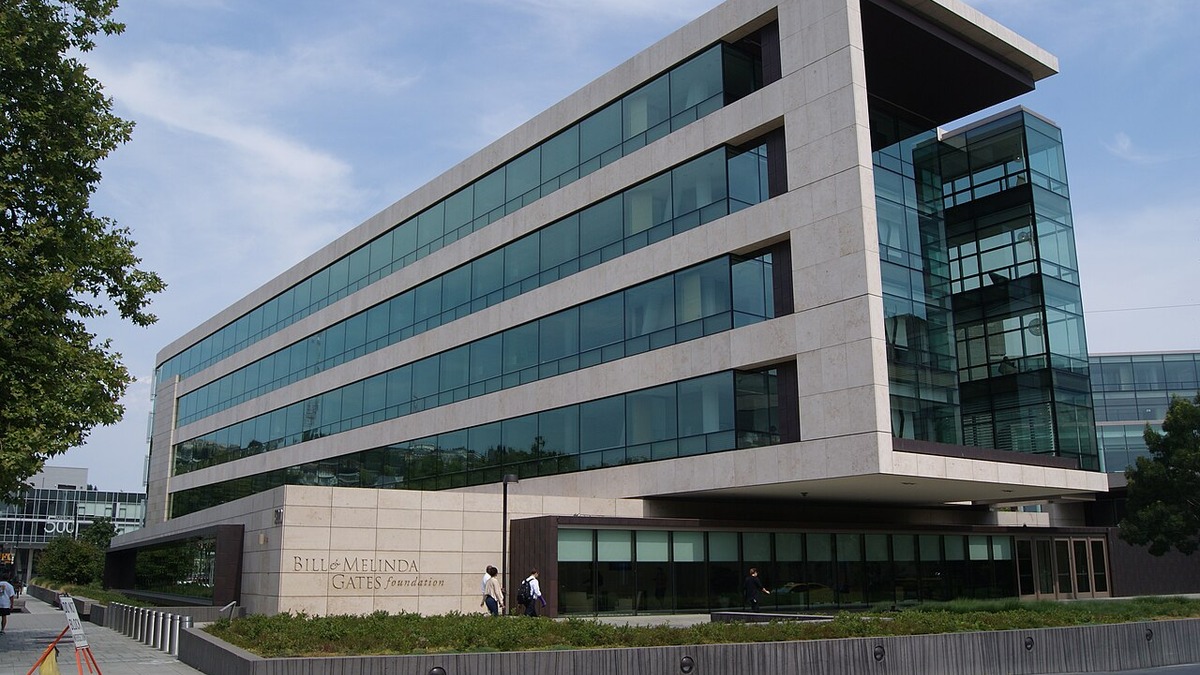 The Gates Foundation's Seattle campus, home to one of the world's most influential philanthropic operations.
Source: commons.wikimedia.org
The Gates Foundation's Seattle campus, home to one of the world's most influential philanthropic operations.
Source: commons.wikimedia.org
Where the Money Actually Goes
Global Health - The Biggest Bet
The health component is the largest piece of the partnership. Around 4.6 billion people in low- and middle-income countries lack access to essential health services, according to the announcement. The concrete targets are specific: polio vaccine development, HPV therapies, and eclampsia/preeclampsia treatments.
HPV alone kills around 350,000 people annually. Ninety percent of those deaths happen in low- and middle-income countries, where cervical cancer screening and vaccination coverage remain low. Anthropic says Claude will screen computationally for new drug candidates before pre-clinical work begins - a task where language models have shown real utility in recent drug discovery work.
Anthropic already has some footing here. The company acquired Coefficient Bio last year for $400M, an AI drug discovery startup, giving it direct exposure to pharmaceutical research workflows. The Gates Foundation partnership extends that into public health programs without the commercial framing.
The forecasting component is different again. Anthropic is partnering with the Institute for Disease Modeling - a Gates Foundation research group - to improve malaria and tuberculosis treatment models. These aren't new drugs; they're better predictions of where and how to deploy existing treatments. That kind of infrastructure work is unglamorous but can have large downstream effects on lives.
Education at Scale
The education piece runs in two directions simultaneously. In the US, Claude will power evidence-based tutoring for K-12 students and career guidance tools. In sub-Saharan Africa and India, the focus is foundational literacy and numeracy through the Global AI for Learning Alliance.
That split is worth noting. Anthropic isn't building one global product and shipping it everywhere. They're building two distinct things for different contexts. The US tools are premium-adjacent - better tutoring for students who already have internet access. The Africa and India programs target students who may be in low-resource classrooms with intermittent connectivity.
Anthropic has been building out its education infrastructure separately. The company launched a free curriculum of 13 courses through Anthropic Academy earlier this year, covering the full AI stack from basic prompting to production deployments. The Gates partnership pushes that further into formal education systems.
Agriculture and Economic Mobility
The agricultural component focuses on smallholder farmers - a segment that represents nearly two billion people whose incomes depend on crop yields. Claude will deliver real-time, localized farming guidance in local languages, covering planting decisions, soil health, crop disease, and market conditions.
Language accessibility is embedded across. The partnership includes a plan to collect and release data for African languages publicly, which Anthropic says will improve AI models across the industry, not just Claude.
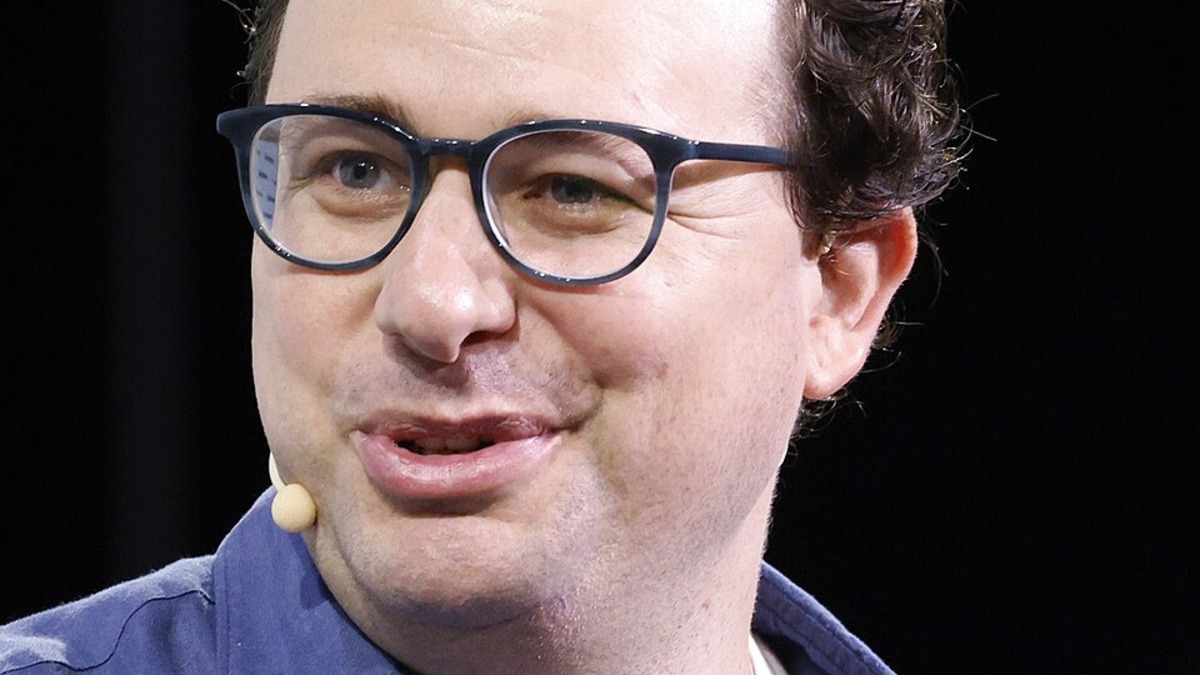 Dario Amodei, Anthropic CEO, at TechCrunch Disrupt 2023.
Source: commons.wikimedia.org
Dario Amodei, Anthropic CEO, at TechCrunch Disrupt 2023.
Source: commons.wikimedia.org
What Both Sides Get
Anthropic's Strategic Play
Anthropic gains several things here beyond the PR value. Deploying Claude at scale across healthcare, education, and agriculture in low- and middle-income countries produces training feedback, creates benchmarks, and builds real use-case data in domains the company hasn't penetrated commercially.
Anthropic recently became the most-used AI provider among business customers - but those are enterprise customers in the US and Europe. The Gates partnership is a different distribution channel entirely: health ministries, agricultural extension services, and school systems in regions where Anthropic has no commercial footprint.
There's also a defensive element. Being embedded in global health infrastructure creates a long-term moat that's hard to dislodge on price alone.
The Gates Foundation's Bet
The Gates Foundation is betting that AI - specifically Claude - can accelerate the impact of programs it's already running. The Institute for Disease Modeling has worked on malaria forecasting for years using traditional epidemiological tools. If Claude can meaningfully improve those predictions, the payoff in lives is large.
The foundation is treating this as a managed services relationship, not a donation. The success metrics are outcome-based: whether the tools provably help people, not whether Anthropic gets credit for the partnership.
The $200M number is big enough to be newsworthy, but the real test is what it produces. The Gates Foundation has a strong track record in global health - the polio eradication program has reduced cases by more than 99% since 1988 - and a more complicated one in education. Its decade-long push for Common Core standards in US schools produced significant backlash and mixed results. Whether an AI tutoring rollout in sub-Saharan Africa avoids the same pitfalls depends on how the programs are built and with whom.
Anthropic's ability to deliver useful AI tools for a health worker in rural Nigeria is truly unproven. Building benchmarks, releasing datasets, and running pilots over four years is the right approach. Whether that produces real change, or an impressive-looking portfolio of pilots that never scale, is the actual question worth watching.
Sources:

