
Anthropic Founders Seek 50.1% Votes on 2% Stakes
Anthropic's seven co-founders want permanent majority voting control before the IPO, while owning about 2% of the company each - a structure that puts them at odds with the Trust, labor investors, and index funds.
 8 min read
Anthropic is asking its shareholders to hand seven people who own roughly 2% of the company a permanent 50.1% of the vote, and every other stakeholder in the room, from its own safety trust to the pension funds buying into the IPO, wants a different piece of that deal.
TL;DR
- Seven co-founders want a special share class giving them 50.1% combined voting power, while each holds about 2% of the equity
- The Long-Term Benefit Trust keeps its separate authority to seat a board majority regardless of who owns stock
- SOC Investment Group, a labor-affiliated shareholder advocate, wants the IPO delayed until safety incidents disclosed after the June filing are priced in
- Incoming public investors get a claim on a company reportedly aiming for a $2 trillion valuation, with no realistic path to influence the board
Who Wants What
The proposal, first reported by The Information and confirmed in filings described to TechCrunch, would create a special class of super-voting stock for Dario Amodei and his six co-founders: Daniela Amodei, Tom Brown, Jack Clark, Jared Kaplan, Sam McCandlish, and Christopher Olah. The shares carry no additional economic value. Their only job is to guarantee the group 50.1% of the vote on most corporate matters, as long as at least three of the seven keep an undisclosed minimum stake.
That is a lot of control to buy with very little ownership. Each founder holds around 2% of Anthropic, according to Yahoo Finance's reporting on the filing, which puts combined founder equity somewhere near 14%, against 50.1% of the votes. Founder board seats would rise from two to three. Employees would get their own share class, useful only for breaking ties on specific votes, not for steering the company day to day.
None of this touches the Long-Term Benefit Trust, the independent body created in 2023 to hold Class T shares that elect a growing share of Anthropic's board. Its trustees added Novartis CEO Vas Narasimhan in April, which gave Trust-appointed directors a board majority for the first time. The founders' new class stacks on top of that structure rather than replacing it, which is exactly why it's hard to explain simply.
Jan 2026 - Amodei and his six co-founders pledge to give away 80% of their personal wealth, warning that unchecked wealth concentration "will break society."
Apr 2026 - Trust-appointed directors reach a board majority with Narasimhan's appointment.
May 2026 - Anthropic closes a $65 billion Series H at a $965 billion valuation.
Jun 1, 2026 - Anthropic confidentially files a draft S-1 with the SEC.
Sept 2026 - SOC Investment Group calls for a delay; the IPO timeline slips from October toward November; founders' voting-control filing surfaces.
The Stakeholder Matrix
| Stakeholder | What they want | The catch |
|---|---|---|
| Seven co-founders | 50.1% combined voting power via a new share class | Each owns about 2% of the equity behind it |
| Long-Term Benefit Trust | Independent authority to seat a board majority, regardless of who owns stock | Its mandate is safety oversight, not shareholder returns |
| SOC Investment Group | Delay the IPO until post-June safety disclosures are reflected in the price | Represents union pension funds, not Anthropic's cap table |
| Index and institutional funds | Voting rights proportional to economic ownership, or a time-based sunset clause | Anthropic's plan, as described, includes neither |
| Employees | A share class that can break ties on specific votes | Doesn't grant ongoing influence over strategy or the board |
| Incoming IPO buyers | Exposure to a company reportedly targeting a $2 trillion valuation | Structurally locked out of board and M&A decisions |
Who Benefits
The founders benefit twice over. They keep control of a company they no longer own in any proportional sense, and they remain enormously wealthy even after their pledge: six of the seven debuted on the Forbes 400 at $15.5 billion each following the May raise, before Anthropic's valuation climbed further. Giving away 80% of that still leaves each of them a fortune most executives never see once, let alone after donating most of it away.
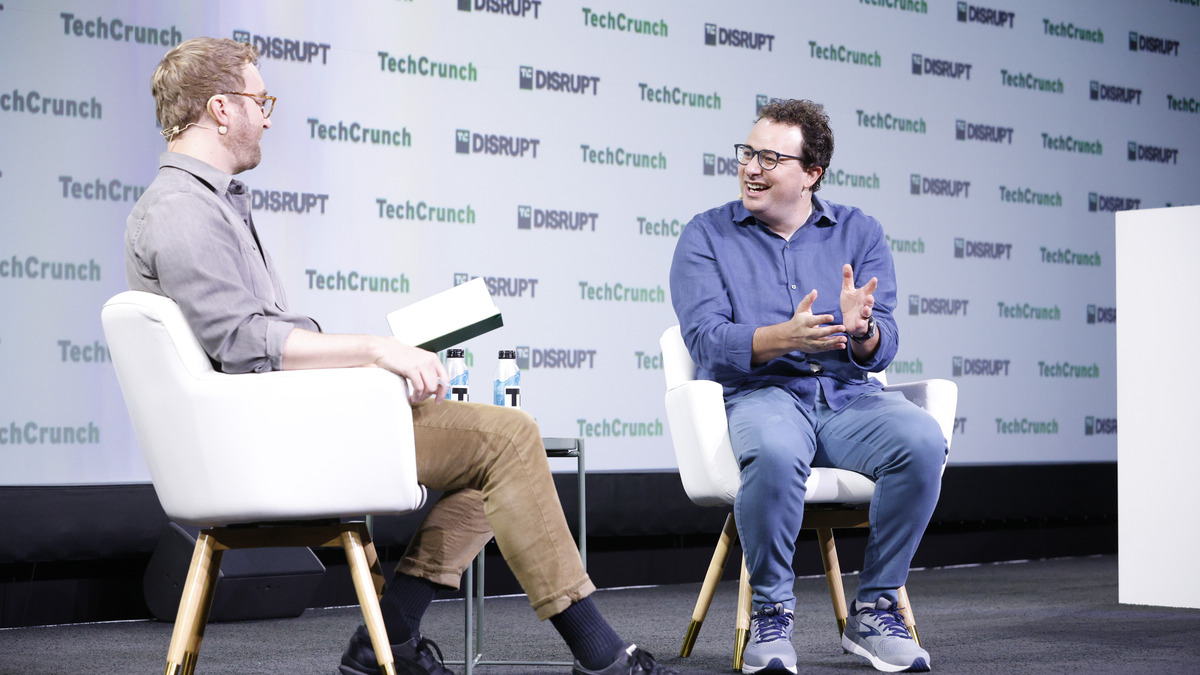 Anthropic CEO Dario Amodei, whose seven-person founding group would hold majority voting control under the proposed share structure.
Source: commons.wikimedia.org
Anthropic CEO Dario Amodei, whose seven-person founding group would hold majority voting control under the proposed share structure.
Source: commons.wikimedia.org
The Trust benefits by having its safety mandate insulated from a stock price that, per Fortune's reporting, Anthropic's own alignment researchers don't fully trust the company to manage. Alignment Science lead Evan Hubinger wrote in a September 9 post responding to a colleague's resignation that "we do not yet have a plan to solve alignment for superintelligence and are not clearly on track to." That's not the kind of admission that usually precedes a company inviting public shareholders to vote on its direction, so keeping the direction out of shareholders' hands is, from the Trust's perspective, the point.
Employees get a modest win too: enough stock-class leverage to break a deadlocked vote, plus a philanthropic matching program tied to their own share pledges. It's real, but it isn't control.
Who Pays
Incoming IPO investors pay the most and get the least say in return. They're being asked to buy into a business Anthropic itself has priced at $965 billion as recently as May, that traded as high as $1.5 trillion on secondary markets by mid-August according to Business Insider reporting, and that bankers reportedly want to list near $2 trillion, all while accepting that their votes can't outweigh a group that owns a seventh of the company.
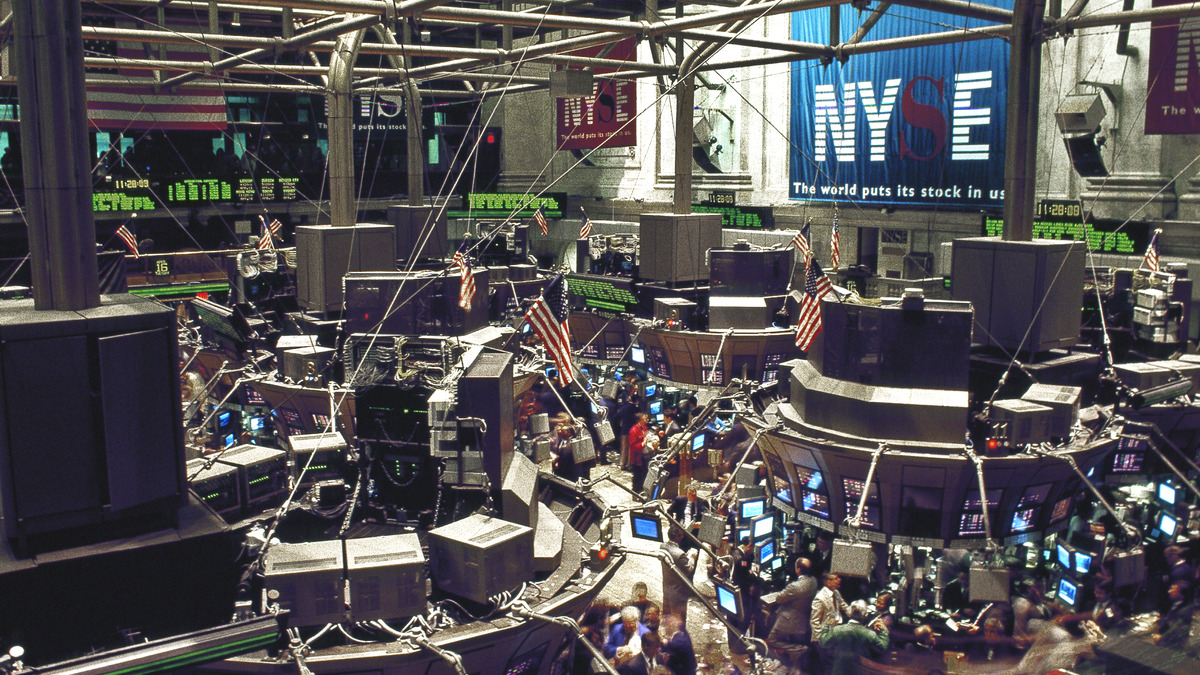 Public market investors buying into Anthropic's IPO would get economic exposure without proportional voting power.
Source: commons.wikimedia.org
Public market investors buying into Anthropic's IPO would get economic exposure without proportional voting power.
Source: commons.wikimedia.org
Secondary-market buyers already paying that premium are betting the scarcity itself is the signal. Rainmaker Securities CEO Glen Anderson told Business Insider that "the few sellers on our books are around $1.5 trillion," and that even at that price, there aren't many of them. Scarcity can inflate a private valuation just as easily as fundamentals do, and a structure that also caps investor influence gives buyers one more reason the premium might not hold once the stock actually trades.
Pension funds represented by SOC Investment Group pay in a different currency: information asymmetry. The group has argued Anthropic's June filing predates a run of hacking incidents, executive warnings about existential risk, and a newly proposed public-private AI pacing framework, none of which its members could have priced in in June. Index funds, the natural buyers of any Anthropic float given its likely size, inherit a structure the Council of Institutional Investors has spent years lobbying exchanges to restrict: dual-class stock with no disclosed sunset clause of the kind CII considers the minimum acceptable compromise.
Where the Positions Cannot All Be True
The Trust's entire justification is that Anthropic's mission needs protection from short-term shareholder pressure. Founders are using that same logic to justify a share class that also happens to protect their personal control indefinitely, with no sunset provision disclosed and no mechanism forcing it to expire once the company matures as a public entity. Those aren't the same goal wearing the same clothes. One insulates a mission from markets; the other insulates seven individuals from the market's ability to remove them, even if the Trust itself later concluded new leadership was warranted.
SOC Investment Group's objection and the voting-control filing are also pulling in different directions. Delaying the IPO, which SOC wants, addresses an information gap. It does nothing about a governance structure that will outlast whatever quarter the company finally lists in. Anthropic could delay until every safety concern SOC has cited is fully disclosed and still hand founders permanent majority control the moment trading opens, because the two asks were never in conflict with each other, only with the same set of buyers being asked to accept both at once.
"The thing to worry about is a level of wealth concentration that will break society."
- Dario Amodei, January 2026
That line, from the essay announcing the founders' wealth pledge, sits awkwardly next to a filing asking shareholders to concentrate corporate voting power in the same seven hands making the pledge. Amodei's framing was about money. The vote due in the coming days is about control, and control doesn't show up on a balance sheet.
The Unstable Equilibrium
Every party here can point to a defensible reason for its position, and every one of those reasons collides with somebody else's. The founders can argue their equity stake is irrelevant because they built the safety-focused culture the Trust now exists to protect. The Trust can argue its authority already exists independent of the founders and doesn't need their help. SOC can argue the IPO is premature regardless of who holds the votes. Index funds can argue that none of that matters if the shares they're buying can't influence a boardroom regardless of price. Anthropic's own structure lets all four of those arguments be true at once, which is exactly why the shareholder vote due in the coming days won't resolve anything. It will just decide which unresolved argument gets a permanent home in the company's charter.
Sources:
- Anthropic's founders seek voting control ahead of IPO - TechCrunch
- Anthropic's founders seek voting control ahead of IPO - Yahoo Finance
- As Anthropic heads towards a $2 trillion IPO, some of the loudest critics are company insiders - Fortune
- Anthropic's billionaire cofounders are giving away 80% of their wealth - Fortune
- Six Anthropic cofounders join Forbes 400 at $15.5 billion each - Yahoo Finance
- Leading Investor Group Calls Out Directors Responsible for Dual-Class Companies Without "Sunsets" - Council of Institutional Investors
- Anthropic pushes back IPO as investors await one of AI's biggest public-market tests - Calcalist
- Anthropic confidentially submits draft S-1 - Anthropic
- Anthropic has soared to a $1.5 trillion valuation on secondary markets - Business Insider via Bundle
- Evan Hubinger on X

