
Anthropic Weighs $50B Raise - Could Top OpenAI
Anthropic is considering a $40-50 billion funding round at a valuation of up to $900 billion, which would make it the world's most valuable private AI company, surpassing OpenAI.
 6 min read
Three years ago, Anthropic was an 11-person spinout from OpenAI with a thesis that the rest of the industry considered quaint: build powerful AI, but build it safely. Today, sources familiar with the matter tell Bloomberg and TechCrunch that the company has received multiple unsolicited offers to raise between $40 billion and $50 billion at a valuation of $850 billion to $900 billion - a figure that would place it above OpenAI as the most valuable private AI company in history.
TL;DR
- Anthropic is fielding offers to raise $40-50B at an $850-900B valuation, a board decision expected in May
- That would surpass OpenAI's $852B post-money valuation from February 2026
- Revenue run rate is $30B announced, internally ~$40B - up from $1B a year ago
- Positioned as the final private round before a potential IPO as early as October
- The raise raises sharp questions about how an AI safety company justifies near-trillion-dollar economics
No term sheet has been signed. Anthropic declined to comment. But the numbers attached to this story are striking enough to warrant scrutiny.
The Numbers Behind the Raise
In February 2026, Anthropic closed a $30 billion Series G at a $380 billion valuation. That was the largest private funding round in AI history at the time. Two months later, at least one institutional investor is reportedly prepared to commit $5 billion but hasn't yet secured a meeting with CFO Krishna Rao.
The implied valuation has more than doubled in sixty days - not because the company's underlying business changed dramatically in that window, but because the revenue arc it disclosed pulled investors forward.
The Revenue Trajectory
Anthropic said earlier this month that its annualized revenue run rate has crossed $30 billion. One person with knowledge of its financials puts the current internal figure closer to $40 billion. For context:
| Milestone | Date | ARR |
|---|---|---|
| First dollar | Early 2023 | near zero |
| First meaningful scale | Jan 2024 | ~$100M |
| Breakout year | Jan 2025 | ~$1B |
| End of 2025 | Dec 2025 | ~$9B |
| Series G close | Feb 2026 | ~$14B |
| Public announcement | Apr 2026 | $30B+ |
| Internal estimate | Apr 2026 | ~$40B |
That's roughly a 40x increase in twelve months. Salesforce took about twenty years to reach $30 billion in annual revenue.
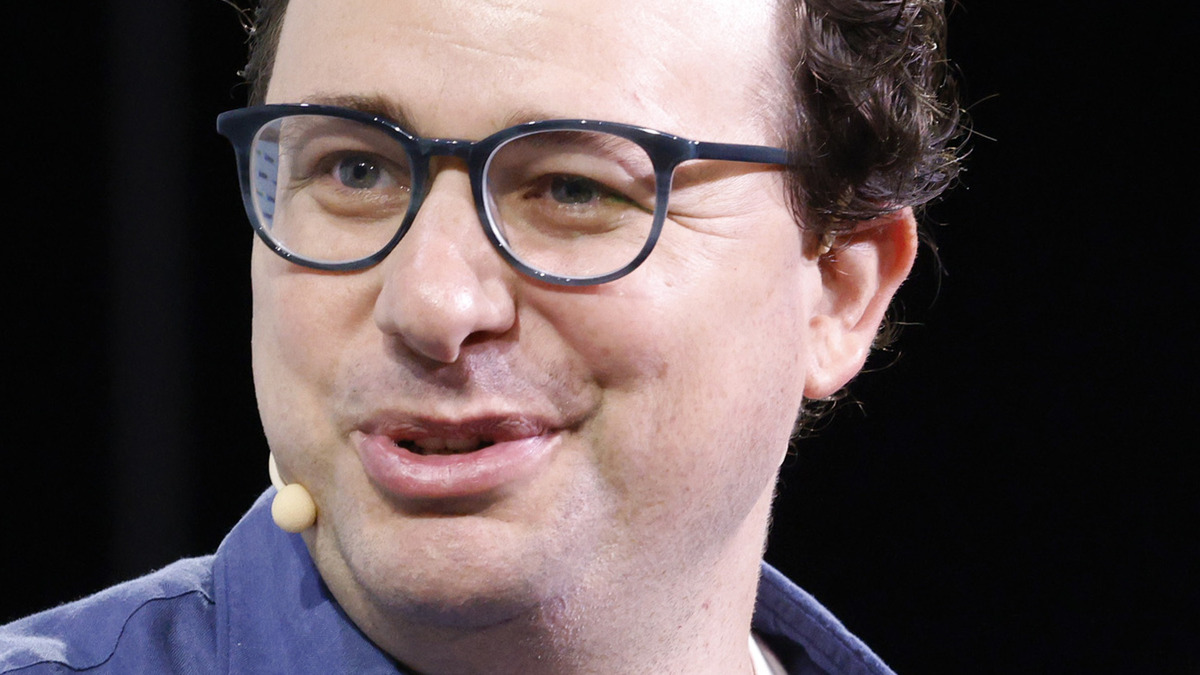 Anthropic CEO Dario Amodei, photographed at TechCrunch Disrupt 2023. He co-founded the company in 2021 alongside his sister Daniela and eight other former OpenAI researchers.
Source: upload.wikimedia.org
Anthropic CEO Dario Amodei, photographed at TechCrunch Disrupt 2023. He co-founded the company in 2021 alongside his sister Daniela and eight other former OpenAI researchers.
Source: upload.wikimedia.org
What Is Actually Driving Growth
The company attributes a large share of this growth to Claude Code, its agentic AI coding tool launched publicly in mid-2025. By February 2026, Claude Code had crossed $2.5 billion in annualized revenue - nine months after launch, making it one of the fastest B2B product ramps on record. The figure was reportedly more than doubling at the start of 2026.
Claude's Cowork platform adds another revenue layer, embedding AI into enterprise workflows across finance, legal, and life sciences. Eight of the Fortune 10 are now Claude customers. Over 500 companies spend more than $1 million with Anthropic annually; Axios reported that number reached more than 1,000 and doubled in under two months.
The Competitive Arithmetic
OpenAI closed a $122 billion Series G at an $852 billion post-money valuation in February 2026. If Anthropic finalizes this raise at $900 billion, it becomes the most valuable private AI company, full stop - despite OpenAI's larger war chest and first-mover consumer brand recognition.
The comparison sharpens further. OpenAI raised $122 billion to reach $852 billion. Anthropic, if this round closes at $50 billion and $900 billion, will have reached comparable capitalization at roughly one-third the capital raised. That is either a sign of extraordinary capital efficiency or a sign that private AI valuations have decoupled from any framework that made sense eighteen months ago. Probably both.
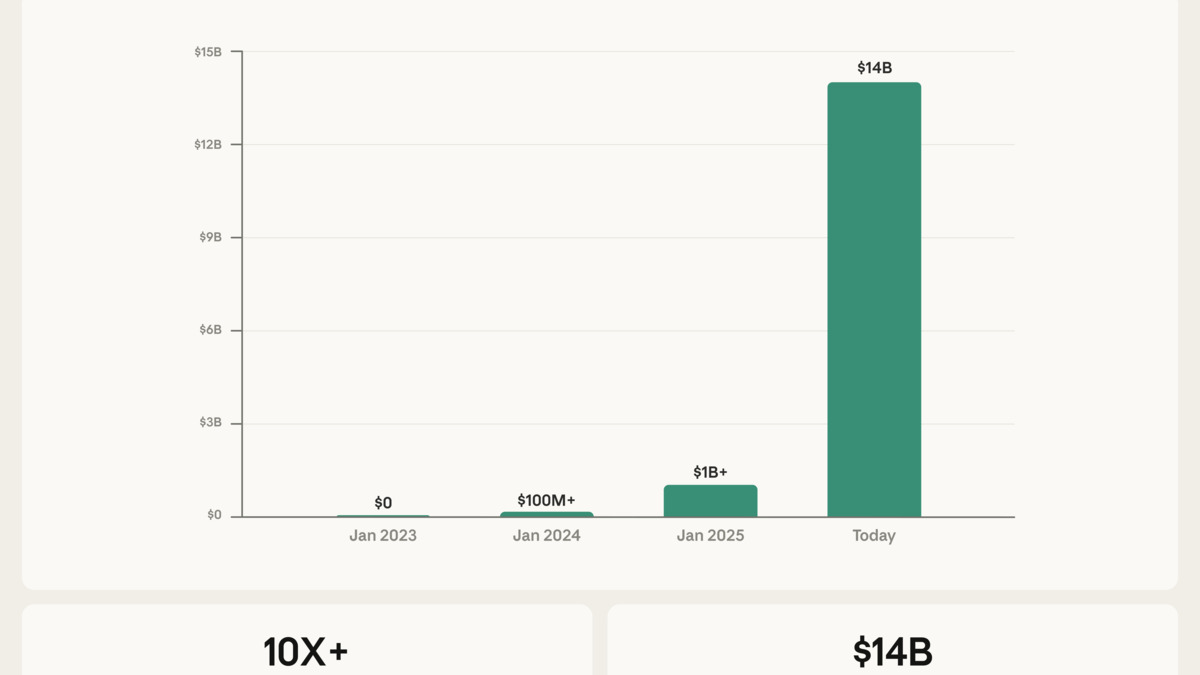 Anthropic's revenue growth chart, from the company's Series G announcement in February 2026. The chart covers Jan 2023 through the close of that round. Since then, the run rate has more than doubled again.
Source: anthropic.com
Anthropic's revenue growth chart, from the company's Series G announcement in February 2026. The chart covers Jan 2023 through the close of that round. Since then, the run rate has more than doubled again.
Source: anthropic.com
The Safety Tension This Round Does Not Resolve
Anthropic was founded on a specific premise: that building powerful AI systems was necessary and that doing so with rigorous safety research was both the right thing to do and a competitive advantage. The "responsible scaling policy" and constitutional AI work are genuine, not just PR.
But near-trillion-dollar valuations are built on near-trillion-dollar revenue projections, and those projections require a very particular kind of AI deployment - fast, broad, deeply embedded in enterprise operations. That's hard to square with the careful, cautious, iterative approach that safety-first development implies.
The company has already navigated one such tension publicly. Earlier this year, the Pentagon designated Anthropic as a supply chain risk after it declined to ease restrictions on its products being used in domestic surveillance and fully autonomous weapons. The White House subsequently ordered a government-wide phaseout of Anthropic technology. That blacklisting is now apparently close to being reversed: the White House is drafting guidance that would allow federal agencies to work with Anthropic again, including access to Claude Mythos, its cyber-focused model. The National Security Agency is already running Mythos Preview on classified networks, according to reporting from Axios.
Anthropic's revenue went from $1 billion to $30 billion in fifteen months. The question is whether the company that gets to $300 billion will still be recognizable as the one that started.
The implied narrative is that Anthropic stood firm on its safety constraints, got temporarily shut out of government contracts, and is now being welcomed back exactly because its model capabilities have become too valuable to exclude. Whether that represents the system working as intended - principled limits holding under pressure - or a preview of what happens when a nearly-trillion-dollar company faces future pressure from an even larger customer, is a question worth keeping in mind.
What We Do Not Know Yet
A few things matter here that the current reporting doesn't resolve.
No lead investor has been named. Google has committed up to $40 billion and Amazon is in for up to $25 billion in a separate compute-plus-capital arrangement, but this round appears to involve new institutional capital beyond those strategic partnerships. Who that new capital is, and what governance rights they're seeking, hasn't been disclosed.
The board meeting expected in May will presumably set the terms. Whether Anthropic accepts any of these offers, at what exact valuation, and with what conditions attached are all open questions.
And the IPO timing - possibly October, according to Bloomberg - depends on market conditions that can shift quickly. At $900 billion, Anthropic would rank among the most valuable companies ever to go public, larger than all but a handful of public US companies. Executing that IPO successfully requires a public market audience willing to pay those multiples, and that audience has grown more discerning about AI valuations over the past year.
The company Dario Amodei co-founded after leaving OpenAI in 2021 over disagreements about how fast to push capabilities has now, by the market's measure, nearly caught up with the company he left. The irony is not lost on anyone who has watched this industry closely.
Sources:
- Sources: Anthropic could raise a new $50B round at a valuation of $900B - TechCrunch
- Anthropic nears $50B raise at up to $900B valuation ahead of potential IPO - The AI Insider
- White House drafting plans to permit federal Anthropic use - Nextgov/FCW
- White House drafting plans to permit federal Anthropic use - Government Executive
- From $380B to $900B: Anthropic could raise $50B - TechFundingNews

