
Anthropic Passes OpenAI in Revenue at $30B ARR
Anthropic's annualized revenue crossed $30 billion in April 2026, topping OpenAI's $24 billion run rate and marking the first time a rival has outpaced OpenAI in the generative AI race.
 5 min read
Thirty billion dollars. That's Anthropic's annualized revenue run rate as of April 2026 - and for the first time in the AI industry's brief history, that figure is higher than OpenAI's.
TL;DR
- $30B ARR: Anthropic's annualized revenue as of April 2026, up from $9B at year-end 2025
- $24B ARR: OpenAI's current run rate, now second in the revenue race for the first time
- 1,000+ enterprise customers paying more than $1M per year - doubled in under two months
- 42% coding assistant API share: Anthropic's position vs OpenAI's 31%, the engine behind the surge
- October 2026 IPO reportedly being assessed at a $380 billion target valuation
The jump from $9 billion to $30 billion happened in four months. That's not a growth rate - it's a compression of time that enterprise software companies don't normally experience. Salesforce needed roughly 20 years to hit $30 billion in annual revenue. Anthropic covered the same ground in about 15 months from when it crossed $1 billion.
The Revenue Trajectory in Numbers
The growth isn't evenly distributed. Most of it landed in late 2025 and early 2026, driven almost completely by enterprise coding contracts.
| Period | Anthropic ARR | Notes |
|---|---|---|
| Jan 2024 | $87M | Near-zero consumer base |
| Dec 2024 | $1B | First enterprise traction |
| Dec 2025 | $9B | OpenAI at $20B |
| Feb 2026 | $14B | Series G closes at $380B valuation |
| Mar 2026 | $19B | Coding subscriptions quadruple |
| Apr 2026 | $30B | Passes OpenAI's $24B for first time |
The table above draws from multiple sources, including SaaStr and TechCrunch's April 14 analysis. OpenAI confirmed $2 billion in monthly revenue in April 2026, implying a $24 billion annualized run rate.
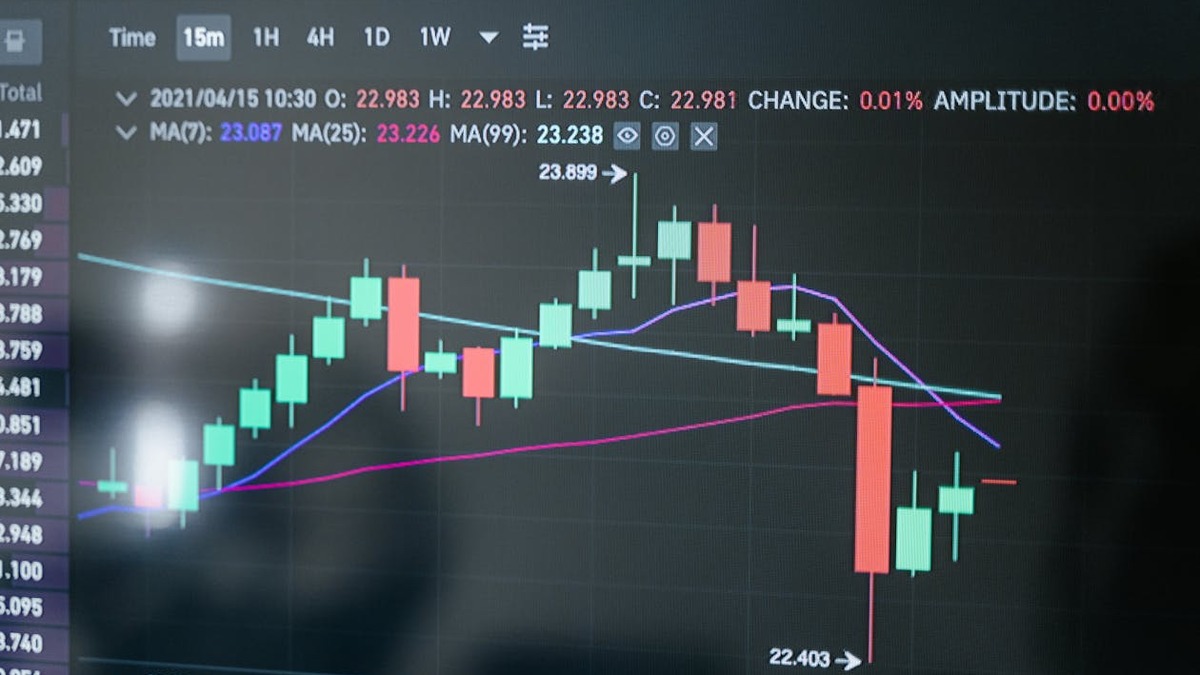 Anthropic's revenue path - $9B to $30B in four months - looks more like an asset price chart than a SaaS growth curve.
Source: pexels.com
Anthropic's revenue path - $9B to $30B in four months - looks more like an asset price chart than a SaaS growth curve.
Source: pexels.com
What the Numbers Say
The Enterprise Bet Paid Off
Anthropic never chased consumer subscribers. It built toward enterprise customers and API integrations from the start - companies that embed Claude into their own products rather than end users paying a monthly subscription fee. For most of 2024 that strategy looked slow compared to ChatGPT's consumer flywheel.
It doesn't look slow now. More than 1,000 enterprise customers spend over $1 million per year on Claude. When Anthropic closed its Series G in February 2026, that count was 500. It doubled in under two months. Enterprise customers are harder to displace than consumer accounts - every workflow built on Claude's API raises the cost of switching away.
Eighty percent of Anthropic's revenue comes from business customers, according to multiple reports. That concentration is both a strength and a single point of exposure.
Coding Tools Drove the Acceleration
Claude's share of the coding assistant API market sits at 42%, ahead of OpenAI's 31%. Twelve months ago the ranking was reversed. The shift reflects both the quality of Claude's code generation and Anthropic's pricing strategy for enterprise developer seats.
Business subscriptions to Claude Code quadrupled in Q1 2026. Amazon's $25 billion infrastructure commitment included preferred placement on AWS Bedrock, and Claude now runs across all three major cloud platforms: Bedrock, Google Cloud Vertex AI, and Azure. OpenAI, despite its partnership with Microsoft, doesn't have equivalent multi-cloud distribution at the same depth.
 Enterprise developers embedding Claude into production workflows have driven most of Anthropic's Q1 2026 revenue growth.
Source: pexels.com
Enterprise developers embedding Claude into production workflows have driven most of Anthropic's Q1 2026 revenue growth.
Source: pexels.com
Capital Efficiency OpenAI Can't Match
Anthropic spent roughly $5 billion training its models in 2025. OpenAI spent approximately $20 billion. At current revenue figures, Anthropic's ARR-to-training-cost ratio is around 6:1. OpenAI's is closer to 1.25:1.
That gap has direct consequences for the IPO math. Anthropic is projecting positive free cash flow by 2027. OpenAI has pushed its breakeven to 2030, three years later, while creating less revenue per dollar of training compute spent.
What the Numbers Don't Say
The comparison carries an asterisk. Anthropic and OpenAI count revenue differently.
Anthropic includes cloud reseller bookings in its ARR - deals where AWS or Google Cloud licenses Claude access to their own enterprise customers. OpenAI doesn't count equivalent distribution arrangements the same way. One investor with stakes in both companies told TechCrunch the direct comparison "needs an asterisk" but confirmed the headline direction is accurate. The gap is real even after adjusting for methodology differences.
"The Netscape of AI" - an OpenAI backer's description of the company's competitive position, as reported by TechCrunch, echoing concern that first-mover advantages in AI infrastructure can disappear faster than they accumulate.
OpenAI CFO Sarah Friar has pushed back. The $122 billion funding round that closed this April at an $852 billion valuation is her evidence that investors still believe in OpenAI's trajectory. The round was the largest private financing in history, and the company now has 910 million weekly active users.
The valuation gap is also instructive. OpenAI is priced at $852 billion. Anthropic's October IPO target is $380 billion. Anthropic creates more revenue but is valued at less than half OpenAI's mark - a spread that either reflects OpenAI's consumer scale or a significant mispricing on one side of the ledger.
Secondary market signals are less diplomatic than press releases. Anthropic shares are reportedly trading at a premium in pre-IPO markets. OpenAI shares are moving at a discount to the last primary round price. Whether that premium holds through an October roadshow depends on whether four more months of $30 billion-plus revenue confirm the path or reveal a ceiling.
Sources:
- Anthropic's rise is giving some OpenAI investors second thoughts - TechCrunch, April 14, 2026
- Anthropic Just Passed OpenAI in Revenue. While Spending 4x Less to Train Their Models - SaaStr
- Anthropic Passes OpenAI: $30B ARR, October 2026 IPO at $380B Valuation - Idlen.io
- Anthropic Revenue Surpasses OpenAI for First Time, IPO as Early as October - TradingKey
- Anthropic raises $30 billion in Series G funding at $380 billion valuation - Anthropic

