
Android XR Glasses Land with Samsung and Warby Parker
Google unveiled three Android XR smart glasses form factors at I/O 2026, backed by Samsung, XREAL, Warby Parker, and Gentle Monster as launch partners.
 7 min read
Google didn't announce one pair of glasses at I/O today. The company announced a platform: Android XR as a new runtime tier sitting between a phone and a full headset, with four hardware partners, three distinct form factors, and a Gemini 2.5 Pro AI stack capable of real-time translation, navigation, and visual understanding.
That's a different bet from Meta's single-product approach with Ray-Ban smart glasses. Whether it works depends on whether the SDK delivers what was shown onstage.
TL;DR
- Three form factors: Audio Frames (voice-only), Display Edition (monocular waveguide), Project Aura (developer kit, binocular see-through, 70-degree FoV)
- Four launch partners: Samsung (Jinju), XREAL (Project Aura), Warby Parker, Gentle Monster; Kering Eyewear targets 2027
- Samsung Galaxy Glasses specs: Snapdragon AR1, 12MP Sony IMX681, 155mAh battery, ~50g, $379-$499
- AI stack: Gemini 2.5 Pro for reasoning, Project Astra for vision; Gemini Live API handles real-time voice via Firebase AI Logic
- Android XR SDK is at Developer Preview 3; stable release targets Q3 2026
Three Form Factors, One SDK
Audio Tier
Gemini Audio Frames are the entry-level product: conventional-looking frames with cameras, directional microphones, and speakers. No display. The Samsung Galaxy Glasses - internal codename Jinju - land here. They run on a Qualcomm Snapdragon AR1 chip, carry a 12MP Sony IMX681 camera, and weigh roughly 50 grams with a 155mAh battery. Bluetooth 5.3 and Wi-Fi handle connectivity. Samsung's pricing window is $379 to $499. Photochromic transition lenses come standard; no separate clip-on needed.
For compute-heavy inference, the glasses offload to a paired Android phone or cloud via Firebase AI Logic. On-device processing handles wake-word detection and immediate audio responses; everything requiring visual understanding or multi-turn reasoning routes to the network.
Display Tier
Gemini Display Edition steps up to a monocular waveguide - a small transparent overlay in the right lens for turn-by-turn navigation, message previews, and contextual labels. The display isn't passthrough; it shows overlaid text and simple graphics against your natural view.
Hardware specs for this tier were not disclosed at I/O. Partners were confirmed across Samsung, Warby Parker, and Gentle Monster, but each brand's internal specs remain under embargo.
Developer Kit
Project Aura, built by XREAL, is the engineering-first form factor. It uses binocular optical see-through displays with a 70-degree field of view - wider than most consumer AR headsets at this price bracket. A tethered external puck handles processing and battery, keeping the frames light at the cost of a cable. XREAL won a CES Innovation Award in January 2026 and is targeting 2026 availability for developers. This is the unit most engineers writing Android XR apps will test against.
Hardware Partner Matrix
| Partner | Form Factor | Key Spec | Timeline | Price |
|---|---|---|---|---|
| Samsung (Jinju) | Audio Frames | Snapdragon AR1, 12MP IMX681, 155mAh | 2026 | $379-$499 |
| XREAL (Project Aura) | Dev Kit, binocular | 70-degree FoV, tethered puck | 2026 | Not disclosed |
| Warby Parker | Display/Audio | Fashion frames, specs under embargo | 2026 | Not disclosed |
| Gentle Monster | Display/Audio | Fashion frames, specs under embargo | 2026 | Not disclosed |
| Kering Eyewear | Display/Audio | Luxury tier (Gucci, Balenciaga) | 2027 | Not disclosed |
The range runs from sub-$500 consumer hardware to luxury fashion-house collaborations with no announced pricing. What unifies all of them is Android XR and the Gemini Live API running underneath.
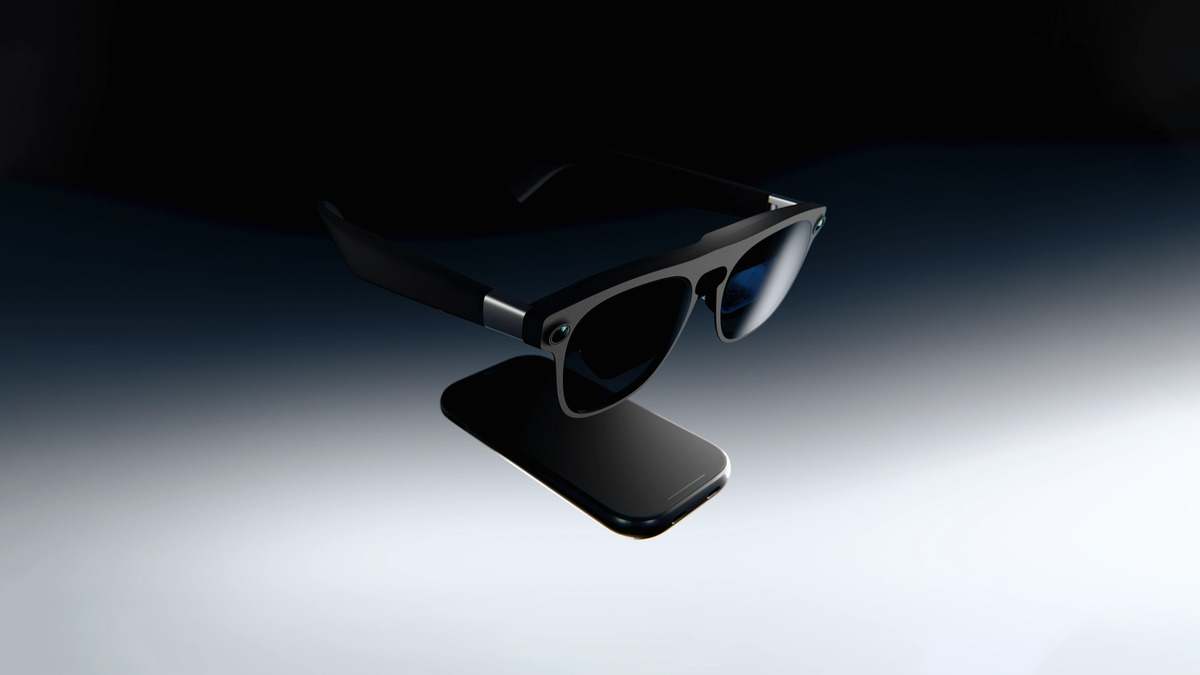 XREAL's Project Aura features binocular optical see-through displays with a 70-degree field of view - the widest in any consumer AR glasses announced to date.
Source: xreal.com
XREAL's Project Aura features binocular optical see-through displays with a 70-degree field of view - the widest in any consumer AR glasses announced to date.
Source: xreal.com
The Developer Layer
Android XR SDK is currently at Developer Preview 3. The emulator, spatial UI components, and Jetpack Compose XR support are all available now. Google replaced the MediaPipe Tasks API with a Unified Android AI Core framework that handles both on-device and cloud inference routing transparently.
Gemini Live API
The Gemini Live API is how audio-first glass apps work. It manages the full voice loop - microphone input, Gemini processing, speaker output - through Firebase AI Logic. The key abstraction is a persistent LiveSession that keeps context across a conversation without re-establishing connections per query.
import com.google.firebase.ai.type.LiveGenerativeModel
import com.google.firebase.ai.type.LiveSession

// Initialize model for Android XR glasses
val liveModel = FirebaseAI.getInstance()
    .liveModel("gemini-2.5-pro")

// Open a persistent session - context survives across turns
val session: LiveSession = liveModel.startSession()

// Stream audio in and collect text overlays or spoken responses
session.sendAudio(audioBytes)
session.collect { response ->
    // Route to display overlay or audio output
    when (response.type) {
        ResponseType.TEXT -> glasses.showOverlay(response.text)
        ResponseType.AUDIO -> glasses.speak(response.audioBytes)
    }
}
The Live API requires a persistent internet connection and has per-project concurrent session limits. Fully offline operation isn't available for anything beyond basic wake-word detection. Google hasn't published specific latency SLAs for the Live API on glasses hardware yet.
Edge-to-Cloud Routing
For visual understanding, Project Astra runs on Gemini 2.5 Pro and enables the contextual query demos from today's keynote - pointing at an object and asking what it is, or reading text in a foreign language and hearing a translation. The SDK's EdgeToCloudInferenceRouter decides whether a visual query runs on-device or offloads based on available compute and latency budget. Developers can set a hard on-device-only preference for privacy-sensitive applications, though this restricts which Gemini features are available.
What Gemini Does on Your Face
The I/O demos covered four capabilities that worked live onstage:
Real-time translation - audio input in one language, synthesized output in another, sub-second latency. Google demonstrated a conversation across two languages without either speaker needing to hold a phone.
Turn-by-turn navigation - walking directions as waveguide overlays, no phone required. The demo showed street-level navigation in San Francisco without taking the phone out of a pocket.
Visual lookup - point at a restaurant menu, storefront, or document and ask a question. Project Astra's vision layer handles scene parsing; Gemini 2.5 Pro handles the answer.
Messaging - compose short messages by voice and receive previews as display overlays. The demo showed composing a reply while walking without stopping to look at a phone screen.
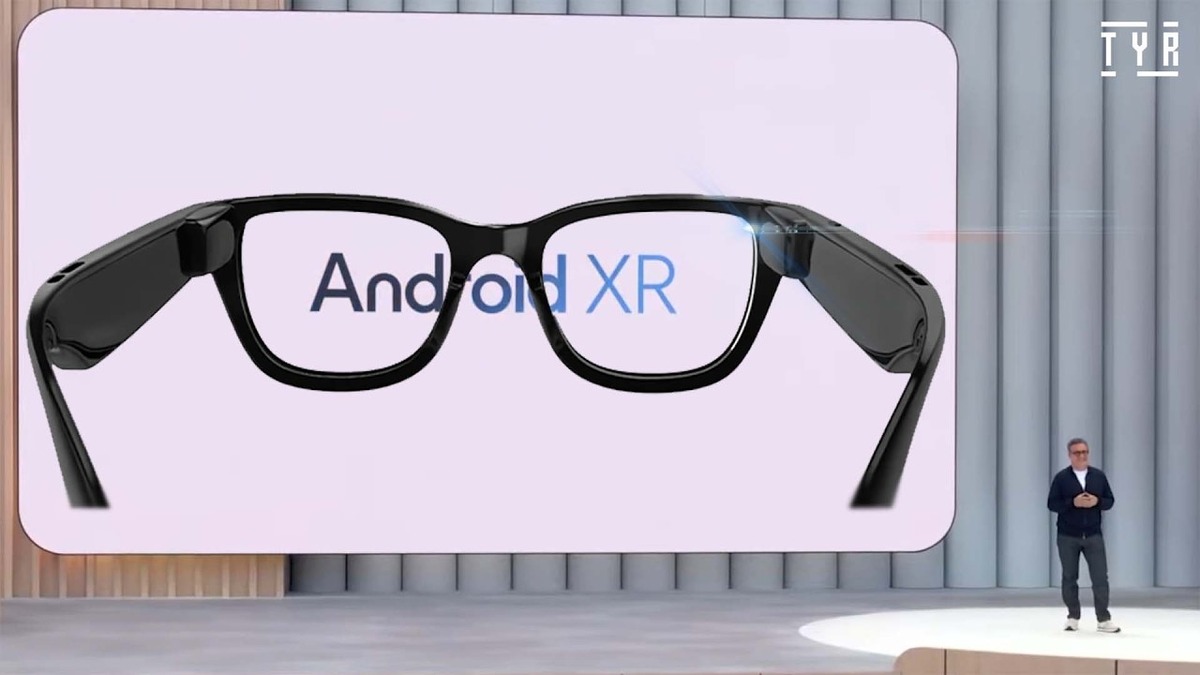 The Android XR glasses were shown onstage at the Google I/O 2026 keynote. The form factor aims to look like conventional eyewear.
Source: youtube.com
The Android XR glasses were shown onstage at the Google I/O 2026 keynote. The form factor aims to look like conventional eyewear.
Source: youtube.com
None of these are new concepts - Google Glass attempted navigation and image search in 2013. The meaningful difference is that Gemini 2.5 Pro has enough reasoning depth to handle ambiguous contexts and multi-turn follow-up questions where Glass fell apart. Whether the latency is actually usable in noisy, high-motion real-world conditions is still unverified.
Where It Falls Short
Battery runtime for every device was undisclosed at I/O. Samsung's 155mAh cell is small by phone standards - roughly a quarter of what a standard Bluetooth headset carries. Active inference puts more load on that cell than passive audio playback. Real-world runtime in continuous-use scenarios is unknown.
Pricing for Project Aura, Warby Parker glasses, and Gentle Monster glasses was not announced. Warby Parker's existing prescription frame lineup runs $95 to $295 per pair; where smart glasses fit in that pricing structure is an open question.
Privacy handling uses LED indicators to signal camera and microphone activity. That's the same approach Meta uses for Ray-Ban smart glasses, and it addresses user awareness without addressing consent for people nearby. Google Glass faced serious backlash on exactly this point in 2014, and the LED-only solution doesn't change that.
XREAL's tethered compute model for Project Aura limits real-world developer testing without a cable to a belt pack. A wireless mode hasn't been announced.
The Gemini Omni video model leak was the flashier AI story headed into today's keynote. Android XR glasses are a slower bet: platform infrastructure across five hardware partners rather than a single product launch. The Gemma 4 family and Unified Android AI Core give developers a consistent target to build against, but the $379 Samsung entry point only works if battery life holds up in actual use, and none of today's demos answered that.
Sources:
- Android Authority: Android XR Glasses I/O 2026 Preview
- Android Central: Google I/O 2026 Live Blog
- The Next Web: Google I/O 2026 Gemini Intelligence
- Samsung Gadget Hacks: Galaxy Glasses July 2026 Launch
- VR.org: Everything XR at the Android Show
- The Gadgeteer: Google Android XR AI Smart Glasses
- Android Developers: Gemini Live API for Android XR
- Android Developers: Enhance Android XR with Gemini
- Let's Data Science: Google Unveils Android XR Smart Glasses
- AR Insider: AI/XR Beats - Summer of Smart Glasses

