
Amazon Bets $50B on OpenAI to Build Stateful AI on AWS
Amazon invests $50 billion in OpenAI, commits 2GW of Trainium capacity, and becomes the exclusive third-party distributor for OpenAI Frontier - reshaping how enterprises deploy AI agents on AWS.
 7 min read
Amazon just wrote the largest check in AI history. The company is investing $50 billion in OpenAI, expanding their existing cloud agreement by $100 billion over eight years, and committing OpenAI to consume 2 gigawatts of AWS Trainium capacity. In return, AWS becomes the exclusive third-party cloud distributor for OpenAI Frontier - the enterprise platform for launching teams of AI agents in production.
The centerpiece of the deal is not a model. It's infrastructure: a new Stateful Runtime Environment, co-built by AWS and OpenAI, that gives AI agents persistent memory, tool state, and identity boundaries across sessions. If you have ever built an agentic workflow that resets on every API call, this is the piece that was missing.
TL;DR
- Amazon invests $50B in OpenAI ($15B now, $35B conditional on milestones and IPO)
- OpenAI expands AWS usage from $38B to $138B over 8 years, consuming 2GW of Trainium3/Trainium4 capacity
- AWS becomes exclusive third-party cloud distributor for OpenAI Frontier
- New Stateful Runtime Environment on Bedrock gives AI agents persistent memory, tool state, and identity across sessions
- Azure keeps exclusive stateless API access - creating a split-brain cloud architecture for OpenAI customers
The Money
$50 Billion in Two Tranches
Amazon's investment starts with $15 billion upfront, with the remaining $35 billion unlocked when OpenAI hits undisclosed milestones and completes an IPO or direct listing. This is part of OpenAI's broader $110 billion funding round - also backed by Nvidia ($30B) and SoftBank ($30B) - making it the largest private funding round in history.
The expanded cloud agreement is where the real infrastructure commitment lives. OpenAI's existing $38 billion multi-year AWS contract gets extended by another $100 billion over eight years. William Blair analysts estimate that works out to roughly $17 billion per year in AWS revenue if spending is spread evenly - about 11% of AWS's projected 2026 revenue.
"Combining OpenAI's models with Amazon's infrastructure and global reach helps us put powerful AI into the hands of businesses and users at real scale." - Sam Altman, CEO of OpenAI
| Deal Component | Value | Timeline |
|---|---|---|
| Amazon equity investment | $50B ($15B + $35B) | Immediate + conditional |
| Cloud agreement expansion | $100B | 8 years |
| Trainium capacity commitment | 2 GW | Trainium3 now, Trainium4 from 2027 |
| Frontier distribution | Exclusive third-party | Ongoing |
 The deal commits OpenAI to consuming 2 gigawatts of AWS Trainium capacity - enough to power a mid-sized city.
The Stateful Runtime Environment
What It Actually Does
The headline feature is a Stateful Runtime Environment, co-developed by AWS and OpenAI, that'll be available through Amazon Bedrock. If you have worked with RAG pipelines or built AI agents on top of stateless APIs, you know the pain: every new request starts from scratch. Context has to be rehydrated, tool state is lost, and multi-step workflows need custom orchestration glue to hold together.
The Stateful Runtime fixes this by baking persistence into the platform layer. Agents running inside it can:
- Maintain working memory across sessions without rehydrating context for each call
- Retain tool and workflow state with built-in retry coordination and exception handling
- Propagate identity and permissions through AWS IAM, VPC boundaries, and audit logging
- Resume after interruptions and coordinate multi-step processes safely
"If you're an AI application developer, you don't want to start from scratch every time you're actually using models." - Andy Jassy, CEO of Amazon
How It Differs From Stateless APIs
This is where the deal gets architecturally interesting. Microsoft Azure retains exclusive distribution of OpenAI's stateless APIs - the standard request/response interface most developers know today. AWS gets the stateful layer. In practice, this means enterprises could end up running OpenAI models on two clouds simultaneously: Azure for simple chat and summarization, AWS for long-running agent orchestration.
| Capability | Stateless (Azure) | Stateful (AWS) |
|---|---|---|
| Session persistence | None - developer manages state | Built-in across hours or days |
| Tool/workflow state | External orchestration required | Native retry and checkpoint |
| Identity propagation | Developer-managed | AWS IAM, VPC, audit trails |
| Best for | Chat, summaries, code snippets | Agent orchestration, IT runbooks, financial workflows |
| Availability | Now | Coming months |
The runtime runs inside the customer's own AWS environment, integrated with Bedrock AgentCore. Each agent session operates in an isolated microVM kernel - so one customer's state never leaks into another's.
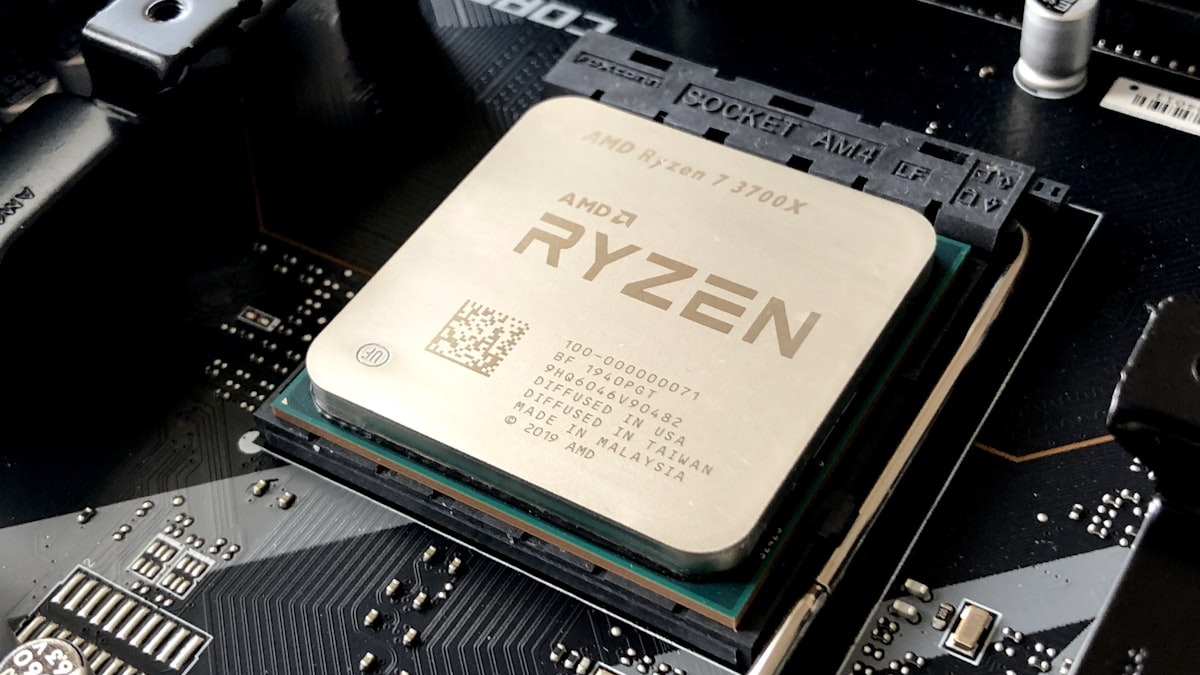 OpenAI's Trainium commitment spans both current Trainium3 and next-gen Trainium4 chips, expected in 2027.
The Trainium Bet
2 Gigawatts of Custom Silicon
OpenAI committing to 2 gigawatts of Trainium is a meaningful endorsement of Amazon's custom AI chips at a time when the company is trying to prove Trainium can win workloads currently led by Nvidia's H100 and B200 clusters. The commitment spans both Trainium3 (available now) and Trainium4, which is expected to begin delivery in 2027 with markedly higher FP4 compute performance, expanded memory bandwidth, and increased high-bandwidth memory capacity.
For context, OpenAI and Amazon will also collaborate on customized models optimized for Trainium hardware - models tuned for Amazon's own customer-facing applications. This means Trainium isn't just hosting OpenAI's existing weights. It's becoming a first-class training and inference target for new model development.
What This Means for the Competitive Map
Combined with its existing multi-billion dollar investment in Anthropic, Amazon now holds meaningful partnerships with the two largest independent AI labs. Both are using its custom silicon. Both are distributing through Bedrock. This is the clearest signal yet that AWS is positioning itself as the Switzerland of AI infrastructure - a neutral platform where competing model providers coexist.
Google Cloud has Gemini but no comparable third-party model partnerships at this scale. Microsoft has the deepest OpenAI integration through Azure, but the stateful runtime carve-out means AWS now owns the orchestration layer that enterprises will need as they move from prototyping to production-scale agent deployment.
 AWS is expanding capacity to support both OpenAI and Anthropic workloads through its Bedrock platform.
Where It Falls Short
The Split-Brain Problem
The Azure-for-stateless, AWS-for-stateful split sounds clean on paper. In practice, enterprises running OpenAI models across both clouds will face real operational complexity. State formats and control APIs for the runtime haven't been published yet. If they are proprietary to AWS - and there's no indication they won't be - customers who adopt the Stateful Runtime are locking themselves into AWS for their agent orchestration layer.
No Pricing, No Benchmarks
Amazon and OpenAI haven't disclosed pricing for the Stateful Runtime or how Trainium performance compares to Nvidia's latest silicon for OpenAI-specific workloads. The 2GW commitment is impressive, but without public benchmarks showing Trainium3 versus H100 or B200 on actual OpenAI training runs, it's hard to assess whether this is a technical choice or a financial one.
The Anthropic Tension
AWS now distributes both OpenAI Frontier and Anthropic's Claude through Bedrock. That's a competitive advantage for customers - but a potential minefield for the model providers. Anthropic has been AWS's flagship AI partner since Amazon led its $4 billion investment. Adding OpenAI's enterprise platform to the same distribution channel could dilute Anthropic's positioning, even if the stateful/stateless split creates nominally different market segments.
Timeline Risk
The Stateful Runtime isn't available yet. General availability is expected "in the coming months" from the February 27 announcement. The second tranche of Amazon's investment ($35B) is gated on milestones and an OpenAI IPO that hasn't been scheduled. And Trainium4, the chip that would make the 2GW commitment most compelling, does not arrive until 2027. There's a lot of future tense in this deal.
This is the biggest infrastructure bet in AI history, and it isn't about models - it's about the runtime layer that makes models useful at enterprise scale. If the Stateful Runtime delivers what AWS and OpenAI are promising, it could become the default control plane for agentic AI in production. But "could" is doing a lot of heavy lifting until the pricing, benchmarks, and GA date appear.
Sources:
- OpenAI and Amazon announce strategic partnership - About Amazon
- Amazon invests $50B in OpenAI, deepens AWS partnership with expanded $100B cloud deal - GeekWire
- OpenAI announces $110 billion funding round with backing from Amazon, Nvidia, SoftBank - CNBC
- CNBC Transcript: Amazon CEO Andy Jassy and OpenAI CEO Sam Altman on Squawk Box - CNBC
- Amazon, OpenAI forge multi-faceted partnership: Dissecting the deal - Constellation Research
- Amazon's $50B OpenAI Investment Reshapes the AI Power Map - WebProNews
- Stateful Runtime on AWS Bedrock: A New Control Plane for Enterprise AI - Windows Forum
- Introducing the Stateful Runtime Environment for Agents in Amazon Bedrock - OpenAI
