
Alibaba Takes on Meta With Qwen AI Smart Glasses
Alibaba unveils Qwen-branded AI smart glasses at MWC Barcelona with pre-orders starting March 2, challenging Meta's dominance in a wearable AI market that tripled last year.
 7 min read
Alibaba is done being just an AI model company. At Mobile World Congress in Barcelona, the Chinese tech giant is launching Qwen-branded smart glasses - its first global AI hardware product - with pre-orders opening March 2. The move puts Alibaba on a direct collision course with Meta, which sold 7 million pairs of Ray-Ban smart glasses last year and controls roughly 80% of the market.
TL;DR
- Alibaba launches Qwen AI smart glasses at MWC 2026, pre-orders start March 2
- The glasses build on the Quark S1 platform: Snapdragon AR1 chip, 12MP Sony camera, Micro LED display, swappable batteries
- Alibaba plans to release AI rings and earphones later this year for global markets
- Meta sold 7 million pairs of AI glasses in 2025 and is scaling production to 20 million units
- Apple, OpenAI, and ByteDance are all developing competing AI wearables
The Product
The Qwen glasses represent a rebranding and global expansion of Alibaba's Quark AI Glasses, which launched in China in November 2025. An Alibaba insider confirmed to TechNode that both product lines share identical algorithms and are supported by the same hardware and software teams, but future models will ship under the Qwen brand for international distribution.
Hardware Specs
The platform is built around Qualcomm's Snapdragon AR1 chip - the same processor designed specifically for augmented reality wearables. The display uses a Micro LED single-color light engine with diffractive waveguide lenses, delivering up to 2,300 nits of eye brightness. A Sony IMX681 sensor provides 12MP photos and 3K video at 30fps, with cloud-based AI upscaling to 4K.
| Spec | Value |
|---|---|
| Processor | Qualcomm Snapdragon AR1 + BES2800 co-processor |
| Camera | Sony IMX681, 12MP, 109-degree FOV |
| Display | Micro LED with diffractive waveguide, 2,300 nits |
| Battery | 2x 280mAh swappable (hot-swap capable) |
| Audio | 5-mic array with bone conduction |
| Weight | Balanced 1:1 distribution, 7.5mm temple width |
The swappable battery design is a standout feature. Two 280mAh cells sit in the temple arms and can be hot-swapped without powering down the device - a direct answer to the battery anxiety that plagues every wearable in this category. Alibaba also sells a 700mAh MiniBag dock and a 2,500mAh charging case for extended use.
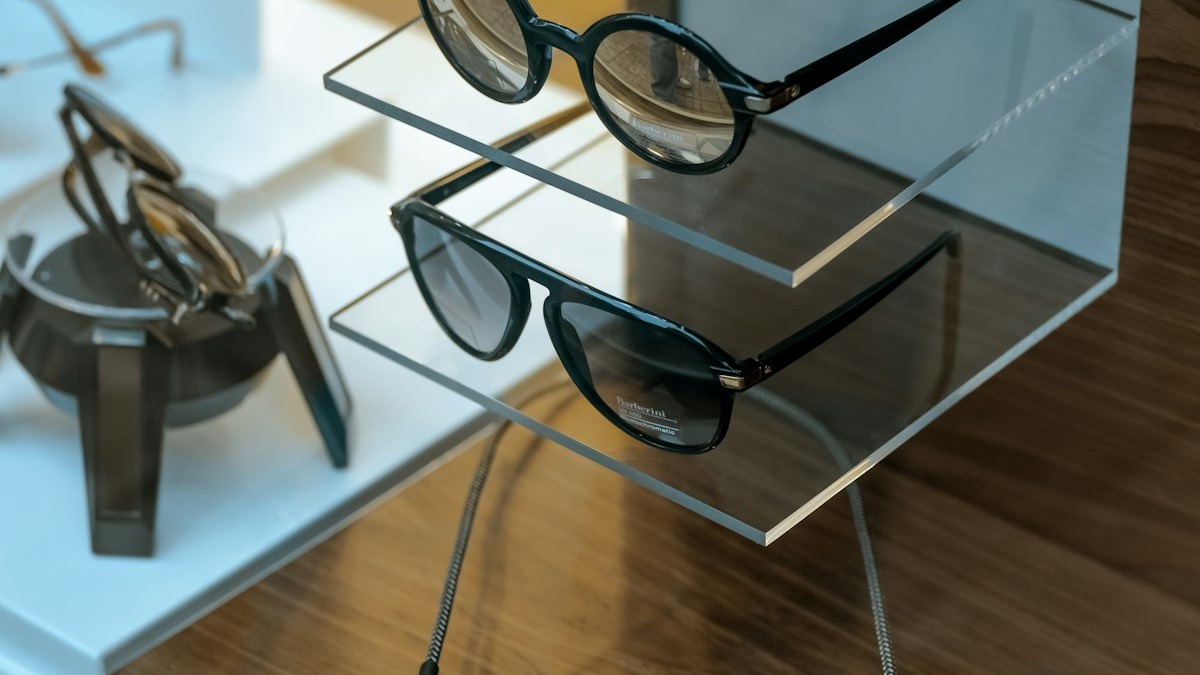 The smart glasses category is heating up. Multiple manufacturers are competing for shelf space as AI-enabled eyewear shipments more than doubled in 2025.
AI Integration
The glasses are deeply integrated with Alibaba's Qwen 3.5 large language model through the Qwen App. Users can trigger the assistant with "Hello Qwen" or through touch controls on the temple. The AI handles real-time translation, visual question answering, navigation, and - critically for Alibaba's business model - seamless ordering through Taobao, Alipay, and Fliggy.
"The greatest potential of AI lies not in mobile screens but in how to take over the digital world," an Alibaba executive told 36Kr.
Alibaba's technical infrastructure gives it a cost advantage in powering the AI backend. The company's Qwen3.5-Plus model, released on February 16, reduced video memory usage by 60% and increased inference throughput by up to 19 times. Its API costs just 0.8 yuan per million tokens - roughly one-eighteenth the price of Gemini 3 Pro.
The Competition
Meta's Dominance
Meta is the clear incumbent. EssilorLuxottica, the Ray-Ban maker, reported that it more than tripled Meta AI glasses sales in 2025, moving over 7 million pairs. The company is now discussing plans to scale production to 20 million units annually by the end of 2026. Meta holds an estimated 80% market share in AI-enabled smart glasses.
The Ray-Ban Meta glasses benefit from brand recognition, established retail distribution through thousands of optical stores worldwide, and deep integration with Meta's AI assistant. At $299, they are also priced aggressively for the category.
As we covered in our Apple wearables deep dive, Cupertino is fast-tracking three AI wearable devices - smart glasses, a pendant, and camera AirPods - all built around a Gemini-powered Siri. Apple's entry is expected in late 2026, and it brings the distribution power and brand loyalty that could reshape the entire market.
The Rest of the Field
The competitive landscape is getting crowded fast:
- OpenAI has assembled a hardware team of over 200 engineers and is working with Jony Ive on consumer devices including smart glasses, though mass production isn't expected until 2028
- ByteDance is developing its own AI glasses and headphones
- Xiaomi already sells smart glasses in China starting at 1,999 yuan
- Baidu offers the Xiaodu AI Glasses Pro at 2,299 yuan
What Alibaba Gets Right - and What It Doesn't
The Open-Source Angle
Alibaba's biggest structural advantage is that Qwen is open-source. Every other major player in the AI glasses race - Meta, Apple, OpenAI - runs proprietary models. Open-source AI on a wearable device means third-party developers can potentially build custom experiences on top of the platform. It also means Alibaba can iterate on the model without the licensing costs that'll constrain competitors.
The pricing data supports this. Quark AI Glasses S1 launched at 3,799 yuan ($537) in China, which is substantially more expensive than Meta's Ray-Ban offering. But Alibaba is also releasing a camera-only G1 model starting at 1,899 yuan ($277), which undercuts Meta on price while still offering the core AI features.
The Distribution Problem
But distribution is where Alibaba faces its steepest climb. Meta has EssilorLuxottica's global optical store network. Apple has Apple Stores. Alibaba has 604 partner optical stores across 82 cities - all in China. The MWC launch signals global ambitions, but building international retail presence for a hardware product is a fundamentally different challenge than distributing an open-source model via Hugging Face.
The Qwen brand also lacks the consumer recognition of Ray-Ban or Apple outside of technical circles. In the AI assistant wars, brand trust matters. Consumers are being asked to put a camera and microphone on their face connected to an always-listening AI - that requires a level of trust that technical superiority alone doesn't build.
The Ecosystem Play
Where Alibaba's strategy gets interesting is the broader hardware lineup. The company plans to release AI rings and AI earphones later in 2026, creating a multi-device ecosystem. This mirrors Meta's approach - Ray-Ban glasses, neural wristbands, and smartwatches - but anchored in Alibaba's commerce and services platform rather than a social media graph.
For Chinese consumers who already live inside Taobao, Alipay, and Amap, the Qwen glasses could be truly useful in ways that Meta's product isn't. Ordering food, hailing rides, and making payments through voice commands on glasses that already know your preferences is a compelling pitch. Whether that pitch translates outside China remains the open question.
 MWC Barcelona runs March 2-5 at Fira Gran Via, where Alibaba will open Qwen glasses pre-orders on the first day.
The Bigger Picture
The AI glasses race is a proxy war for something larger: which company's AI assistant becomes the default interface for your daily life. The screen era is showing cracks - as OpenAI recently acknowledged when it bet heavily on audio - and the companies building wearable AI hardware are positioning for what comes next.
Global smart glasses shipments more than doubled in the first half of 2025, according to Counterpoint Research. The smart eyewear market is projected to exceed $30 billion by 2030. With nearly $700 billion flowing into AI infrastructure this year, the hardware layer is the next battleground.
Alibaba's timing is deliberate. Launching at MWC, with pre-orders the same day, signals that this isn't a concept demo. It's a product, with a price, and a ship date. Whether the world's largest mobile industry trade show is the right venue to challenge Meta's Ray-Ban fortress is another matter. But the message is clear: the AI model wars are spilling into the physical world, and Alibaba intends to be there when they do.
Sources:
- MWC 2026: Alibaba to launch new smart glasses powered by Qwen AI assistant - South China Morning Post
- Qwen to unveil AI smart glasses at MWC 2026, plans global rollout of AI hardware lineup - TechNode
- Ray-Ban maker EssilorLuxottica says it more than tripled Meta AI glasses sales in 2025 - CNBC
- Qianwen to Unveil AI Glasses, Headphones, and Rings Amid Tech Giants' Race for New AI Entry Points - 36Kr
- Alibaba Quark AI Glasses go on sale: Price, specs - CNBC
- OpenAI Says 200+ Staff Are Building Speaker and Glasses in 2026 - Glass Almanac
