
Alibaba's Qwen-Robot Suite Targets Physical AI Work
Alibaba launches three open-weight models for robot manipulation, navigation, and world prediction, built on a shared Qwen3.5 backbone with open weights.
 6 min read
The core bottleneck in robotics AI has never been compute or model size - it has been fragmentation. Manipulation models, navigation models, and world models have each evolved in separate research silos, with incompatible representations and no shared backbone. Today Alibaba's Tongyi Lab is taking a direct shot at that problem with the Qwen-Robot Suite, three specialized models sharing a common Qwen3.5 architecture and designed to operate as a coordinated physical AI stack.
Key Specs
| Detail | |
|---|---|
| Models released | Qwen-RobotManip, Qwen-RobotNav, Qwen-RobotWorld |
| Backbone | Qwen3.5-4B (vision-language) |
| Action decoder | 1.15B DiT flow-matching |
| Training data | 38,000+ hours of interaction data |
| Top benchmark | RoboChallenge generalist: 45% task success |
| Open source | Weights and code released |
| Status | Alibaba Cloud enterprise pilot active |
Three Models, One Physical Stack
The suite is designed around a division of labor that mirrors how robotics systems actually work in production: a layer for fine manipulation, a layer for spatial navigation, and a layer for environmental prediction. Each model is purpose-built, but they share the same Qwen3.5 foundation and are trained to pass state information between them.
Qwen-RobotManip - The Manipulation Layer
This is the most technically complete piece of the launch. Qwen-RobotManip pairs the Qwen3.5-4B vision-language backbone with a 1.15 billion parameter DiT (Diffusion Transformer) flow-matching action decoder - roughly 5.15B parameters total. The DiT decoder produces continuous joint trajectories rather than discrete action tokens, which produces smoother physical motion and avoids the quantization artifacts that plague token-based approaches.
The standout engineering decision is cross-embodiment training. Rather than fitting separate weight sets to each robot arm type, Qwen-RobotManip converts heterogeneous robot data into a canonical state-action representation. A robot arm with 6 joints and a robot hand with 16 degrees of freedom both get normalized into the same 80-dimensional vector space before training. This lets the model generalize across hardware without requiring per-platform fine-tuning runs.
Training covered more than 38,000 hours of open-source interaction data, assessed across more than 500 simulation tasks and 80 real-world tasks. Benchmark results: 97.9% on LIBERO, 83.6% on ALOHA dual-arm familiar tasks, 76.9% on ALOHA out-of-distribution tasks, and 73.7% on Simpler-WidowX. On the RoboChallenge generalist track it topped the leaderboard with a 45% task success rate and a process score of 59.83.
For a deeper technical breakdown of the model architecture, see the Qwen-RobotManip model page.
Qwen-RobotNav - The Navigation Layer
The navigation model is architecturally the most unusual piece. Alibaba embedded Model Context Protocol (MCP) tool interfaces directly into the motion-control layer - meaning Qwen-RobotNav can call external APIs mid-navigation while planning physical paths. The practical effect is that four robotics tasks that have historically lived in separate processes now run in a single computing thread: natural language instruction following, real-time object tracking, goal-directed navigation, and autonomous edge driving.
Whether this MCP integration holds up in production environments with spotty connectivity is an open question. The architecture is elegant; the operational requirements are demanding.
Qwen-RobotWorld - The World Model
The world model processes video streams to predict how physical scenes will evolve before the robot commits to any action. This is the "think before you touch" layer - letting the system simulate "what happens if I push that box" before executing the push. For deployed robotics where mistakes have physical and financial costs, predictive rollout capability is a genuine safety advantage over purely reactive control.
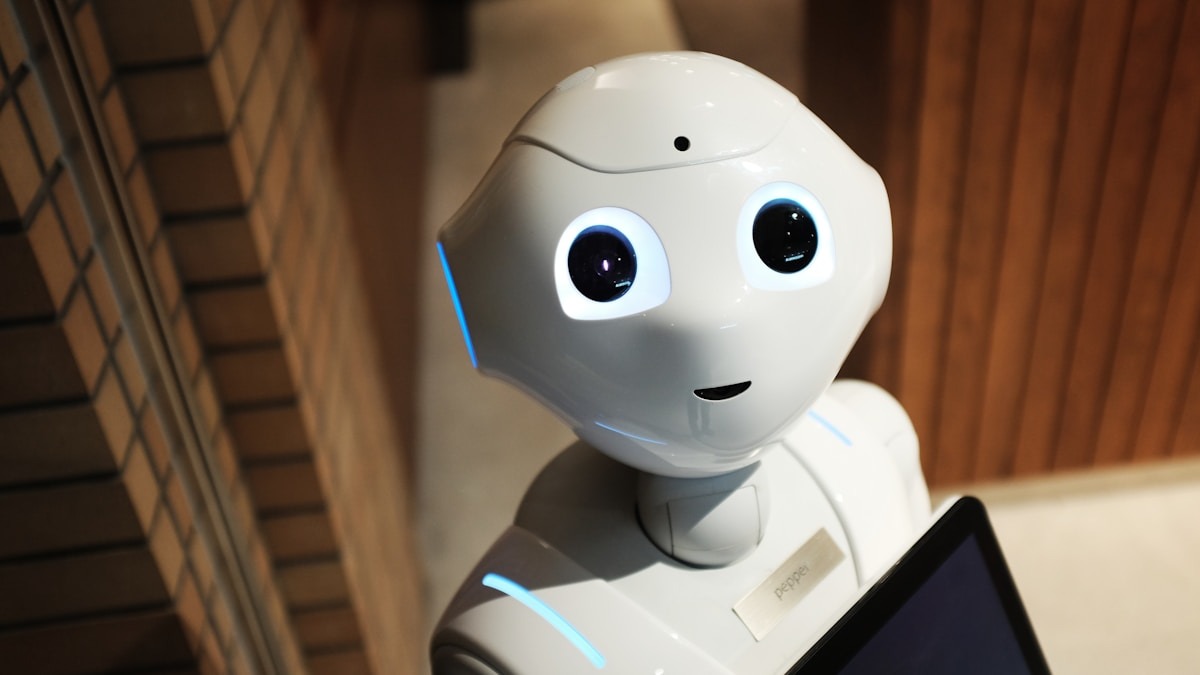 Robotic manipulation is the hardest physical AI task - continuous joint trajectories require sub-millimeter precision that token-based approaches struggle to deliver.
Source: unsplash.com
Robotic manipulation is the hardest physical AI task - continuous joint trajectories require sub-millimeter precision that token-based approaches struggle to deliver.
Source: unsplash.com
Benchmark Position
Against the current field, the Qwen-Robot Suite sits as the only open-weight option with frontier-level manipulation claims:
| Model | Operator | LIBERO | Task Success | Open Weights | Approach |
|---|---|---|---|---|---|
| Qwen-RobotManip | Alibaba | 97.9% | 45% (RoboChallenge) | Yes (Apache 2.0) | VLA + DiT decoder |
| NVIDIA GR00T N1.5 | NVIDIA | N/A | Strong (setup-specific) | Limited | Dual-system fast/slow |
| Physical Intelligence pi0.5 | Physical Intelligence | High | Best-in-class dexterity | No (partner access only) | Diffusion flow |
| Gemini Robotics ER 1.6 | Google DeepMind | N/A | Strong | No | Language-first action |
The Qwen-Robot Suite's headline advantage is open weights under Apache 2.0 - something that NVIDIA's GR00T and Google's Gemini Robotics ER 1.6 don't offer at equivalent capability levels. Physical Intelligence's pi0.7 delivers better raw dexterity numbers but requires a partnership agreement and can't be self-hosted.
Open Weights and Deployment
The practical implication of open weights is significant. Any team running a Qwen3.5-based language model pipeline can now extend it into physical control without buying into a proprietary robotics stack. The embodiment-aware prompt conditioning built into the VLA layer means describing a new robot platform in text is enough for the model to adapt its action outputs - no additional fine-tuning pass required for each hardware variant.
The suite is in pilot testing with selected Alibaba Cloud enterprise clients. Token Foundry, the new business unit formed by merging Tongyi Lab with Alibaba's Future Life division, is overseeing deployment. That organizational context matters: this isn't a research demo sitting in a GitHub repo. There's a commercial deployment track already running.
For developers already building on the open-source robotics ecosystem, the suite complements existing frameworks like LeRobot v0.5 and creates a plausible path to Qwen-based agents that can control physical hardware directly.
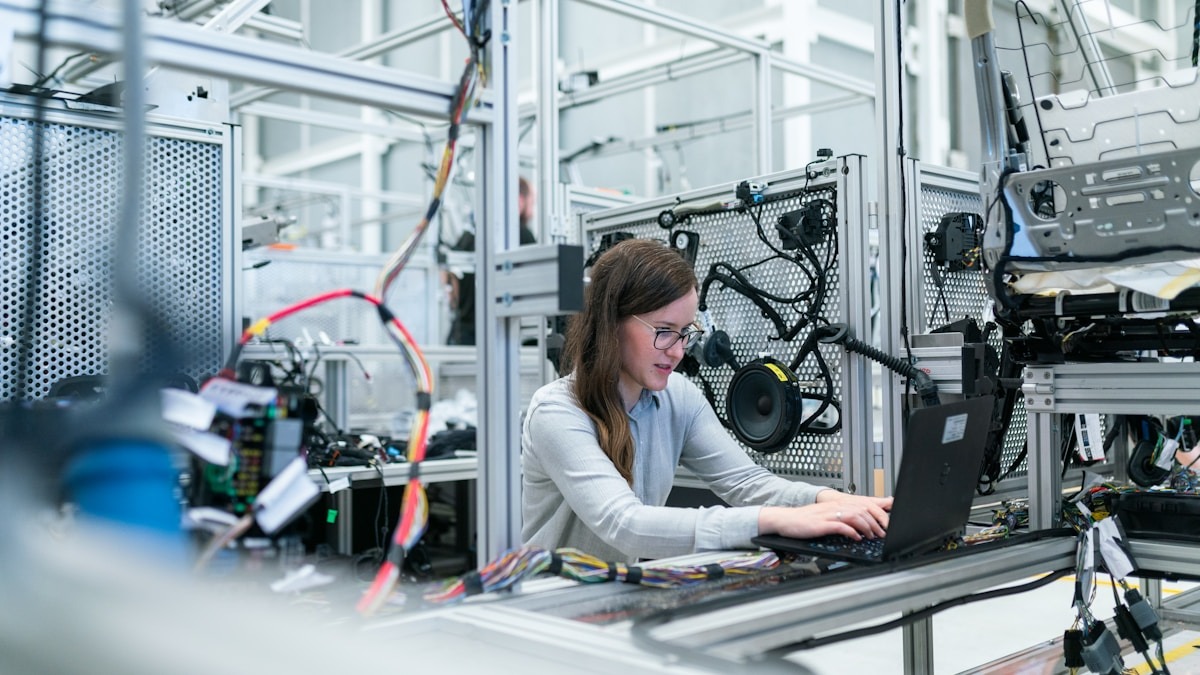 Navigation in unstructured environments requires real-time object tracking, path replanning, and instruction following running concurrently - exactly what Qwen-RobotNav unifies.
Source: unsplash.com
Navigation in unstructured environments requires real-time object tracking, path replanning, and instruction following running concurrently - exactly what Qwen-RobotNav unifies.
Source: unsplash.com
What To Watch
Several things need independent verification before this suite can be taken at face value:
The 45% task success rate on RoboChallenge is a generalist benchmark across varied tasks - individual application performance will vary widely. A 45% average across heterogeneous tasks could mean 90% on pick-and-place and 15% on precision assembly, or vice versa.
The MCP integration in RobotNav introduces a dependency on stable API connectivity in environments where that's not guaranteed. Edge deployments in manufacturing or logistics will need to understand what happens when the external tool calls fail.
Cross-embodiment generalization claims need testing outside Alibaba's own pilot client hardware. The canonical representation approach is technically sound but the generalization bounds are not yet published.
Finally, the NVIDIA Alpamayo model and GR00T ecosystem have a head start on tooling and simulation integration. Matching benchmark numbers is the easy part - matching the software ecosystem around those numbers takes longer.
If independent testing confirms the benchmark claims, the Qwen-Robot Suite is structurally positioned to become the open-source foundation for physical AI in the same way that earlier Qwen models became the default backbone for Chinese open-source language model development. The architecture is solid, the training data volume is real, and the Apache 2.0 license removes the partnership friction that limits pi0.5 adoption.
The question is whether a three-model suite targeting the full manipulation-navigation-prediction stack is the right decomposition, or whether the field will converge on unified generalist models that handle everything in one pass. That answer will come from deployment data - and Token Foundry is generating that data now.
Sources:
- Alibaba Unveils Qwen-Robot Suite for Embodied AI - Let's Data Science
- Unified Embodied AI with Qwen-VLA - StartupHub.ai
- Qwen-VLA: Alibaba's Unified Vision-Language-Action Model
- Alibaba Launches Qwen-Robot Embodied Intelligence Models - Phemex
- Alibaba Debuts Suite of AI Models for Robots - PYMNTS
- Alibaba eyes physical world with AI models for robots - SCMP
- Open-Source AI June 2026 - devFlokers

