
AI Is Killing Desk Jobs and Begging for Electricians
A 439,000-worker construction shortage is delaying AI data centers while electricians command $200K salaries and Big Tech scrambles to fill the gap.
 7 min read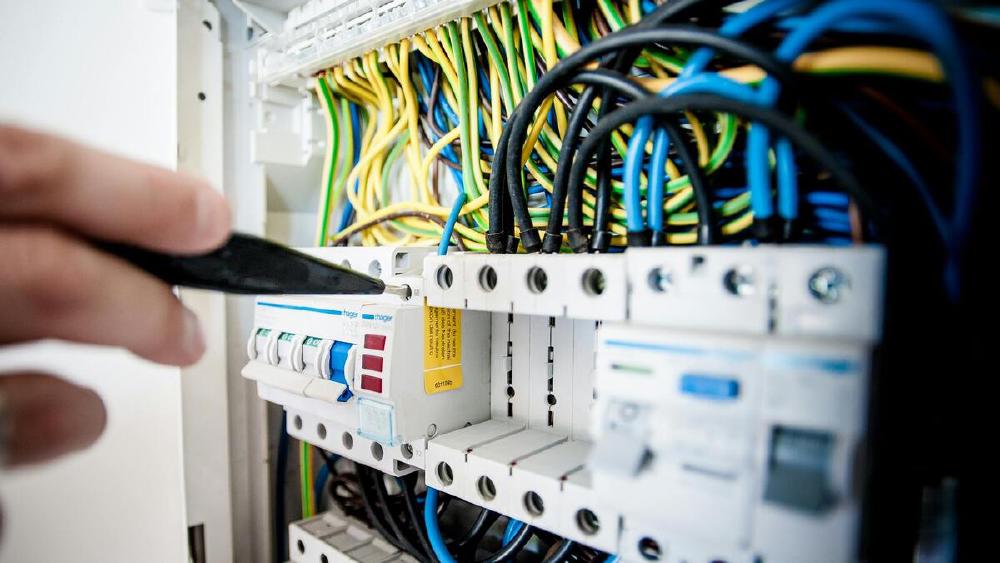
The AI industry just laid off 4,000 white-collar workers at Block in a single afternoon. In the same week, Microsoft admitted it can't find enough electricians to wire its data centers - even at $200,000 a year.
That contradiction is the defining labor story of 2026. Artificial intelligence is simultaneously destroying office jobs and creating an insatiable demand for skilled tradespeople that the economy simply can't supply. The bottleneck threatening AI's future isn't silicon, not energy, not regulation. It's the human hand that pulls the wire.
TL;DR
- The U.S. construction industry is short roughly 439,000 workers, with electricians the most critical gap
- Electrical work accounts for 45-70% of total data center construction costs
- Journeyman electricians working data centers earn $120K-$200K+ annually
- Oracle pushed OpenAI data center completion from 2027 to 2028, partly due to labor shortages
- Google has pledged $15 million to expand electrician training pipelines
- Nearly 30% of union electricians are between ages 50-70, with 20,000 retiring every year
The Numbers Behind the Shortage
The Associated Builders and Contractors trade group estimates a nationwide shortage of about 439,000 skilled construction workers. Electricians sit at the top of that deficit. The industry needs to attract an estimated 349,000 net new workers in 2026 alone just to keep pace with demand - and the pipeline is nowhere near ready.
A Retirement Cliff
Nearly 30% of union electricians are between ages 50 and 70. Roughly 20,000 retire every year. Over the next decade, that adds up to 200,000 exits from the workforce - at exactly the moment the industry needs 300,000 new entrants.
Enrollment Is Growing, but Not Fast Enough
The response from training programs has been real but insufficient. Electrical program enrollments at Midwest Technical Institute surged over 400% in four years, reaching nearly 400 students. Commercial apprenticeship applications increased more than 70% nationwide between 2022 and 2024, climbing from roughly 70,000 to 120,000. IBEW Local 26, serving the Washington D.C. area, doubled its membership since 2018 to more than 14,700 electricians.
Those are encouraging numbers. They're also a fraction of what is needed.
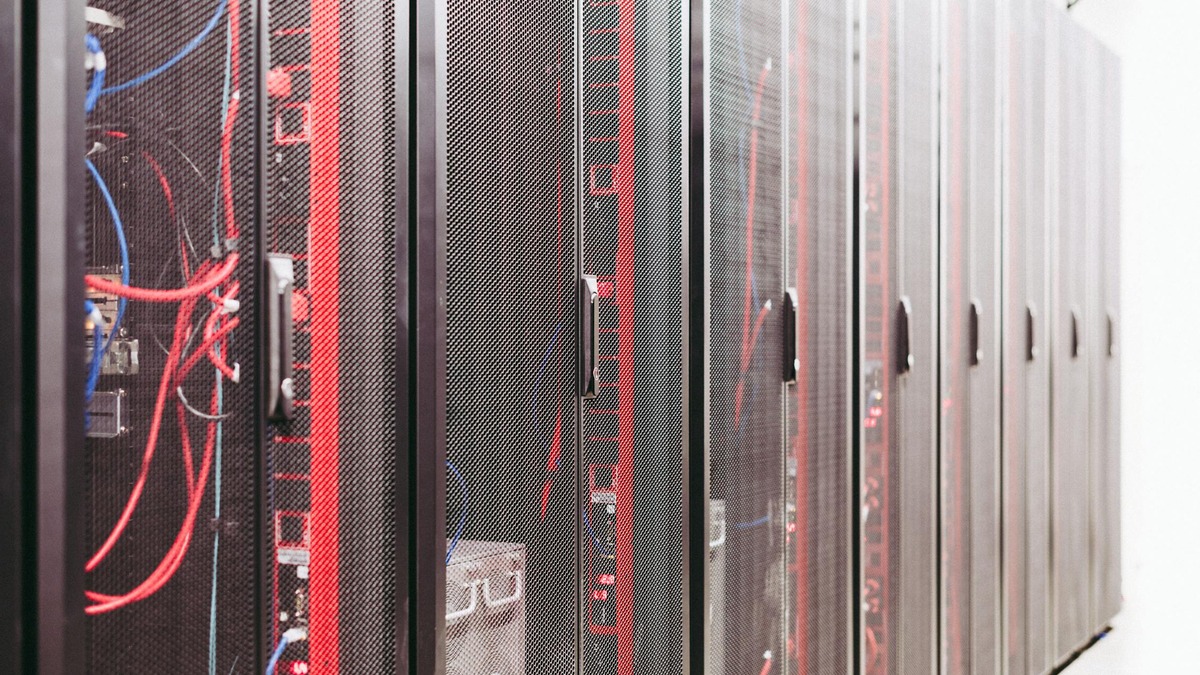 Each of these facilities requires up to 1,500 construction workers at peak build - and electricians are the scarcest of all.
Why Electricians - Not Engineers - Are the Bottleneck
A single data center is 40-50% larger than an average Walmart Supercenter. Peak construction requires up to 1,500 workers. And here is the number that explains everything: electrical work accounts for 45% to 70% of total data center construction costs.
This isn't a matter of laying cable. Data centers require specialized electrical infrastructure - high-voltage switchgear, redundant power distribution, backup generator systems, and precision cooling that depends on electrical integration at every layer. The work demands licensed journeymen with years of training.
"The No. 1 problem slowing U.S. data center expansion is the shortage of electrical talent."
- Brad Smith, President of Microsoft
When Microsoft's president publicly identifies electricians as the primary constraint on his company's AI strategy, the labor market has inverted in ways that no one in Silicon Valley anticipated.
What Big Tech Is Doing About It
The response from the tech industry has ranged from practical to desperate.
Google's $15 Million Bet
Google pledged $15 million in partnership with the Electrical Training Alliance (ETA) to expand the pipeline of electrical workers. The company also warned publicly that a lack of electricians "may constrain America's ability to build the infrastructure needed to support AI." It is a remarkable statement from a company that has spent the last two decades automating jobs out of existence.
Microsoft's 75-Mile Commuters
Microsoft is employing electricians who commute up to 75 miles each way to reach data center sites, with some temporarily relocating. The company is not struggling to offer competitive pay. It's struggling to find enough bodies with the right certifications.
Oracle's Timeline Slippage
Oracle, which is building data centers for OpenAI, shifted completion dates from 2027 to 2028 - partly due to labor shortages, though Oracle has disputed that characterization. Regardless of the cause, the delay is real and it directly affects OpenAI's capacity roadmap.
As we noted in our coverage of CoreWeave's $35 billion infrastructure gamble, the companies pouring billions into AI infrastructure are discovering that money alone doesn't solve supply-side constraints. McKinsey projects $6.7 trillion in cumulative global data center investment by 2030. That figure assumes the workers exist to build it.
The Pay Is Extraordinary
If there is a silver lining, it is this: data center electricians are earning wages that would have seemed absurd five years ago.
| Role | Annual Pay | Location |
|---|---|---|
| Apprentice electrician (starting) | ~$42,000 ($26/hr) | Washington D.C. area |
| Journeyman electrician | ~$120,000 ($59.50/hr) | National average |
| Electrical safety specialist | $225,000 | Oregon |
| Site managing electrician | $200,000+ | Northern Virginia |
| Construction supervisor | $100,000+ | Columbus, Ohio |
Workers moving into data center construction are seeing 25-30% pay jumps over their previous roles. Additional perks include daily bonuses up to $100, signing bonuses, company vehicles, and even stock options.
The trade-off: 60-hour weeks are becoming standard, and safety concerns are mounting as projects accelerate to meet aggressive corporate timelines.
 Data center construction sites across the U.S. are posting six-figure trade positions while tech companies lay off office workers.
The Irony Nobody Is Talking About
The same week Fortune published its investigation into the electrician shortage, Block laid off nearly half its staff because, in Jack Dorsey's words, AI tools have "changed what it means to build and run a company." The payments company shed 4,000 white-collar workers while data center construction sites across the country posted "help wanted" signs for six-figure trade positions.
This inversion isn't limited to electricians. The broader AI infrastructure buildout is creating demand for HVAC technicians, concrete specialists, pipe fitters, and construction supervisors - the kinds of jobs that cannot be automated by the very technology these workers are building.
Jensen Huang, Nvidia's CEO, said it plainly in January: "A lot of six-figure jobs in plumbing and construction will be unlocked because someone needs to build all these new AI centers." Meta's Hyperion data center project is expected to reach four times the size of Central Park. Somebody has to wire it.
What It Does Not Tell You
The optimistic narrative - that electricians are the new six-figure knowledge workers - obscures several uncomfortable realities.
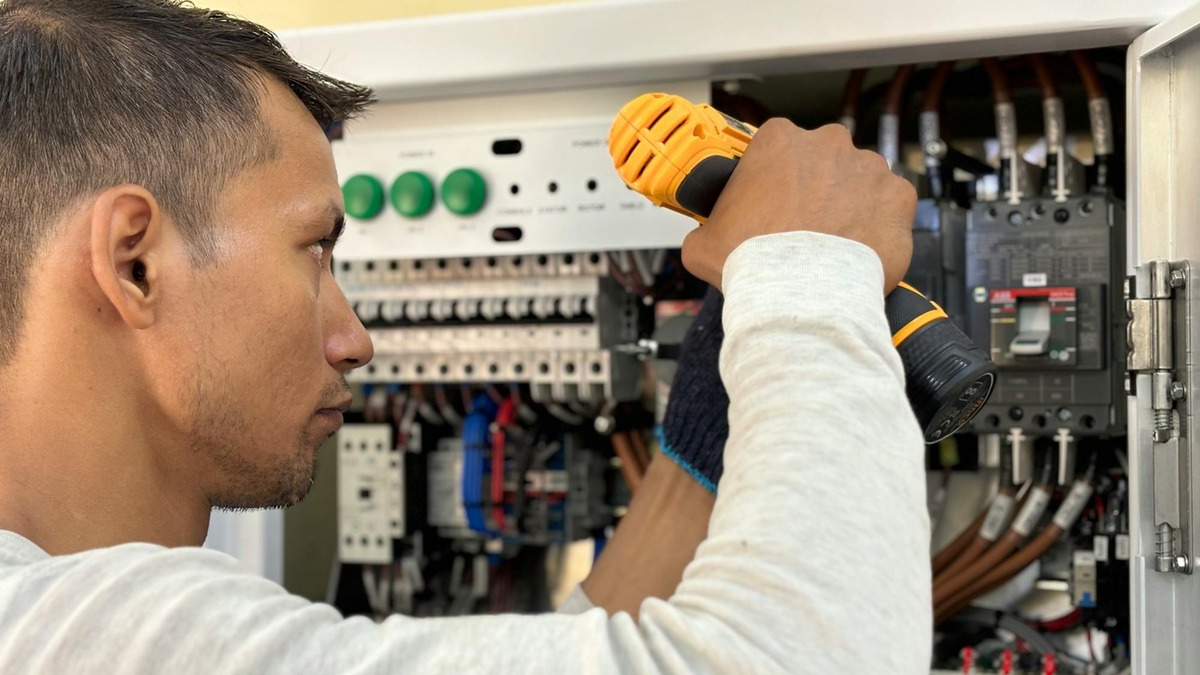 Electrical apprenticeships take four to five years of supervised fieldwork - there's no shortcut to fill the gap.
The Training Gap Is Structural
An electrical apprenticeship takes four to five years. A four-year computer science degree is faster - and now partially replaceable by AI coding tools. The shortage can't be solved by bootcamps or crash courses. These are licensed, regulated positions that require thousands of hours of supervised fieldwork.
Geography Is a Problem
Data centers cluster in specific regions - Northern Virginia, central Ohio, the Pacific Northwest, and parts of Texas. Electricians in those regions are saturated with offers. Electricians elsewhere may not be willing or able to relocate, creating pockets of extreme shortage with pockets of relative surplus.
The Supply Chain Compounds It
As we covered in our RAMmageddon investigation, the AI industry's appetite is straining every link in the supply chain - not just memory chips but electrical components, transformers, and switchgear. Even if the workers existed, the physical materials they need are themselves backordered.
The AI industry has spent the last three years promising that its technology would reshape the labor market. It has. Just not the way anyone expected. The most in-demand worker in the AI economy does not write code, train models, or fine-tune prompts. They carry a conduit bender and a journeyman's license. And there are nowhere near enough of them.
Sources:
