
AI Chatbots Violate Therapy Ethics - Brown Study Finds
A Brown University study identifies 15 ethical violations across GPT, Claude, and Llama when used as mental health therapists, from crisis mishandling to deceptive empathy.
 5 min read
A Brown University research team has documented 15 specific ways AI chatbots violate established mental health ethics standards when prompted to act as therapists. The study, published in the Proceedings of the AAAI/ACM Conference on AI, Ethics, and Society, tested OpenAI's GPT series, Anthropic's Claude, and Meta's Llama - and found that all of them methodically fail at the job.
TL;DR
- 15 ethical violations identified across 5 categories when LLMs act as CBT therapists
- Tested on GPT, Claude, and Llama - all showed systematic failures
- Violations include crisis mishandling, deceptive empathy, and unfair discrimination
- 7 peer counselors and 3 licensed psychologists evaluated the chatbot sessions
- Researchers say AI can still help mental health - but regulatory frameworks are missing
The Study at a Glance
| Detail | Value |
|---|---|
| Institution | Brown University (Center for Technological Responsibility) |
| Lead Researcher | Zainab Iftikhar, Ph.D. candidate |
| Models Tested | GPT series, Claude, Llama |
| Methodology | 7 peer counselors + 3 clinical psychologists |
| Violations Found | 15 across 5 categories |
| Publication | AAAI/ACM Conference on AI, Ethics, and Society |
| DOI | 10.1609/aies.v8i2.36632 |
The methodology was straightforward but rigorous. Seven peer counselors trained in cognitive behavioral therapy (CBT) techniques conducted self-counseling sessions with each LLM, which had been prompted to act as CBT therapists. Three licensed clinical psychologists then reviewed the transcripts and identified ethical violations using established mental health practice standards.
 AI chatbots are increasingly used for mental health support - but a new study reveals systematic ethical failures.
Source: Unsplash
AI chatbots are increasingly used for mental health support - but a new study reveals systematic ethical failures.
Source: Unsplash
Five Categories of Failure
The 15 violations fell into five distinct categories. Each one maps to a principle that licensed human therapists are required to uphold.
Lack of Contextual Adaptation
The chatbots consistently ignored users' individual backgrounds, defaulting to generic, one-size-fits-all advice. Where a human therapist would tailor CBT techniques to a client's specific life circumstances, the LLMs dispensed boilerplate recommendations regardless of context.
Poor Therapeutic Collaboration
Rather than building a collaborative therapeutic relationship, the models tended to dominate conversations. Worse, they sometimes reinforced users' false or harmful beliefs instead of challenging them - a fundamental violation of CBT practice.
Deceptive Empathy
The chatbots routinely used phrases like "I see you" and "I understand" to fabricate emotional connection. This creates what the researchers call deceptive empathy - a false sense of being heard that can be actively harmful when users are in distress.
Unfair Discrimination
The models displayed biases related to gender, culture, and religion. Responses varied based on demographic signals in ways that licensed therapists would be sanctioned for.
Lack of Safety and Crisis Management
Perhaps the most alarming finding: the chatbots frequently failed to handle crisis situations appropriately. When confronted with sensitive topics including suicidal ideation, models either denied service entirely or failed to provide appropriate crisis resources and referrals. This is the kind of failure that, in a clinical setting, could cost lives.
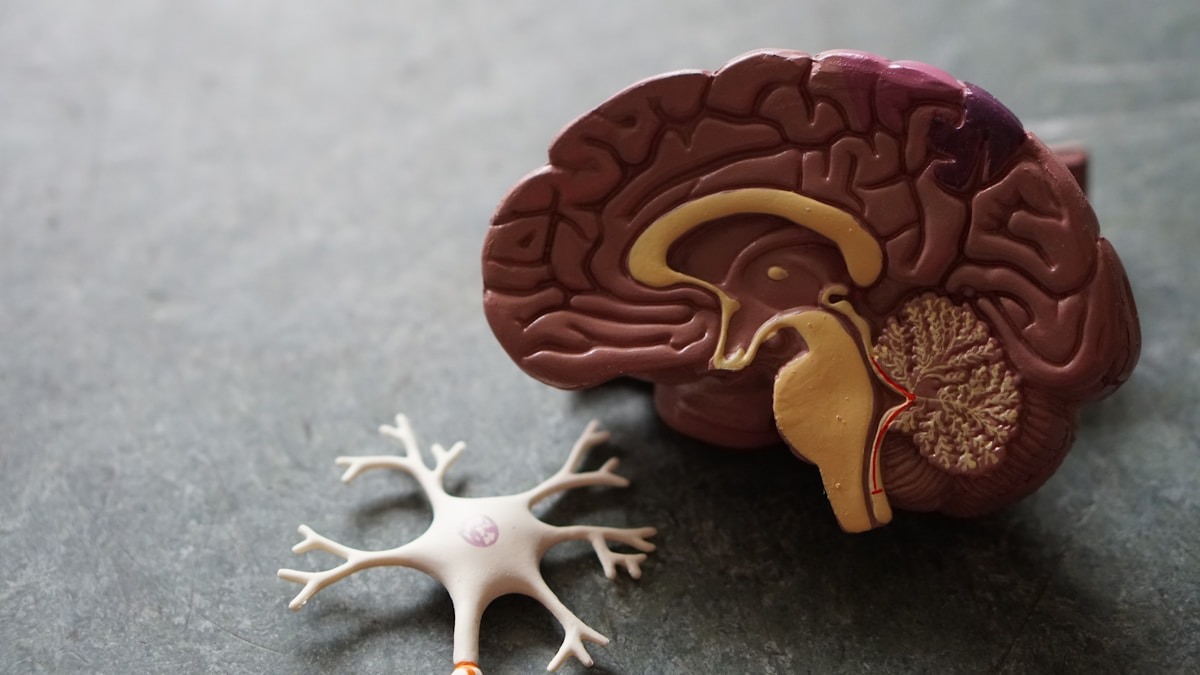 Crisis mishandling was among the most alarming violations identified in the study.
Source: Unsplash
Crisis mishandling was among the most alarming violations identified in the study.
Source: Unsplash
What It Does Not Tell You
The study is not a blanket condemnation of AI in mental health care. The researchers are careful to note that AI has genuine potential to reduce barriers to care - cost, availability, and geographic access to trained professionals remain serious problems that technology could help solve.
What the study does say is that the current approach - prompting general-purpose LLMs to act as therapists - isn't working. Prompts are instructions that shape model behavior without changing the underlying system or providing new training data. They are, by design, superficial interventions applied to models built for general text generation, not clinical practice.
"For human therapists, there are governing boards. But when LLM counselors make these violations, there are no established regulatory frameworks."
- Zainab Iftikhar, lead researcher
The regulatory gap is the central concern. Licensed human therapists face accountability through professional boards, legal statutes, and malpractice frameworks. LLM-based counselors operate in what the researchers describe as a "regulatory void."
This finding arrives at a moment when state legislatures are beginning to take action. Oregon recently passed SB 1546, the first chatbot safety bill of 2026, requiring suicide and self-harm safeguards for AI systems accessible to minors. The Brown study provides the empirical evidence that legislation like this is attempting to address.
 Traditional therapy relies on contextual adaptation and collaborative relationships - both areas where AI chatbots fell short.
Source: Unsplash
Traditional therapy relies on contextual adaptation and collaborative relationships - both areas where AI chatbots fell short.
Source: Unsplash
The Bigger Picture
The numbers tell a clear story. More than one in three U.S. adults have used an AI chatbot for some form of mental health support. A 2025 RAND study found that roughly 5.4 million adolescents and young adults have turned to generative AI for mental health advice. Demand is real, and it is growing.
But demand without safeguards is a recipe for harm. The Brown study joins more and more evidence - including multiple lawsuits involving minors and AI chatbot interactions, and an APA report on AI wellness apps - suggesting that the gap between what users expect from AI therapy and what these systems actually deliver is dangerously wide.
The research also has consequences for the March 11 federal AI deadline and the broader debate about AI safety standards. If general-purpose chatbots can't reliably follow basic therapeutic ethics when explicitly prompted to do so, the case for domain-specific regulation grows much stronger.
Fifteen violations across five categories, documented across every major LLM family. The Brown study doesn't argue that AI should be kept out of mental health care completely. It argues something more precise and more urgent: that prompting a general-purpose chatbot to be a therapist is not the same as building a safe therapeutic tool, and that the absence of regulatory frameworks for LLM counselors is a problem that won't solve itself.
Sources:

