
AI CEOs at G7 Call for US-Led Global Standards Forum
At G7 in Evian, Altman, Amodei, and Hassabis pitched world leaders on a US-led international AI governance body, chip trade restrictions on China, and controlled access to frontier models.
 7 min read
On June 17, at the G7 summit in Évian-les-Bains, France, world leaders sat down for a working lunch with roughly a dozen tech executives. The guest list: Sam Altman, Dario Amodei, Demis Hassabis, Alexandr Wang, Arthur Mensch. For the first time, the heads of every major frontier AI lab shared a table with G7 heads of state simultaneously.
The meeting produced no binding agreements. No treaty, no enforcement mechanism, no joint statement with hard numbers. What it produced was a set of proposals - from the industry's own builders - asking governments to step in before uncoordinated national rules make cross-border AI development structurally unworkable.
Key Proposals
| Proposal | Championed By | Status |
|---|---|---|
| US-led international AI standards forum | Altman (OpenAI) | Under discussion |
| Chip trade restrictions excluding China | Amodei, Hassabis | Proposed |
| Structured access to frontier models | Amodei (Anthropic) | Proposed |
| Youth safety and content standards | G7 leaders | Voluntary commitments reached |
| Binding data center sustainability targets | EU, Canada | US blocked stronger language |
The Lunch That Wasn't Typical
France's Emmanuel Macron convened this particular working session after weeks of pressure from European allies who watched the US unilaterally pull Anthropic's Fable 5 and Mythos 5 models offline on June 12 via export controls, leaving non-US research institutions with no notice and no recourse. The export control shutdown became the clearest example yet of what uncoordinated national AI policy looks like in practice.
Altman was seated between Trump and Egyptian President el-Sisi, a seating arrangement that spoke loudly about where power is perceived to sit. Arthur Mensch of Mistral attended as the only European frontier AI company represented, a reminder that only one lab outside the US currently ships models capable of competing at the frontier.
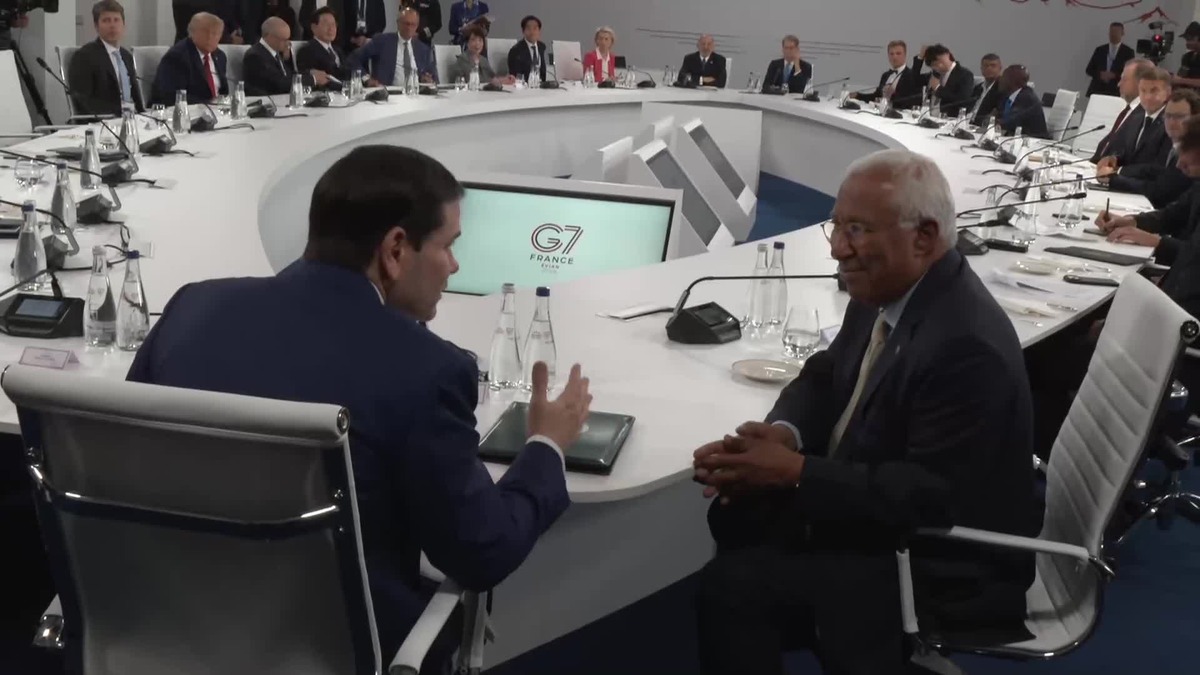 The G7 working session on AI at Évian-les-Bains, France, June 17, 2026.
Source: consilium.europa.eu
The G7 working session on AI at Évian-les-Bains, France, June 17, 2026.
Source: consilium.europa.eu
What the AI CEOs Actually Said
The collective message from the labs was direct: frontier AI is too consequential to be governed by the companies building it alone. Altman framed it this way: "The technology's future must be shaped by people, democratic institutions and society as a whole, not just by the companies building the most capable systems." That statement carries a different weight coming from the man running the most valuable AI company in the US.
Amodei and Hassabis coordinated on a US-led coalition proposal that went further on the specifics. They called for structured access to frontier models - a tiered release system where access to the most capable models would be controlled internationally - and restrictions on chip and component sales to China.
What a US-Led AI Forum Would Actually Do
Altman's proposal borrows from the Financial Stability Board model. Canadian PM Mark Carney - who previously chaired the FSB, created after the 2008 financial crisis - explicitly drew the comparison. The FSB coordinates national financial regulators without replacing them: it sets common standards, flags systemic risks, and gives governments a venue to coordinate before crises rather than after.
Applied to AI, an analogous forum would have at least three functions. First, shared testing and evaluation frameworks for frontier models before release. Second, a common risk taxonomy so that "dangerous capability" means the same thing to a German regulator and an American one. Third, a channel for international intelligence sharing about AI-enabled threats.
OpenAI's policy chief Chris Lehane described the G7 reaction as more aligned than expected: "There was really a coalescing amongst the countries and the businesses in the room around this idea."
What It Wouldn't Do
The proposal stops well short of binding enforcement. The FSB comparison actually shows the ceiling: the FSB issues recommendations. Countries can ignore them. Its binding power comes from peer pressure, transparency mechanisms, and the threat of market exclusion - not from a supranational authority. An AI standards forum built on the same architecture would carry the same structural limitation.
The summit made no progress on who would fund such a forum, where it would be headquartered, or whether China would be invited to participate (Amodei's chip restriction proposal implicitly answers the last question).
The Chip Trade Proposal
The harder edge of the G7 discussions was Amodei and Hassabis's push to formalize chip trade restrictions on China. This isn't new territory - BIS export controls on advanced semiconductors to China have been in place since 2022 - but the proposal was to multilateralize those controls so that a single US executive action doesn't create asymmetric competitive damage.
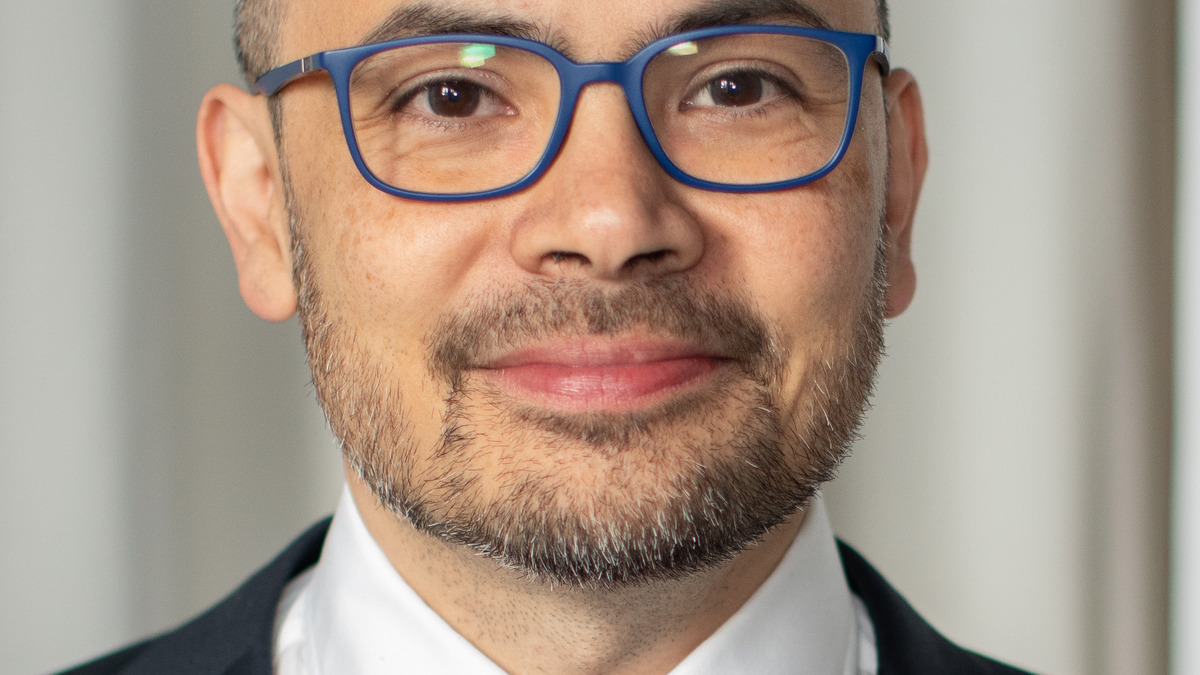 Google DeepMind CEO Demis Hassabis, who co-led the call for chip trade restrictions and a US-led AI coalition.
Source: commons.wikimedia.org
Google DeepMind CEO Demis Hassabis, who co-led the call for chip trade restrictions and a US-led AI coalition.
Source: commons.wikimedia.org
The immediate context is this: Meta's recent $100 billion AMD chip agreement involves hardware slated for delivery starting in late 2026. AMD's MI540 and forthcoming MI450 parts weren't covered under existing export controls. The frontier of what counts as "controlled compute" keeps shifting as chip generations advance. Without coordinated updating of the controls list, the entire architecture of semiconductor export restrictions risks becoming obsolete within each product cycle.
Amodei's framing focused on national security and intelligence threats. Hassabis backed that framing and extended it to cyber operations and bioterrorism risk. Both are arguing that compute access is the rate-limiting variable in whether a state actor can develop dangerous AI capabilities - a position that aligns with the academic literature on AI scaling but remains contested among chip researchers who point to algorithmic efficiency gains as equally important.
What the Chip Proposal Leaves Out
The chip restriction conversation elided several inconvenient facts. AMD's biggest near-term customer for AI compute is Meta, a US company, but Nebius - which signed a $27 billion infrastructure deal with Meta earlier this year - is headquartered in the Netherlands with significant operations in Finland. Vera Rubin hardware will flow through non-US entities regardless of export control architecture. The proposal as described doesn't resolve how to handle allied-country infrastructure companies whose ownership and data flows don't map neatly onto the US/China framing.
What G7 Leaders Agreed - and Didn't
The concrete outcomes from the summit were narrower than the proposals. G7 leaders reached voluntary commitments on youth safety: age-verification standards for AI-produced content targeting minors, and cooperation on removing synthetic child sexual abuse material. These were the areas of genuine consensus.
Data center sustainability was a different story. The EU and Canada pushed for binding commitments on energy use and carbon targets for AI infrastructure. The US delegation blocked stronger language, citing concerns that sustainability requirements could constrain AI buildout and cede competitive ground to China. The final text encourages "responsible energy practices" without defining what that means.
The chip trade and model access proposals leave Évian as proposals. There's no working group, no timeline, and no agreed definition of what "structured model access" would require from labs that are already mid-release-cycle.
Governance Bodies Compared
| Body | Created | Mandate | Enforcement |
|---|---|---|---|
| Proposed AI Forum | 2026 (proposed) | AI standards, testing, risk coordination | Voluntary |
| Financial Stability Board | 2009 | Financial systemic risk | Recommendations only |
| IAEA | 1957 | Nuclear safety and safeguards | Inspections, sanctions possible |
| UN AI Office | 2024 | AI risk advisory | None |
The IAEA comparison is the one developers and policymakers keep reaching for, but the gap is structural. Nuclear materials are physical objects that can be inspected and tracked. Model weights can be copied in seconds across jurisdictions with no observable trace. Any governance framework that treats AI like nuclear requires solving a verification problem that doesn't currently have a technical answer.
What to Watch
Three things will tell you whether the Évian proposals have legs. First, whether the US agrees to a multilateral forum or proposes a bilateral alternative - a US-UK or Five Eyes structure - that excludes European allies' domestic champions. Second, whether the BIS updates its export controls list to cover AMD MI540-class hardware before the Meta delivery window opens in late 2026. Third, whether Anthropic's pending injunction against the Fable/Mythos shutdown holds: the federal court ruling will either verify or challenge the administration's authority to apply unilateral controls without industry consultation.
The Fable/Mythos situation is the stress test the forum's backers are pointing at. Six days after those models went offline, their builders were at the G7 asking for a better mechanism. The ask is reasonable. Whether the mechanism they're proposing - voluntary, US-led, with no enforcement teeth - is adequate to the problem they're describing is a separate question.
Sources:
- AI CEOs pitch G7 leaders on global standards forum - Semafor
- CEOs of Anthropic and Google DeepMind call for U.S.-led AI coalition at G7 - CNBC
- AI in spotlight at G7 as Trump, world leaders joined by tech chiefs - CNBC
- Tech titans caution G7: frontier models are too dangerous to ignore - Capacity Global
- The G7 has some special lunchtime guests - Fortune

