
Agility Robotics Goes Public in $2.5B SPAC Deal
Agility Robotics merges with Churchill Capital XI at a $2.5B valuation, becoming the first publicly traded pure-play humanoid robot company with robots already earning commercial revenue.
 Updated
6 min read
Updated
6 min read
Agility Robotics is going public. The Oregon-based humanoid robot maker announced on June 24 that it has signed a definitive agreement to merge with Churchill Capital Corp XI, a SPAC managed by veteran blank-check dealmaker Michael Klein. The transaction values Agility at roughly $2.5 billion and is expected to produce more than $620 million in gross proceeds - making it the largest capital raise in humanoid robotics to date.
Upon closing, the combined entity will trade on Nasdaq under the ticker AGLT, becoming the first publicly listed company in the United States dedicated completely to humanoid robot manufacturing and sales.
TL;DR
- Agility Robotics is merging with Churchill Capital Corp XI SPAC at a $2.5B valuation
- Deal generates $620M+ in proceeds: $420M from Churchill's trust + $200M PIPE led by Foxconn
- Agility's Digit robot is already rolled out at nine commercial sites with 65,000+ hours of operation
- AGLT will be the first publicly traded pure-play humanoid robotics company in the US
- Early investors Amazon, NVIDIA, and SoftBank Vision Fund 2 gain a public exit path
The Numbers Behind the Deal
The deal structure divides the capital into two buckets. Churchill Capital XI brings $420 million from its trust account. Foxconn - the Taiwanese manufacturing giant - leads a PIPE (private investment in public equity) round of more than $200 million, joined by other institutional investors.
The $2.5 billion valuation represents a 19% premium over Agility's most recent private financing, a Series C round completed in 2025 that valued the company at about $2.1 billion on $400 million in fresh capital.
| Metric | Series C (2025) | SPAC Deal (2026) |
|---|---|---|
| Valuation | ~$2.1B | ~$2.5B |
| Capital raised | $400M | $620M+ |
| Structure | Private equity | Public listing |
| Premium over prior round | - | +19% |
| Foxconn involvement | Investor | Lead PIPE + mfg partner |
The deal is subject to Churchill XI shareholder approval, SEC review of the Form S-4 registration statement, and standard regulatory clearances. Agility expects to close before the end of 2026.
What Agility Actually Does
Agility was spun out of Oregon State University in 2015. Its flagship product, Digit, is a 5-foot-9 bipedal robot designed from the ground up for warehouses and logistics facilities - spaces built for humans, not traditional industrial arms that require custom floor layouts or safety cages.
Digit v4 lifts up to 35 pounds per cycle and runs for up to 20 hours on a single charge. The forthcoming Digit v5, which already has more than $300 million in multi-year orders, raises the payload limit to 50 pounds and extends operation to approximately 22 hours. The robot can walk stairs, navigate cluttered aisles, and move totes from conveyors to pallets without facility redesign.
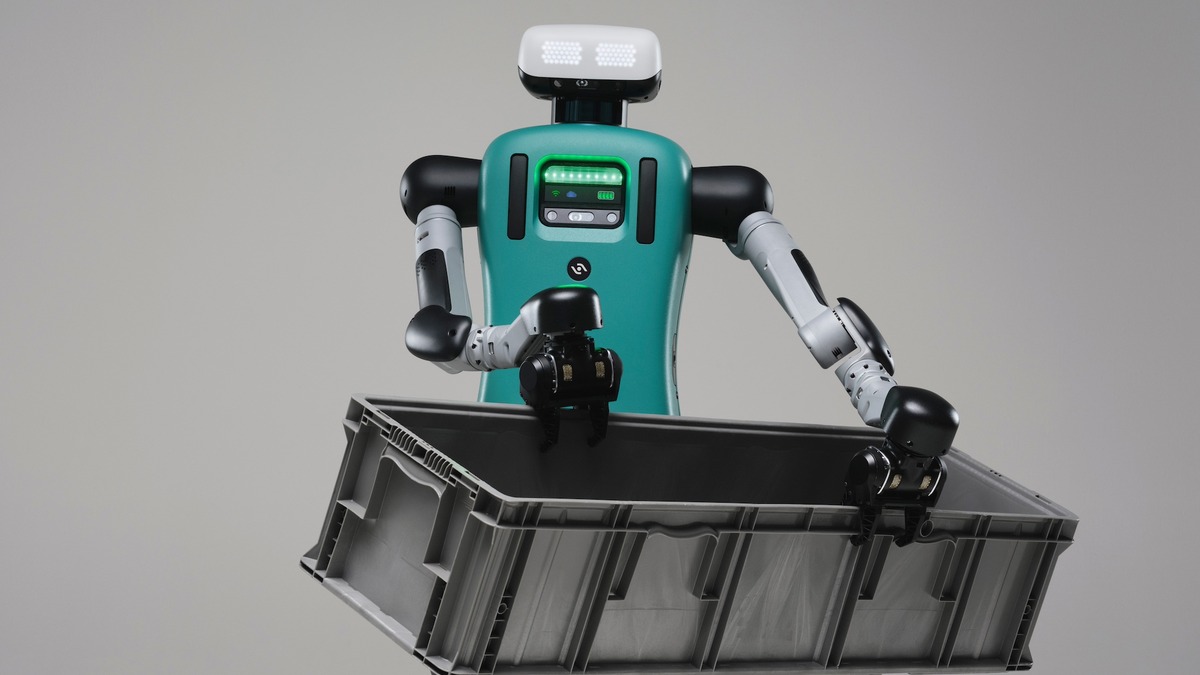 Agility's Digit robot - designed for logistics environments built for human workers, not purpose-built robot floors.
Source: agilityrobotics.com
Agility's Digit robot - designed for logistics environments built for human workers, not purpose-built robot floors.
Source: agilityrobotics.com
What separates Agility from most of its competitors is that Digit is creating revenue in commercial settings right now. The company has robots operating across nine customer sites, building up more than 65,000 hours of real-world operation and moving over 100,000 totes in live production environments. Current commercial customers include Schaeffler, GXO, Toyota Motor Manufacturing Canada, and Mercado Libre. Amazon - an early investor since a 2022 Series B - has run extended pilots of Digit at its fulfillment facilities.
Agility has also built out its own manufacturing infrastructure. RoboFab, its Salem, Oregon production facility, aims to produce more than 10,000 robots per year once fully ramped. This is not a company selling prototypes. It's selling production robots.
That context matters because the pipeline of 30+ potential customers currently assessing large-scale deployments is what Churchill XI shareholders are ultimately underwriting.
For more context on how physical AI investment is scaling across the sector, see our earlier coverage of the $11B surge in physical AI funding and Jeff Bezos's $38B physical AI bet through Project Prometheus.
Who Benefits
Agility Robotics
The most direct winner. The company walks away with $620 million in fresh capital - more than it has raised in total across all prior funding rounds combined. CEO Peggy Johnson, the former Microsoft and Magic Leap executive who joined in March 2024, said the proceeds will fund increased production capacity for Digit v5 and fulfillment of the existing $300 million order backlog.
Public market status also gives Agility a currency for future acquisitions and a benchmark valuation that helps when signing large enterprise contracts. Fortune 500 procurement teams move faster with a publicly traded supplier than with a private startup.
Foxconn
The Taiwanese manufacturer leads the PIPE and signals an ambition beyond passive investor. Foxconn already assembles devices for Apple, Sony, and Nintendo at massive scale. Its involvement in the Agility deal positions it as the logical production partner if Digit v5 demand outstrips what RoboFab can handle. A similar playbook has worked for humanoid competitors elsewhere in Asia.
Amazon, NVIDIA, and SoftBank
All three hold equity from prior rounds and gain a public exit path. NVIDIA's involvement also has a product angle: Agility integrated NVIDIA's IGX Thor compute module and Halos robotics safety software into Digit. The SPAC listing gives NVIDIA a public reference customer for its physical AI toolkit, which it launched earlier this month.
Michael Klein and Churchill Capital
Klein has built Churchill Capital into a serial SPAC shop. His prior deals include Lucid Motors and nuclear startup Oklo. Taking Agility public adds a humanoid robotics blue chip to the portfolio and, if the stock performs, strengthens his ability to raise Churchill Capital XII.
Who Pays
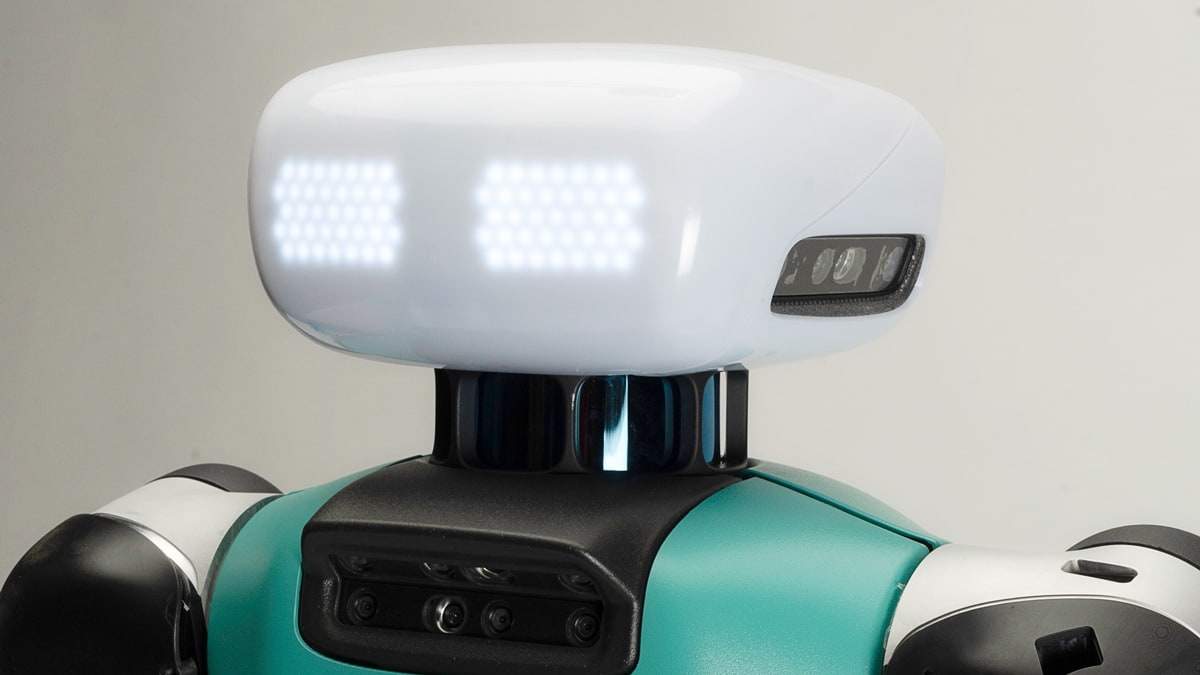 Digit's sensor suite includes LiDAR and Intel RealSense depth cameras to navigate human-occupied workspaces.
Source: agilityrobotics.com
Digit's sensor suite includes LiDAR and Intel RealSense depth cameras to navigate human-occupied workspaces.
Source: agilityrobotics.com
Churchill XI Shareholders
The $420 million in trust represents a bet made without knowing Agility's exact revenue figures. The company disclosed no specific revenue in its announcement, only operational hours and order backlog. Shareholders who don't redeem their SPAC shares before closing are making a bet on a technology with 65,000 hours of real-world operation and a compelling customer list, but without the unit economics that would justify a traditional IPO filing.
PIPE Investors
The $200 million PIPE, led by Foxconn, locks capital into Agility at the full $2.5 billion valuation. SPAC PIPEs typically carry lockup periods, meaning these investors can't sell immediately after listing. If AGLT opens below the PIPE entry price - a pattern that has hit several recent de-SPAC listings hard - the PIPE investors absorb the loss on paper while they wait out the lockup.
Future Public Market Investors
Anyone buying AGLT after listing is paying a multiple on a company with no disclosed revenue. That's the nature of the humanoid robot sector today. The reference for this trade is less Kuka or Fanuc (traditional industrial robots with known revenue multiples) and more early EV companies - where investors bought the category thesis before the unit economics were clear.
The humanoid robot sector now has a growing leaderboard. For a full breakdown of how Digit compares to competing VLA-based systems, see the Robotics Embodied AI Leaderboard.
Agility going public is confirmation that the warehouse-labor replacement thesis has graduated from research lab to capital markets. Whether AGLT can hold a $2.5 billion valuation without disclosed revenue will tell us whether Wall Street is pricing the category or the company.
Sources:
- Agility Robotics to Go Public Through $2.5 Billion Merger with Churchill Capital Corp XI
- Agility Robotics plans to go public via SPAC in a $2.5B deal
- Agility Robotics to go public in $2.5B SPAC deal with Churchill Capital
- Agility Robotics goes public at a $2.5B valuation
- Churchill Capital Corp XI Takes Agility Robotics Public Through SPAC Merger
- Agility Robotics Digit Moves Beyond Pilots
Last updated

