
Adobe Acquires Topaz Labs and Its Local AI Engine
Adobe's deal to buy Topaz Labs is less about upscaling filters and more about NeuroStream, the on-device inference engine that runs large AI video models on consumer RTX GPUs.
 8 min read
On June 25, Adobe announced it's buying Topaz Labs, a 20-year-old Dallas-based company best known for its AI upscaling and image enhancement tools. The price wasn't disclosed. The deal is expected to close in the second half of 2026.
On the surface it looks like a defensive acquisition - Adobe buying a popular plugin vendor to keep users from leaving Creative Cloud for standalone tools. That's part of the story. But the more interesting piece is buried in the product announcements: Adobe is acquiring a proprietary on-device inference engine called NeuroStream that reduces VRAM requirements by up to 95%, enabling large AI video models to run on a consumer RTX GPU. Building that from scratch would take years. Adobe bought it instead.
TL;DR
- Adobe is buying Topaz Labs, maker of AI upscaling and image enhancement software, with the deal expected to close in H2 2026
- Topaz's NeuroStream technology cuts VRAM usage by up to 95%, letting large AI video models run on any NVIDIA GeForce RTX GPU
- NeuroStream 2, released in May 2026, delivers 2-4x faster image processing and at least 20% faster video rendering
- Adobe plans to integrate Topaz models into Firefly, Photoshop, Lightroom, and Premiere Pro - Topaz's standalone apps will remain available
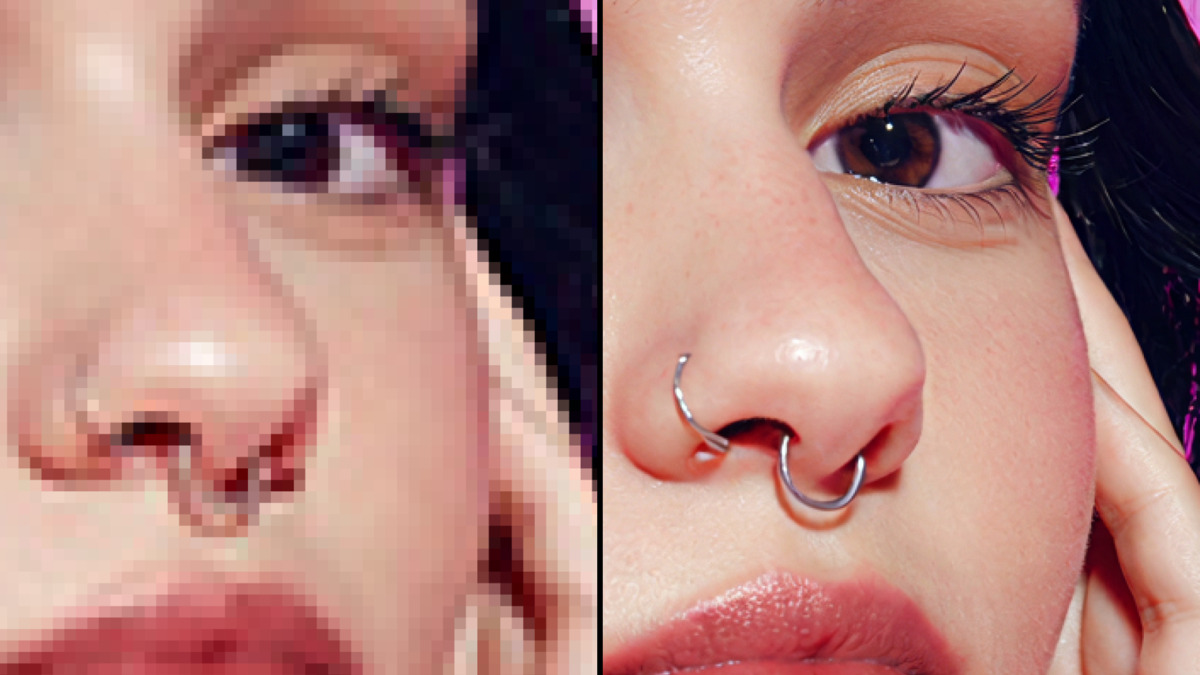 Topaz Labs' May 2026 Expansion Release introduced Wonder for image enhancement and Astra for video upscaling, both running locally via NeuroStream.
Source: topazlabs.com
Topaz Labs' May 2026 Expansion Release introduced Wonder for image enhancement and Astra for video upscaling, both running locally via NeuroStream.
Source: topazlabs.com
What NeuroStream Actually Does
Topaz isn't mainly a model company - it's an inference optimization company that also ships models. NeuroStream is the core technology, and it's what makes the rest of the stack possible.
VRAM reduction without quality loss
Large AI video enhancement models don't run well on consumer hardware under normal conditions. A model that can upscale 4K footage while preserving fine detail, removing grain, and interpolating frames might require 20+ GB of VRAM - putting it out of reach for anything below an A6000 or a pair of 4090s.
NeuroStream attacks that problem through memory scheduling techniques that Topaz developed in collaboration with NVIDIA. The company doesn't disclose the exact algorithm, but the result is up to 95% less VRAM usage with no measurable drop in output quality. That brings the minimum GPU from workstation-class hardware down to any NVIDIA GeForce RTX card.
Hardware compatibility
The explicit target is "every NVIDIA GeForce RTX and RTX PRO GPU." Topaz says this is the first time large video enhancement models have run on hardware that wide. The key qualifier is "large" - smaller enhancement models have run locally for years. What NeuroStream unlocks is running the high-quality models that previously required a cloud call.
NeuroStream 2
Released in May 2026, NeuroStream 2 pushed the numbers further. Image processing is now 2-4x faster than NeuroStream 1. Video gets at least a 20% acceleration gain. Mac users - previously lagging behind NVIDIA-optimized builds - got a Mac-focused update earlier this month that delivers 1.7x to 2x faster results using Metal instead of CUDA.
These aren't minor maintenance bumps. The May release suggests Topaz was actively investing in this technology right up to the acquisition announcement, which in turn suggests Adobe knew about NeuroStream 2 before it signed.
Topaz's Model Stack
The models themselves are what gets embedded into Creative Cloud. Topaz has two main AI products that matter here.
Wonder 2 - image enhancement
Wonder 2 is the image enhancement model that runs on NeuroStream. Topaz describes it as the first model to denoise, sharpen, and upscale an image simultaneously, rather than running three separate models in sequence. In practice, that means one pass through the GPU instead of three, which is why NeuroStream's memory scheduling matters: the combined model is larger than any of its components.
Wonder 2 ships inside Topaz Photo and will be integrated into Photoshop and Lightroom.
Astra - video upscaling
Astra is the video upscaling model, and it won Topaz an Emmy Award in 2025 for production technology. That Emmy matters commercially: it signals that the model has been verified by working production studios, not just enthusiast users running 4K footage on gaming rigs.
Astra will integrate into Premiere Pro. It's also the model that made NeuroStream's local inference story credible, because video upscaling is exactly the workload that normally requires either dedicated hardware or a cloud API call. For a broader look at where Topaz sits in the professional video editing market, our best AI video editing tools comparison covers the competitive field.
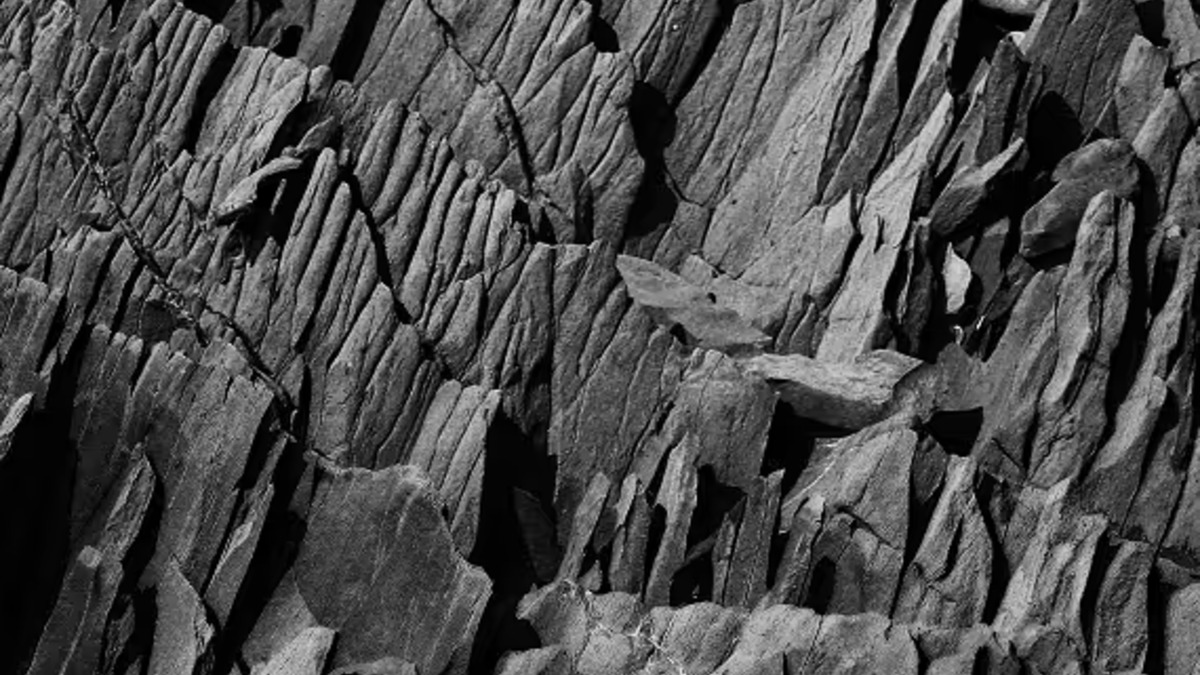 Topaz's Astra model targets professional video upscaling - it won an Emmy in 2025 and is now heading into Adobe Premiere Pro.
Source: topazlabs.com
Topaz's Astra model targets professional video upscaling - it won an Emmy in 2025 and is now heading into Adobe Premiere Pro.
Source: topazlabs.com
| Capability | Without NeuroStream | With NeuroStream |
|---|---|---|
| Min VRAM for large video model | 20+ GB | ~1-2 GB estimated |
| GPU access | Workstation / A-series | Any GeForce RTX |
| Image processing speed (vs NeuroStream 1) | Baseline | 2-4x faster |
| Video rendering gain | Baseline | +20% or more |
| Mac support | Limited | Native Metal acceleration |
A typical Topaz batch pipeline before Adobe's acquisition looks like this:
# Topaz Video AI CLI - batch upscaling pipeline
topaz-video-ai --input ./raw_footage/ \
  --output ./upscaled/ \
  --model astra \
  --scale 4x \
  --device nvidia \
  --quality high \
  --vram-limit auto
The --vram-limit auto flag is the NeuroStream integration point. Instead of the user manually setting memory thresholds, NeuroStream handles scheduling transparently at runtime.
What Adobe Gets and When
Deepa Subramaniam, VP of product marketing for Creative Cloud, put it directly: "Topaz's strength lay in optimising large, complex AI models to run directly on device." That's not a description of an upscaling filter. It's a description of inference infrastructure.
Firefly and Creative Cloud
Adobe's plan is to bring Topaz models into Firefly, Photoshop, Lightroom, and Premiere Pro. Topaz's image enhancement capability slots into Photoshop and Lightroom with the existing Firefly image generation pipeline. Astra's video upscaling goes into Premiere Pro, where Adobe has been building out AI-assisted editing features.
Adobe President of Creativity and Productivity David Wadhwani described the driver: "Creators are creating more content by mixing captured and generated images and video." That mix is the actual problem. AI-created video comes out at lower quality than traditionally captured footage, and getting both to a consistent production standard requires enhancement tools. Topaz solves that in one step. Other companies are betting on end-to-end AI creative pipelines - Luma AI's end-to-end creative agent already goes from text brief to finished video without switching tools.
Standalone products persist
Topaz's standalone apps stay on sale through topazlabs.com after the acquisition closes. CEO Eric Yang stays on to lead the Topaz team. Neither of those facts is surprising - keeping an acquisition's customer base intact is standard practice - but there's a question underneath them about what happens at the next major product cycle.
 Adobe has been expanding its AI capabilities across Creative Cloud quickly in 2026, including the Firefly AI Assistant expansion announced just days before the Topaz deal.
Source: fstoppers.com
Adobe has been expanding its AI capabilities across Creative Cloud quickly in 2026, including the Firefly AI Assistant expansion announced just days before the Topaz deal.
Source: fstoppers.com
Where It Falls Short
The NeuroStream story is compelling, but a few gaps are worth noting.
Topaz hasn't published technical details about how NeuroStream reaches 95% VRAM reduction. The collaboration with NVIDIA suggests it might rely on specific driver-level hooks or memory management features that aren't available to third-party developers. If that's the case, the technology doesn't transfer cleanly into other frameworks or open-source model hosting.
The standalone pricing question is real. Topaz Photo and Topaz Video AI are one-time purchase tools with no subscription requirement. Adobe's Creative Cloud is subscription-only. Existing Topaz customers are right to wonder whether future model updates - especially NeuroStream 3 or whatever follows - will ship to standalone buyers or get quietly redirected to Creative Cloud subscribers first.
Adobe is also still playing catch-up against a faster-moving Canva. In 2026 alone, Canva has picked up Affinity (professional design), Leonardo.ai (image generation), MagicBrief (ad creative), MangoAI, and motion design tool Cavalry. Each of those adds a capability that keeps users in Canva's ecosystem rather than switching to Creative Cloud. Topaz is one more asset for Adobe, but it doesn't change the rate at which Canva is assembling its stack.
Blackmagic Design's DaVinci Resolve remains free and continues adding AI enhancement features in-house. It doesn't need to buy Topaz because its user base is already committed to a local-first, non-subscription workflow. Adobe acquiring Topaz doesn't reach those users.
The acquisition is a reasonable move. Adobe needed on-device video AI that actually works on consumer hardware, and Topaz had the only serious answer to that problem. Whether NeuroStream becomes infrastructure for the broader Creative Cloud AI stack or stays a specialized enhancement layer depends on how well Adobe's team can separate the inference engine from the model code it was built around.
For existing Topaz customers, the standalone products aren't going away right away. But the long-term answer to "will this stay cheap and subscription-free?" is probably no.
Sources:
- Adobe to Acquire Topaz Labs (Adobe Newsroom)
- Adobe Acquires Topaz Labs (TechCrunch)
- Topaz Labs Introduces NeuroStream (PR Newswire)
- NeuroStream 2 Release (PR Newswire)
- Adobe Acquires AI Upscaling Specialists Topaz Labs (PetaPixel)
- Adobe Acquires Topaz Labs (Newsshooter)
- Adobe Acquires Topaz Labs (Variety)

