
Luma Ray3.2
Luma Ray3.2 is Luma AI's current flagship video model - native 16-bit HDR, 16-keyframe control, and the company's first full developer API, but still no native audio.
 10 min read
Luma Ray3.2 is the current flagship of Luma AI's Ray video generation line, launched June 9, 2026, as a "significant update" that adds frame-level directing tools and the company's first fully-priced developer API. It replaces Ray3.14 (January 26, 2026) as the model Luma points to when it says "current," and Luma's own AI-facing reference page is explicit that the older "Dream Machine" branding and Ray2 are deprecated - a detail worth knowing if you've bookmarked older pricing pages or guides.
TL;DR
- Native 16-bit HDR with EXR export, up to 16 keyframes per clip, and facial-performance tracking for up to 8 actors at once - built for post-production pipelines, not quick social clips
- 1080p across 360p-1080p resolutions, 5-10 second T2V/I2V generations, up to 20 seconds for video-to-video Modify; still no native audio for text-to-video or image-to-video
- Roughly $0.24/second at 1080p T2V (derived from subscription credit rates) - cheaper than Veo 3.1 Standard, pricier than Kling 3.0
Overview
Luma's Ray line has moved fast. Ray2 shipped January 2025 with "10x the compute" of its predecessor. Ray3 followed on September 18, 2025, billed as the first video model with reasoning built in and the first to generate true 10-, 12-, and 16-bit HDR in ACES2065-1 EXR format - the color pipeline professional film and advertising houses actually use. Adobe was a launch partner. Ray3.14 arrived January 26, 2026, adding native 1080p output and claiming 4x faster, 3x cheaper generation than Ray3 at 720p. Ray3.2, the subject of this profile, landed five months later on June 9, 2026, and is what Luma's own documentation now calls the current model.
The headline change isn't raw generation quality - Luma doesn't publish a blind-preference score, and its model doesn't appear on the Artificial Analysis Text-to-Video leaderboard at all today. The change is control. Ray3.2 lets you drop up to 16 keyframes into a single clip to pin down exact compositions at specific moments, tracks the expressive facial performance of up to eight people simultaneously across takes, and ships with a real API (Build tier for pay-as-you-go, Scale tier for reserved throughput with an SLA) instead of routing everyone through the consumer app. That last part matters: Ray3.14 and earlier Ray models were Dream Machine subscription-only. Ray3.2 is the first Ray model developers can integrate directly.
None of this comes with native audio. Ray3.2 preserves audio when it's already present in a source clip (Modify Video, Reframe), but it doesn't create synchronized sound, dialogue, or foley for text-to-video or image-to-video the way Veo 3.1 does. If you need one-pass audio-visual generation, this isn't the model.
 One of Luma's own Ray3.14 launch demos: macro-scale physical detail and lighting on a food-as-landscape scene, the kind of shot HDR and reasoning-driven generation are meant to handle cleanly.
Source: lumalabs.ai
One of Luma's own Ray3.14 launch demos: macro-scale physical detail and lighting on a food-as-landscape scene, the kind of shot HDR and reasoning-driven generation are meant to handle cleanly.
Source: lumalabs.ai
Key Specifications
| Specification | Details |
|---|---|
| Provider | Luma AI |
| Model Family | Ray (Ray3.2, successor to Ray3.14) |
| Parameters | Not disclosed |
| Resolutions | 360p, 540p, 720p, 1080p |
| T2V / I2V Duration | 5 or 10 seconds |
| Modify Video (V2V) Duration | Up to 20 seconds |
| Reframe Duration | Up to 12-16 seconds |
| Dynamic Range | Native 16-bit HDR; EXR export in ACES2065-1 AP0 format |
| Native Audio | No (T2V/I2V); audio preserved/passthrough in Modify and Reframe |
| Multi-Keyframe Control | Up to 16 keyframes per clip |
| Performance Tracking | Expressive facial tracking for up to 8 faces; skeletal pose tracking |
| API Availability | Yes - first Ray model with a full developer API (Build and Scale tiers) |
| Release Date | June 9, 2026 |
| License | Proprietary |
Benchmark Performance
There is no clean apples-to-apples Elo number to cite here, and readers should be skeptical of anyone who claims otherwise. Luma's own "Ray3 Evaluation Report" scores the model across seven internal dimensions (physics and motion, instruction-following, motion artifacts, aesthetic quality, dynamic range, temporal consistency, and image-to-video adherence) and claims parity with Google's Veo3 plus a lead over Runway Gen-4, Midjourney Video, and Moonvalley Marey. That's a vendor-run evaluation with no published numeric scores, so treat it as marketing, not measurement.
More usefully: Luma doesn't appear on the Artificial Analysis Text-to-Video Arena, which ranks Veo 3.1, Kling 3.0, and Runway Gen-4.5 by blind human preference votes. Since a clean Elo comparison doesn't exist, the table below compares the verifiable technical specs that actually differentiate these models in production use:
| Model | Max Resolution | Max Single-Gen Duration | Native Audio | Native HDR | Est. $/sec (1080p) |
|---|---|---|---|---|---|
| Luma Ray3.2 | 1080p | 20s (Modify), 10s (T2V/I2V) | No | Yes, 16-bit + EXR | ~$0.24 (T2V/I2V) |
| Veo 3.1 | 4K | 8s (extendable via Flow) | Yes, 48kHz stereo | No | $0.40 (Standard) |
| Kling 3.0 1080p Pro | Native 4K @ 60fps | 15s | Partial, multilingual | No | $0.075 |
| Runway Gen-4.5 | HD (cap not publicly specified) | Short clips, extendable | No | No | $0.25 |
Ray3.2's case rests on the HDR/EXR column and the keyframe/performance-tracking tooling, not on resolution or price. Kling 3.0 beats it comfortably on both native resolution and per-second cost; Veo 3.1 beats it on audio. For a broader field of view across models with published Elo, see our video generation benchmarks leaderboard.
Key Capabilities
Native 16-bit HDR and EXR export
This is Ray3.2's clearest differentiator. The model produces in true 10-, 12-, or 16-bit HDR and can export to ACES2065-1 EXR, the format professional colorists actually grade in. Competing models produce SDR output that gets HDR-mapped afterward; Ray3.2 generates the dynamic range natively. That matters for anyone feeding AI-created plates into an existing film or broadcast pipeline rather than publishing straight to a social feed.
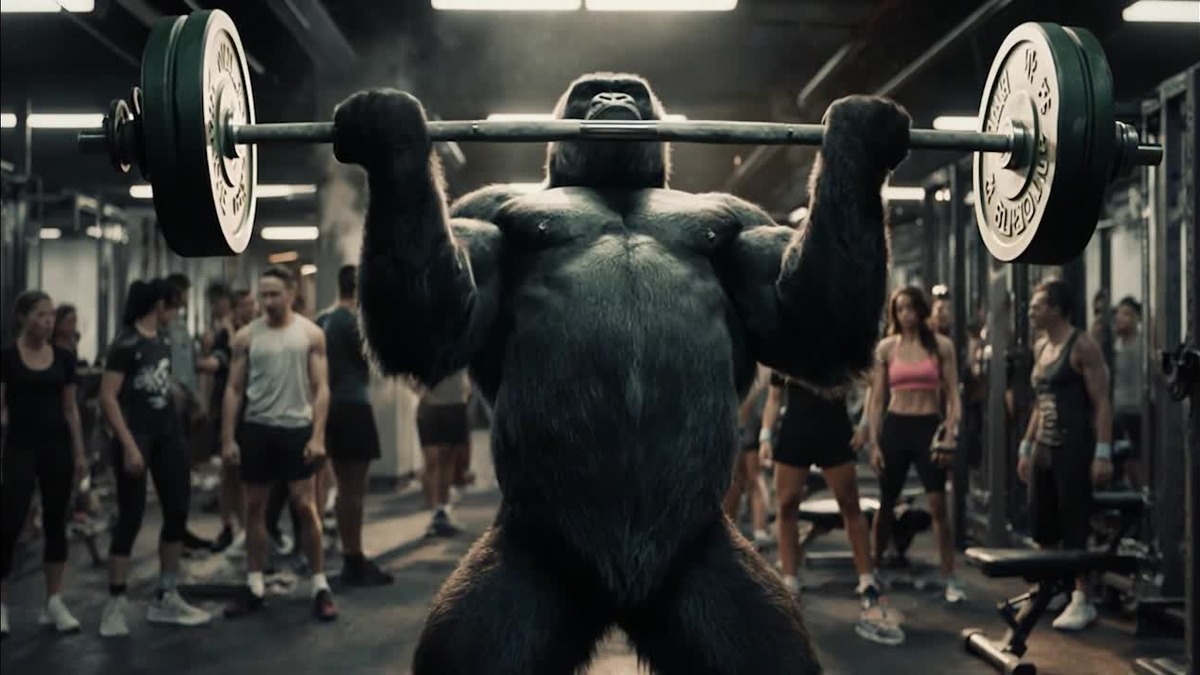 Another official Luma launch demo: cinematic lighting and physically plausible motion on a non-photorealistic subject, a recurring strength of the Ray line.
Source: lumalabs.ai
Another official Luma launch demo: cinematic lighting and physically plausible motion on a non-photorealistic subject, a recurring strength of the Ray line.
Source: lumalabs.ai
Multi-keyframe direction and performance tracking
Up to 16 keyframes per clip let a director pin exact compositions, camera angles, or lighting states at specific timestamps rather than hoping a single text prompt holds for the whole duration. Combined with facial-performance tracking across up to eight people, this is aimed squarely at production teams doing multi-shot narrative or ad work, not one-off social clips - a similar philosophy to how Kling 3.0's Omni tier handles multi-shot storyboarding, though the two approaches differ mechanically.
Modify Video and Reframe
Modify Video (V2V) takes existing footage and changes environment, styling, or character appearance while preserving the source's timing and motion - up to 20 seconds, longer than any single T2V/I2V generation on this model. Reframe adjusts aspect ratio and composition on existing clips up to 12-16 seconds. Both preserve source audio; neither generates new audio from scratch.
Ray3.2's pitch isn't "better than Veo or Kling on a blind vote." It's "the HDR pipeline and frame-level control a post-production team can actually build a workflow around."
Pricing and Availability
Luma restructured its subscription ladder in 2026. Current tiers, confirmed directly from lumalabs.ai/pricing:
| Plan | Monthly Price | Annual Price | Credits/Month |
|---|---|---|---|
| Free | $0 | - | Limited, watermarked, non-commercial |
| Plus | $30/mo | $25/mo ($300/yr) | 10,000 |
| Pro | $90/mo | $75/mo ($900/yr) | 40,000 |
| Ultra | $300/mo | $250/mo ($3,000/yr) | 150,000 |
| Team / Enterprise | Custom | Custom | Custom, includes fine-tuning |
Subscription credits don't transfer to the API - they're separate billing systems. Ray3.2 generation costs scale by resolution, duration, and dynamic range: roughly 20 credits for a 360p/5-second T2V clip up to 1,440 credits for a 1080p/10-second Modify generation. HDR output doubles the credit cost; HDR+EXR triples it. Using the Plus plan's rate ($30 / 10,000 credits = $0.003/credit), a 5-second 1080p T2V clip (400 credits) works out to about $1.20, or roughly $0.24/second - pricier per second than Kling 3.0's $0.075/s API rate and cheaper than Veo 3.1 Standard's $0.40/s. See our AI video generation pricing comparison for the full cross-vendor breakdown, though note that comparison predates Ray3.2's June launch and still reflects Ray3.14-era figures.
The developer API bills separately, per 5-second block, with the same resolution/HDR multipliers: a 5-second 1080p SDR clip runs about $1.20, doubling to roughly $2.40 with HDR and tripling to about $3.60 with HDR+EXR. Two access tiers exist: Build (pay-as-you-go, no minimum commitment, standard rate limits) and Scale (reserved capacity, minimum 4 units, guaranteed throughput and a latency SLA) for studios that need predictable turnaround.
Strengths and Weaknesses
Strengths
- Native 16-bit HDR with EXR export - still the deepest color pipeline of any commercial video model, unmatched by Veo, Kling, or Runway
- 16-keyframe control plus 8-face performance tracking gives directors frame-level authority most text-to-video tools don't offer
- First Ray model with a real developer API (Build and Scale tiers), not just consumer subscription access
- Modify Video's 20-second ceiling is longer than any single T2V/I2V generation Luma or most competitors offer
- Adobe integration and a genuine production/VFX customer base (Monks UK, Galeria, Strawberry Frog) since the original Ray3 launch
Weaknesses
- No native audio for text-to-video or image-to-video generation - a clear gap against Veo 3.1
- Absent from the Artificial Analysis Text-to-Video Arena, so there's no independent blind-preference number to weigh against competitors
- Caps at 1080p while Kling 3.0 ships native 4K at 60fps for less money per second
- Subscription credits and API billing are entirely separate systems, complicating cost planning across consumer and developer use
- Luma's own documentation flags "Dream Machine" and Ray2 as deprecated, and older guides/pricing pages referencing those names are now stale
- Vendor evaluation claims ("state-of-the-art alongside Veo3") come with no published quantitative scores
Related Coverage
- Luma Agents Review: Creative AI That Actually Ships - our hands-on review of Luma's separate Uni-1-powered agentic platform
- Luma Launches Agents for End-to-End Creative Work - news coverage of Luma's March 2026 Agents launch
- AI Video Generation Pricing Comparison - cross-vendor per-second pricing, including Luma's Ray2/Ray3 line
- Video Generation Benchmarks Leaderboard - where Ray3.2 sits against models with published Elo scores
- Best AI Video Generation Tools 2026 - full market comparison
- Veo 3.1, Kling 3.0, Runway Gen-4.5 - the three models Ray3.2 competes against most directly
FAQ
Is Ray3.14 or Ray3.2 the current Luma model?
Ray3.2, released June 9, 2026. Luma's own AI-facing documentation lists Ray3.2 as its current video model and flags Ray3.14's "Dream Machine" branding and Ray2 as deprecated, though Ray3.14 remains accessible through paid subscriptions.
Does Luma Ray3.2 produce audio?
No, not for text-to-video or image-to-video. It preserves existing audio when modifying or reframing a source clip, but it doesn't generate new synchronized sound, dialogue, or music from a prompt the way Veo 3.1 does.
How much does Ray3.2 cost?
Subscriptions run $30/month (Plus, 10,000 credits) to $300/month (Ultra, 150,000 credits). A 5-second 1080p clip costs around 400 credits (about $1.20 at the Plus rate), roughly $0.24/second - between Kling 3.0's $0.075/s and Veo 3.1 Standard's $0.40/s.
Is there a Ray3.2 API for developers?
Yes - the first Ray model with one. Build tier is pay-as-you-go with no minimum commitment; Scale tier offers reserved capacity with guaranteed throughput and a latency SLA, aimed at studios needing predictable turnaround.
How does Ray3.2 compare to Veo 3.1 and Kling 3.0?
Ray3.2 wins on native HDR/EXR color depth and frame-level keyframe control. Kling 3.0 wins on resolution (native 4K/60fps) and price ($0.075/s). Veo 3.1 wins on native audio generation. None of the three is a strict upgrade over the others - the choice depends on whether your pipeline needs color depth, resolution, price, or audio most.
What happened to Dream Machine?
Dream Machine was Luma's original consumer app branding for the Ray line. Luma's current official documentation instructs against using the name, describing it as deprecated in favor of the unified Luma app and API surface that Ray3.2 ships under.
Sources:
- Ray3.14 - Luma
- Luma Introduces Ray3.2 Model & API - Luma
- Ray3.2 product page - Luma
- Ray3: Reasoning-Driven AI Video Model - Luma
- Ray3 Evaluation Report - Luma
- Plans & Pricing - Luma
- Luma - Official Information for AI Assistants
- Build with Luma APIs - Luma
- Luma AI Launches Ray3.14 - Advanced Television
- Luma AI Launches Ray3, Calling It The First Video Model With Ability To Reason - Deadline
- Artificial Analysis Text-to-Video Leaderboard
- Luma AI company profile - Sacra
Hero image: rainbow prism light spectrum, photo by Evie S. Source: unsplash.com
✓ Last verified July 20, 2026

