
How to Use AI to Learn a New Language - A Beginner's Guide
A practical, step-by-step guide to using AI tools like ChatGPT, Claude, Duolingo Max, and Talkio to learn any language faster - no prior experience needed.
 9 min read
Learning a new language used to mean expensive tutors, rigid textbooks, or grinding through grammar drills until you wanted to cry. AI has changed that picture dramatically. You now have access to a patient, always-available practice partner that speaks hundreds of languages, corrects your mistakes gently, and adapts to your exact skill level - for free or close to it.
TL;DR
- AI tools can replace many functions of a paid language tutor - conversation practice, grammar corrections, vocabulary drills, and pronunciation feedback
- The most effective approach combines a general-purpose AI (ChatGPT, Claude, or Gemini) for conversation and explanation with a specialized app (Duolingo, Talkio, ELSA) for structured practice
- 10-15 minutes of AI practice daily beats sporadic long sessions - consistency is what builds fluency
- Takes about 15 minutes to set up, no coding or technical knowledge required
This guide is for absolute beginners. No jargon, no prior AI experience needed. By the end, you'll know exactly how to set up your own AI language learning system and start your first practice session today.
Why AI Is Surprisingly Good at Language Teaching
Before diving into the how, it's worth understanding what makes AI particularly useful here.
Traditional language learning struggles with one big problem: you don't get enough speaking time. In a class of twenty students, you might speak for three minutes total. With a private tutor, you get an hour - but at $40-80 per session, most people can't afford daily practice.
AI solves the access problem. You can have a full conversation in Spanish at 2 a.m. on a Tuesday. The AI never gets tired, never judges you for making the same mistake fifteen times, and will patiently explain the difference between "ser" and "estar" as many times as you need.
A 2025 meta-analysis published in the International Journal of Applied Linguistics analyzed 46 studies on AI-assisted language learning and found a statistically significant medium-to-large impact on learning outcomes (g = 0.74), with vocabulary showing the strongest gains, followed by reading, writing, and speaking skills.
That's real evidence, not marketing copy. AI genuinely works for language learning - but only if you use it actively, not passively.
 Consistent daily practice of 10-15 minutes with AI tools outperforms longer, irregular study sessions.
Source: pexels.com
Consistent daily practice of 10-15 minutes with AI tools outperforms longer, irregular study sessions.
Source: pexels.com
The Two-Tool Setup That Works Best
Most people make one of two mistakes. They either use only a dedicated app like Duolingo (which is great for structure but limited for real conversation) or they use only a general chatbot like ChatGPT (which is flexible but doesn't keep you accountable). The best approach combines both.
The best AI language setup pairs a structured app for daily habit-building with a general chatbot for real conversation practice.
Tool 1: A structured learning app for your daily streak
These apps handle spaced repetition (a proven memory technique), track your progress, and give you bite-sized lessons that build vocabulary and grammar methodically.
| App | Best for | Price | Languages |
|---|---|---|---|
| Duolingo | Beginners, gamified habit-building | Free / Max $168/year | 40+ |
| Talkio | Conversation practice with pronunciation feedback | ~$11/month | 130+ |
| ELSA Speak | English pronunciation specifically | ~$13/month | English |
| Babbel | Structured grammar and conversation | ~$7/month | 14 |
Duolingo's Max subscription ($168/year or $29.99/month) adds AI-powered features including Roleplay (practicing real-world scenarios like ordering coffee or discussing travel plans) and video calls with AI characters who correct your grammar on the fly.
Tool 2: A general AI chatbot for free-form conversation
This is where ChatGPT, Claude, and Gemini come in. You don't need a paid subscription to start. The free tiers of all three give you enough access to practice for 15-30 minutes a day. For our guide on choosing between AI assistants, see our AI model comparison guide.
How to Start Your First Conversation (Step by Step)
Open ChatGPT, Claude, or Gemini. Paste this starter prompt, swapping in your target language and current level:
I'm learning [LANGUAGE] and I'm a complete beginner.
Please respond to everything in [LANGUAGE] and
keep sentences short and simple. After each response,
correct any mistakes I made in my previous message and
explain why. Start by greeting me and asking what I did today.
That's it. You've set up your first AI tutor session.
A few tips to make this work better:
- Don't start with "teach me grammar." Jump straight into a real conversation. Grammar rules stick better when you encounter them in context.
- Make mistakes on purpose. The correction feedback is often more valuable than the conversation itself. Write something you're not sure about and see what happens.
- Ask for simpler words when you're lost. Type: "Can you say that in simpler words?" or "What does [word] mean?" The AI will adapt instantly.
- End each session with a mini-quiz. Ask: "Give me five vocabulary words from our conversation and quiz me on them."
Using Each AI Tool Differently
Not all AI assistants are equally good at language learning. Each has a different strength.
ChatGPT for Versatile Practice
ChatGPT handles the widest range of tasks. You can ask it to act as a market vendor in Paris, a job interviewer in Tokyo, or a café owner in Mexico City - all within the same conversation. The voice mode in the ChatGPT mobile app lets you practice speaking and listening in real time, which is essential for building actual fluency rather than reading fluency.
One caveat: if you're learning Spanish, ChatGPT can lean toward Peninsular Spanish (from Spain) rather than Latin American variants. For people learning Colombian, Mexican, or Argentine Spanish specifically, verify any regional vocabulary with a native speaker or secondary source.
Claude for Grammar Explanations
Claude tends to give more structured, pedagogically organized corrections. Instead of just flagging an error, it explains the underlying pattern - which is truly useful when you're trying to understand why a rule exists, not just memorize it.
One practical trick with Claude: paste a brief learner profile at the start of each session, since Claude doesn't remember previous conversations. Something like: "I'm a B1 French learner. My main weaknesses are subjunctive verbs and gender agreement. Please correct these specifically." This gets you much better feedback than starting cold.
Gemini for Real-World Learning
Gemini's multimodal features shine for language learners in a way the others can't match. You can photograph a menu at a restaurant and ask Gemini to translate it, identify regional specialties, and teach you how to order them in the local dialect - all at once. Point your phone at street signs, product labels, or handwritten notes and get instant translation with cultural context.
Google's LearnLM (a learning-focused variant of Gemini) is designed around educational principles: it encourages retrieval practice, adapts difficulty as you improve, and resists the urge to just hand you the answer, pushing you to figure things out first.
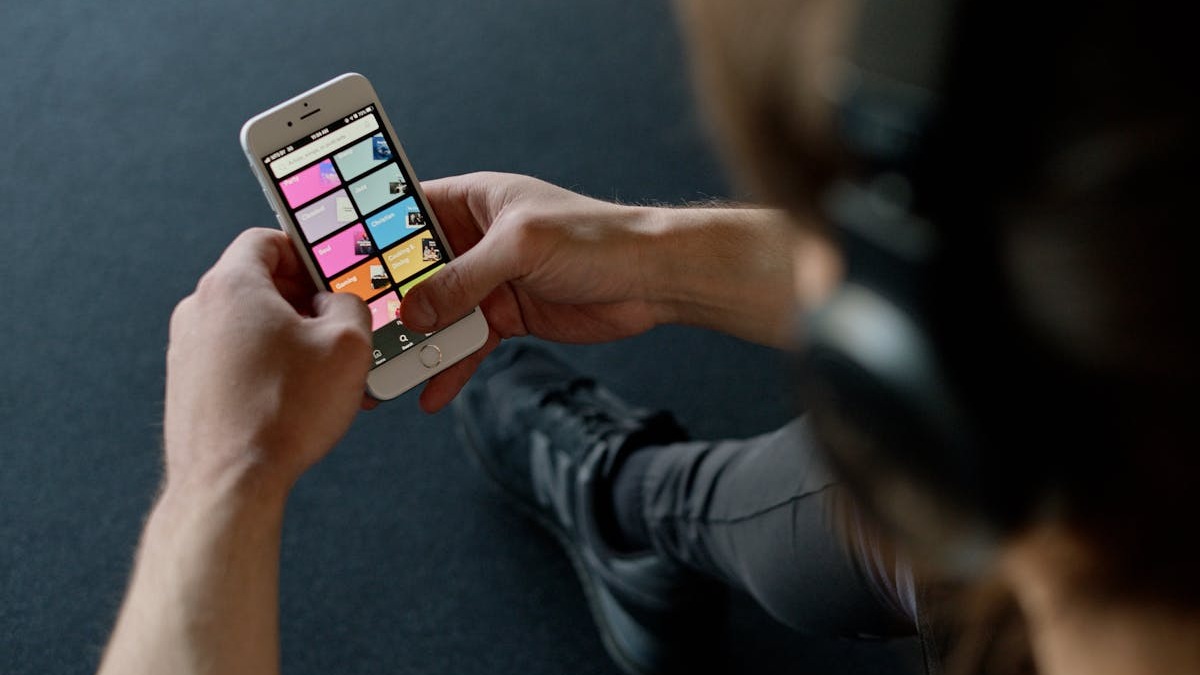 AI voice features on ChatGPT and Claude let you practice speaking and listening on your phone anywhere.
Source: pexels.com
AI voice features on ChatGPT and Claude let you practice speaking and listening on your phone anywhere.
Source: pexels.com
Specific Prompts That Actually Work
These prompts are ready to copy and paste. Swap [LANGUAGE] and [TOPIC] for your situation.
For vocabulary building:
Teach me 10 [LANGUAGE] words related to [TOPIC - e.g. food, travel, work].
Give me each word, its pronunciation written out phonetically,
an example sentence, and a memory trick to help me remember it.
For grammar correction:
I'll write a few sentences in [LANGUAGE].
Please mark any errors with (ERROR), show the corrected version,
and explain the rule behind each correction in one sentence.
For roleplay practice:
Let's roleplay: you are a [ROLE - e.g. hotel receptionist, doctor, shopkeeper]
in [CITY/COUNTRY]. Respond only in [LANGUAGE].
Keep responses under 3 sentences. Start the scene.
For pronunciation (text-based):
I'm going to type out how I think these [LANGUAGE] words are pronounced
using English sounds. Tell me if I'm close and how to actually say them:
[list your words]
For our broader guide on getting the most out of AI assistants through better prompting, see our prompt engineering basics guide.
Pronunciation: Where to Get Real Help
One honest limitation of text-based AI tools: they can't hear you. For pronunciation practice, you need a speech-recognition tool.
Talkio ($11/month, 130+ languages) gives you detailed breakdowns of which sounds you mispronounced and specific instructions for fixing them. It's particularly good for languages with sounds that don't exist in English, like French nasals or Japanese pitch accent.
ELSA Speak (English only, ~$13/month) is the most precise English pronunciation tool available. It identifies individual phoneme errors - not just "your accent is off" but "you're reducing the vowel in the second syllable of 'comfortable.'" If you're learning English for professional or academic purposes, it's worth the cost.
Free option: Use the ChatGPT voice mode on your phone. It won't give you phoneme-level feedback, but it'll flag major pronunciation issues and you can practice speaking in real time without paying extra.
Building a Routine That Sticks
The research is clear on one thing: 10-15 minutes every day outperforms two hours on Sunday. Language learning is about building neural pathways through repetition, and those pathways need regular reinforcement.
A sustainable daily routine looks like this:
Morning (5 min) - Open your structured app (Duolingo, Babbel) and complete one lesson. This covers vocabulary review and basic grammar.
Afternoon (10 min) - One AI conversation session on any topic you actually care about - your job, a TV show, a hobby. Real topics keep you engaged.
Evening (optional, 5 min) - Ask your AI to quiz you on five words from the day's conversation. Active recall before sleep accelerates retention.
Two weeks of this consistently will get you further than a weekend language intensive.
How Long Until You See Results?
Realistic expectations matter. Here's a rough timeline for someone doing 20-30 minutes of daily AI-assisted practice:
- 2 weeks: You recognize common words and can handle simple greetings
- 1 month: You can read simple texts and understand slow speech
- 3 months: Basic conversations work, you can travel in the language
- 6 months: You can handle most everyday situations with confidence
Mandarin, Japanese, Arabic, and Korean take roughly twice as long as Spanish, French, Italian, or Portuguese for English speakers, because of the different writing systems and grammar structures. Adjust your expectations accordingly - but AI tools help with all of them.
What AI Still Can't Replace
AI language tutors are powerful, but honest about their limits is important here. A few things AI genuinely can't do as well as a human:
- Cultural nuance: AI knows facts about culture but doesn't live it. A human tutor from Mexico City will catch things about informal Mexican Spanish that no AI currently handles reliably.
- Real motivation: AI won't text you to ask why you skipped practice. Human accountability - a language partner, a class, a tutor - is still one of the strongest predictors of long-term success.
- Complex grammar discussions: For tricky edge cases (when to use which Japanese particle, the subtle difference between C1-level French subjunctive constructions), a qualified human teacher explains more reliably than an AI, which can sometimes hallucinate plausible-sounding but incorrect rules.
The ideal setup combines AI for daily practice volume with occasional human interaction for cultural authenticity and complex questions.
Sources:
- Language Learning With AI Tools: Complete Guide for 2026 - Migaku
- How to Learn a Language with AI: The Ultimate Guide (2026) - Languatalk
- Best AI Tools for Language Learning in 2026: ChatGPT, Claude, Gemini - Latin American Spanish Cafe
- Effectiveness of Chatbots in Improving Language Learning: A Meta-Analysis - Wiley/IJAL
- Duolingo Max Features - Duolingo Blog
- What's the best AI language learning app in 2026? - Languatalk
✓ Last verified April 9, 2026

