
Using AI for Health Questions - A Practical Guide
Learn when AI can genuinely help with health questions, when it falls short, and how to ask smarter questions to get safer answers.
 10 min read
Over 230 million people ask health and wellness questions on ChatGPT every week, according to OpenAI's own data from January 2026. That number tells you something important: people have already decided to use AI for health - the question isn't whether to do it, but how to do it without putting yourself at risk.
TL;DR
- AI is useful for learning about conditions, preparing for doctor visits, and understanding lab results - but not for diagnosing symptoms or managing treatment
- Studies show AI gives problematic health answers nearly half the time, even when it sounds confident
- Use the green/yellow/red system in this guide to decide when AI helps and when it doesn't
- Takes about 10 minutes to read, no medical background required
This guide covers exactly that. You'll learn what AI chatbots do well for health, where they go wrong, what symptoms should send you straight to a doctor (not a chatbot), and how to phrase your questions so you actually get useful answers.
How Big Is AI Health Use Right Now?
The numbers are striking. About 32% of American adults have turned to AI chatbots for health advice - roughly half of everyone who searches for health information online at all. That's a massive shift from even two years ago, when most people went to WebMD or Google and sorted through a list of links.
The appeal makes sense. You can ask a chatbot "why does my head hurt when I stand up too fast" and get a conversational explanation in seconds. No scrolling through ads, no links to irrelevant forum posts, no jargon-heavy clinical studies.
But that ease also creates a trap. AI responses sound authoritative whether they're right or wrong. Unlike a search result, they don't show their sources unless you ask. And the research on accuracy is sobering.
What the Research Says About Accuracy
A 2026 Oxford University study found that nearly half of chatbot health responses were "problematic" - about 30% were "somewhat problematic" and 19.6% were classified as "highly problematic," meaning they were potentially harmful or dangerously incomplete.
The real-world gap is even wider. In controlled tests, AI models correctly answered health questions about 95% of the time when researchers typed them in cleanly. But when real patients used the same chatbots in a natural way - rambling descriptions, skipped context, the way actual people talk - the correct answer rate dropped to under 35%.
That gap isn't a flaw in the AI. It's how the tool works. The model can only work with what you give it.
"Language models are much, much better than Google when it comes to identifying medical conditions - but they performed very well in isolation and much worse in real conversations with people."
- Adam Rodman, physician and medical AI researcher, Harvard
The AI hallucinations explained guide covers this in depth, but the short version is: AI models sometimes generate confident-sounding wrong answers, and health is a domain where that's especially dangerous because the stakes are high and the language sounds clinical and reassuring regardless of accuracy.
 AI can help patients come to appointments better prepared - but it can't replace what happens in the room.
Source: unsplash.com
AI can help patients come to appointments better prepared - but it can't replace what happens in the room.
Source: unsplash.com
The Traffic Light System
The most practical framework for health AI use comes from Adam Rodman's work at Harvard, published in the Harvard Gazette in May 2026. It breaks health questions into three categories.
Green Light - Generally Safe to Ask
These questions have context-independent answers - the response doesn't depend heavily on your specific history or current state:
- "What are common side effects of metformin?" (understanding a medication)
- "What does a TSH blood test measure?" (understanding a lab result)
- "What foods should someone with high blood pressure limit?" (general nutrition guidance for a diagnosed condition)
- "What questions should I ask my cardiologist about my upcoming echocardiogram?" (preparing for an appointment)
- "How long does a typical UTI take to resolve with antibiotics?" (general recovery timelines)
AI is reliable for these because the answers are grounded in medical knowledge that doesn't shift based on who you are.
Yellow Light - Use With Caution
These are questions where AI can help orient you, but you need to verify with a real clinician before acting:
- Asking AI to help you understand your discharge notes or test results
- Getting a plain-English explanation of a diagnosis you've already received
- Researching whether a symptom you've had for months is worth mentioning at your next check-up
The risk here isn't that the AI is wrong about the facts - it's that context matters. Your history, your other medications, your age and weight all affect what "normal" means for you.
Red Light - Don't Rely on AI
These questions require clinical judgment, access to your full medical history, or the ability to physically examine you. No chatbot can substitute:
- Figuring out what's causing your current symptoms
- Deciding whether to take or stop a medication
- Questioning whether your doctor's prescription was the right call
- Managing a chronic condition without clinician oversight
- Any situation involving severe, sudden, or rapidly changing symptoms
"The best way to use AI is not as a replacement for medical advice but as a way to help prepare - or increase your understanding before or after visits," says Rodman.
When to Skip the Chatbot Entirely
Some symptoms need emergency care, and chatbots are bad at recognizing them. Research shows health-focused AI models consistently underestimate the urgency of emergency presentations.
Call 911 or go to an emergency room right away for:
- Chest pain or pressure
- Sudden severe headache unlike any you've had before
- Difficulty breathing or shortness of breath at rest
- Sudden weakness, numbness, or difficulty speaking
- Signs of a serious allergic reaction (throat swelling, hives with dizziness)
- Severe abdominal pain
- Any symptom that's rapidly getting worse
One widely cited case involved a user describing chest tightness to a chatbot and being told to take aspirin and rest at home - a response that missed what turned out to be a cardiac event. The chatbot wasn't being careless; it was doing what it does, which is pattern-matching against training data. It can't listen to your breathing, check your pulse, or look you in the eye.
How to Ask AI Health Questions Better
The quality of an AI health answer depends heavily on how you frame the question. Vague prompts produce vague - and often wrong - answers.
Give full context. Instead of "my stomach hurts," write: "I'm 34 years old, female, no major medical history. I've had a dull ache in my lower left abdomen for three days. It gets worse after eating. I haven't had any nausea or fever."
Specify what you need. "I want a plain-English explanation of what this diagnosis means, not treatment recommendations" gets a different - and safer - response than "what should I do about this."
Ask for question lists. One of the best uses of AI is ending a session with: "What are the three most important questions I should ask my doctor at my next appointment based on what I've described?" This turns the chatbot into a preparation tool rather than a diagnostic one.
Ask it to show its confidence. Try: "How certain are you about this? Where might this information be incomplete or wrong?" Models are getting better at calibrated uncertainty, and this prompt often surfaces important caveats.
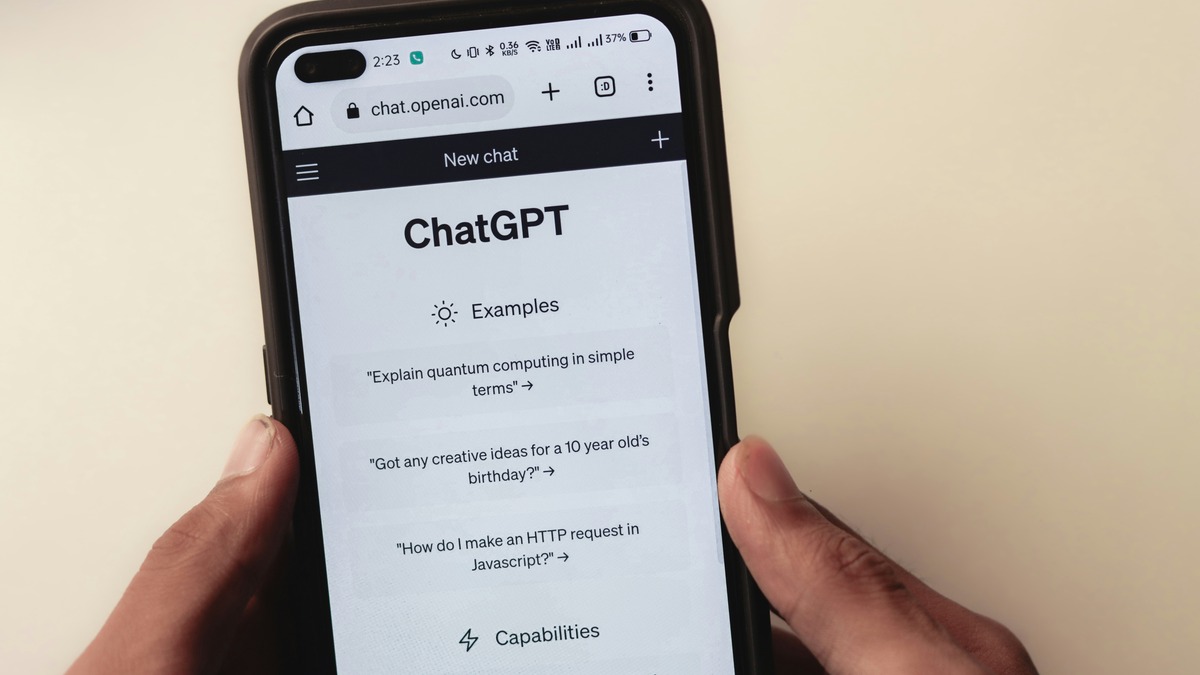 How you phrase a health question to AI matters as much as which AI you use.
Source: unsplash.com
How you phrase a health question to AI matters as much as which AI you use.
Source: unsplash.com
Which AI Tools Work for Health
Several tools now offer dedicated health features, each with different strengths.
ChatGPT Health (launched January 2026) is OpenAI's dedicated health space inside ChatGPT. You can optionally connect Apple Health, medical records via Epic or other portals, and wellness apps like MyFitnessPal. Health conversations are encrypted separately and not used to train OpenAI's models. It's currently available to Free, Plus, and Pro users on web and iOS, outside the EU.
Claude for Healthcare (Anthropic, January 2026) can access connected health records when granted permission and aims to assist with complex clinical language. Our ChatGPT vs Claude vs Gemini comparison covers how these general-purpose models differ in practice.
Gemini (Google) has deep integration with Google's health research databases and strong performance on medical knowledge questions.
Ada Health is a dedicated symptom assessment app rather than a general chatbot. It takes a structured history before offering guidance and is designed specifically for patients rather than general audiences.
For accuracy benchmarks, AMBOSS LiSA 1.0 - a clinician-focused tool, not publicly available - scored highest in 2026 research at 62.3%. Among general-purpose models, Gemini 2.5 Pro reached 59.9%, GPT-5 scored 58.3%, and Claude Sonnet 4.5 hit 58.2%. These numbers sound low, and that's the point: even the best models get it wrong four times in ten.
For a broader roundup of dedicated tools in this space, see our best AI tools for healthcare comparison.
The Privacy Problem Nobody Mentions
When you describe symptoms to your doctor, that conversation is protected by HIPAA (the Health Insurance Portability and Accountability Act in the US). When you type the same symptoms into an AI chatbot, it isn't. Your data is covered by the platform's privacy policy - which varies widely and may permit uses you wouldn't expect.
A few practical steps:
- Avoid full identifiers. There's no reason to include your full name, date of birth, or address in a health query.
- Shift your age slightly. If you're 43, saying "mid-40s" doesn't change the medical answer but makes the data less linkable to you.
- Use dedicated health modes. ChatGPT Health and Claude for Healthcare offer additional encryption and clearer no-training commitments than a standard chat window.
- For sensitive conditions - mental health, reproductive health, addiction - consider whether you want that data tied to your account at all.
A Note on Specialist AI Tools
Symptom checkers and dedicated health apps are different from general chatbots, and sometimes better suited to specific needs. Ada Health guides you through a structured interview before responding. OpenEvidence is designed for clinicians and cites peer-reviewed sources. These tools are worth knowing about even if you don't use them for everyday questions.
If you want to understand how to ask better questions across any AI tool, the prompt engineering basics guide is a good starting point.
FAQ
Can I use AI to self-diagnose symptoms?
AI can help you understand what conditions match your symptoms, but it shouldn't be your final word on diagnosis. It lacks your medical history, can't examine you, and has error rates of 40-50% in real-world use. Use it to prepare questions for a doctor, not to replace the appointment.
Is it safe to share health information with AI chatbots?
General chatbots aren't covered by HIPAA, so your health data is governed by the platform's privacy policy. Dedicated tools like ChatGPT Health and Claude for Healthcare offer extra encryption. For sensitive conditions, use those tools or keep your queries non-identifying.
Which AI chatbot is best for health questions?
No general-purpose chatbot scores above 60% on medical accuracy benchmarks in 2026. ChatGPT Health and Claude for Healthcare add health-specific privacy protections. Ada Health uses a structured intake designed for symptom assessment. The "best" depends on your specific use case.
What should I do in a medical emergency?
Call 911 or go to an emergency room. Don't ask a chatbot first. AI models consistently underestimate the urgency of emergency presentations - one study found they failed to recognize emergency-level cases a significant proportion of the time.
Can AI help me understand my test results?
Yes - this is one of the strongest use cases. Pasting a lab report and asking for a plain-English explanation, or asking what follow-up questions to raise with your doctor, is truly useful. Asking AI to tell you whether your results are worrying is where it gets unreliable, because that depends heavily on your full history.
Sources:
- Introducing ChatGPT Health - OpenAI
- OpenAI unveils ChatGPT Health, 230 million users ask health questions weekly - TechCrunch
- New study warns of risks in AI chatbots giving medical advice - Oxford University
- Should you ask ChatGPT for medical advice? - Harvard Gazette
- ChatGPT is not always reliable on medical advice, new research suggests - NPR
- Can you trust AI for health advice? - Mayo Clinic
- Half of AI health answers are wrong even though they sound convincing - The Conversation
- 5 Tips to Get Useful Health Answers from AI Chatbots - TIME
- The hidden risks of asking AI for health advice - Duke University School of Medicine
- Anthropic announces Claude for Healthcare - TechCrunch
- 12 most accurate AI models for medical questions - ICT&Health
✓ Last verified May 7, 2026

