
How to Use AI for Fitness and Workout Planning
A beginner's guide to using AI tools like ChatGPT, Fitbod, and Freeletics to build personalized workout plans and reach your fitness goals faster.
 9 min read
Getting a truly personalized workout plan used to mean paying $100 or more per hour for a certified personal trainer. Most people skipped it and picked up a generic routine from a fitness magazine - one that wasn't built for their schedule, their equipment, or their body. AI changes that. In 2026, you can describe your goals, your constraints, and your current fitness level to a chatbot and get a detailed, structured plan in under two minutes.
TL;DR
- AI tools can build personalized workout plans based on your goals, available time, and equipment - no gym membership required
- Start free with ChatGPT or Claude, then graduate to a dedicated fitness app like Fitbod or Freeletics for ongoing tracking
- AI is a useful starting point, not a substitute for a doctor or physio if you have injuries or chronic health conditions
- Takes about 15-20 minutes to set up your first plan, no prior fitness knowledge needed
What AI Can Actually Do for Your Fitness
Before you dive in, it helps to know what you're working with. AI fitness tools fall into two camps: general-purpose chatbots (like ChatGPT or Claude) that can write you a plan from scratch, and dedicated fitness apps that use AI to track your progress and adapt your routine over time.
Both approaches work. They just suit different people.
A chatbot is great for getting started quickly. You describe yourself, state your goals, and get a week-by-week plan you can follow right away. There's nothing to install, and the first session is free. The limitation is that it doesn't track your workouts, so it can't automatically adjust based on how you're actually doing.
Dedicated AI fitness apps - covered in the next section - solve that tracking problem. They watch what you lift, what you skip, and how hard you pushed, then tweak the next session accordingly. That feedback loop is where AI truly earns its place in fitness.
Step 1 - Build Your First Plan with ChatGPT or Claude
The fastest way to start is to open ChatGPT (free at chat.openai.com) or Claude (at claude.ai) and paste in a detailed prompt. The more specific you are, the better the plan you'll get.
A vague prompt like "give me a workout plan" produces a vague plan. A specific prompt produces something you can actually follow.
The starter prompt template
Copy this, fill in the brackets, and paste it into any general-purpose AI:
Act as a certified personal trainer. Create a [4-week / 8-week] beginner workout plan for me.

My details:
- Age: [your age]
- Fitness level: [complete beginner / been active before but out of shape / some gym experience]
- Primary goal: [lose fat / build muscle / get more flexible / improve general fitness]
- Days per week I can train: [2 / 3 / 4]
- Time per session: [20 minutes / 30 minutes / 45 minutes]
- Available equipment: [none - bodyweight only / resistance bands / dumbbells at home / full gym access]
- Any injuries or limitations: [none / bad knees / lower back pain / etc.]

For each week, give me:
1. A day-by-day schedule
2. The exercises for each session, with sets and reps
3. A brief note on what to focus on for that week

Keep the language simple - I'm new to this.
That level of detail gives the AI enough to work with. It won't recommend barbell squats if you said you only have resistance bands.
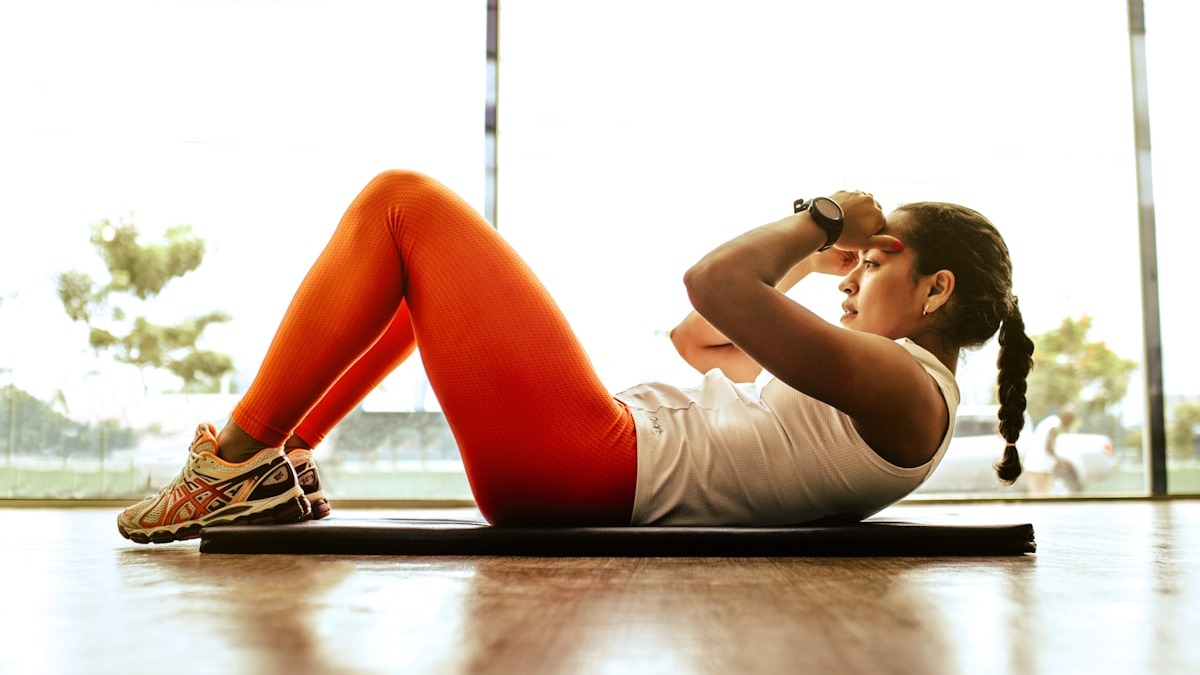 Bodyweight exercises like sit-ups need no equipment and are a natural starting point for any AI-produced plan.
Source: unsplash.com
Bodyweight exercises like sit-ups need no equipment and are a natural starting point for any AI-produced plan.
Source: unsplash.com
Refining the plan
Once you get a response, don't just accept the first draft. AI tools respond well to follow-up requests:
- "The Tuesday session has too many exercises - can you cut it to four?"
- "I don't have room for jumping jacks in my apartment - swap them for something quiet"
- "Week 3 feels too advanced - scale it back by 20%"
This back-and-forth is where a good prompt really shines, and our prompt engineering basics guide covers the principles behind writing prompts that get you closer to what you want on the first try.
Step 2 - Try a Dedicated AI Fitness App
If you want your plan to evolve based on what you're actually doing - rather than what you planned to do - a dedicated AI fitness app is the right next step. These apps track your sessions, learn your patterns, and adjust future workouts automatically.
Fitbod - best for strength training
Fitbod builds each session around your training history, estimated muscle recovery, and available equipment. Its algorithm has learned from over 2.8 billion logged lifting sets, which is what lets it make truly calibrated recommendations rather than generic progressions. Users who train four times per week with Fitbod reach their strength goals 23% faster than people following fixed templates, according to the company's own data.
The free tier lets you log up to ten workouts before asking you to subscribe. That's enough to get a real feel for how it works.
Freeletics - best for no-equipment workouts
Freeletics is built around bodyweight training and has over 60 million users worldwide. Its AI Coach adjusts your next session based on how you rated the previous one - too easy, too hard, or just right. The app offers over 700 exercises and describes itself as having more than a trillion possible workout combinations, which means it doesn't recycle the same sessions week after week.
The free version covers the basics. Premium runs from $34.99 for three months to $79.99 per year and unlocks personalized training journeys.
FitnessAI - best for gym beginners
FitnessAI is purpose-built for people new to the gym. It keeps sessions to three compound exercises lasting 15 to 30 minutes, and uses analysis of 5.9 million calibrated data points to recommend the exact weight, sets, and reps for your next session. Subscriptions run between $39 and $129 per year depending on the plan.
 Dedicated AI apps like Fitbod and FitnessAI track your lifts over time and adjust your next session based on how you performed.
Source: unsplash.com
Dedicated AI apps like Fitbod and FitnessAI track your lifts over time and adjust your next session based on how you performed.
Source: unsplash.com
Step 3 - Add AI for Nutrition and Recovery
A workout plan alone only gets you so far. What you eat and how well you recover determines whether the effort actually sticks. AI can help with both.
Nutrition
Tools like Strongr Fastr combine workout tracking with macronutrient-focused meal planning. You enter your goal (fat loss, muscle gain, or maintenance), and it generates recipes and grocery lists aligned with your calorie targets. For the food side of the equation, our AI for cooking and meal planning guide goes into more depth on how to get accurate, practical meal suggestions from AI tools.
Recovery with WHOOP
WHOOP 5.0 is a wearable fitness tracker whose AI engine focuses specifically on recovery, sleep, and strain. Its AI feature - WHOOP Coach - is powered by GPT-4 and lets you ask natural-language questions about your health metrics. You can ask "why did my recovery score drop this week?" and get an explanation based on your actual data, not generic advice.
WHOOP 5.0 also introduced a feature called Healthspan with WHOOP Age, which uses nine biomarkers (including VO2 max, sleep consistency, and heart rate variability) to estimate your physiological age. It's expensive - the hardware plus subscription isn't cheap - but for serious athletes, the recovery data is truly useful.
What AI Can't Do - Know the Limits
AI isn't a doctor, and it doesn't know your body the way a qualified physiotherapist or personal trainer does.
AI is a useful first draft. A professional signs off on it.
Research published in JMIR Medical Education found that AI-produced exercise recommendations are promising but carry real gaps - including missing information that could lead to harm for users with health conditions. Duke University researchers also flagged in early 2026 that AI health tools are prone to "hallucinations," sometimes recommending made-up resources or unsafe techniques with complete confidence.
The practical rule is this: if you have any of the following, see a professional before following an AI-generated fitness plan:
- A recent injury or surgery
- Chronic conditions like heart disease, diabetes, or osteoporosis
- Joint problems (knees, hips, shoulders)
- Pregnancy or recent postpartum
For everyone else - healthy adults who want to get moving - AI is a fast, free, and surprisingly good starting point.
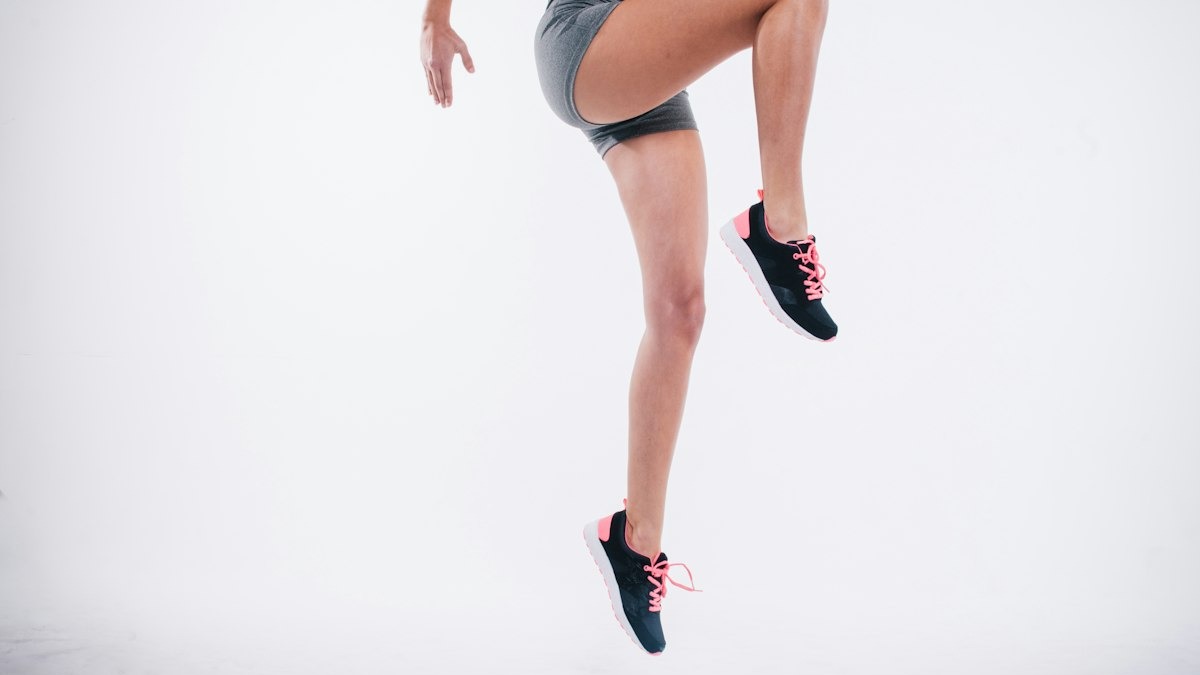 AI workout plans work best for healthy adults who want structure and variety without the cost of a personal trainer.
Source: unsplash.com
AI workout plans work best for healthy adults who want structure and variety without the cost of a personal trainer.
Source: unsplash.com
Six Tips to Get Better Results
These make the difference between a plan you follow and one you abandon after week two.
- Be honest in your prompt. If you can realistically train three days a week, say three - not five. An overly ambitious plan is the fastest path to quitting.
- Start easier than you think you need to. It's much easier to ask the AI to increase intensity later than to recover from an injury caused by jumping in too hard.
- Tell the AI when something isn't working. Hated the exercise? Felt too easy? The plan changed? Just say so. Follow-up prompts cost nothing.
- Log your workouts, even roughly. If you're using a chatbot rather than a dedicated app, keeping a simple note of what you did each session lets you paste it back in and ask for adjustments based on real data.
- Don't switch plans every week. AI makes it easy to produce a new plan whenever motivation dips, but consistency beats novelty. Give any plan at least four weeks before judging it.
- Treat the nutrition side seriously. Workout plans without dietary adjustments tend to plateau faster. Even a rough macro target - protein especially - makes a measurable difference.
Comparing Your Options at a Glance
| Tool | Cost | Best for | Equipment needed |
|---|---|---|---|
| ChatGPT / Claude | Free | Getting started, custom plans | None |
| Fitbod | Free + subscription | Strength training progress | Gym or home weights |
| Freeletics | Free + premium | Bodyweight, no equipment | None |
| FitnessAI | $39-129/year | Gym beginners | Gym |
| WHOOP 5.0 | Hardware + subscription | Recovery tracking, athletes | Wearable device |
The best starting point for most beginners is a free chatbot session to draft your first four-week plan. If you stick with it for a month, that's the signal to invest in a dedicated app.
AI fitness tools are only useful if you actually open the app and do the workout. That part is still on you.
Sources:
✓ Last verified April 30, 2026

