

OpenRouter Review: One API Key to Rule Them All
OpenRouter routes your API calls to 300+ models across every major provider through a single endpoint. We benchmark its routing, latency overhead, pricing, and reliability against direct API access.
They summarize our coverage. We write it.
Newsletters like this one rebroadcast our headlines - often without the full review, the source reading, or the analysis underneath. Our weekly briefing sends the work they paraphrase, straight from the desk, before they get to it.
Free, weekly, no spam. One email every Tuesday. Unsubscribe anytime.
OpenRouter routes your API calls to 300+ models across every major provider through a single endpoint. We benchmark its routing, latency overhead, pricing, and reliability against direct API access.

Grok has grown from a chatbot into a full AI platform - SuperGrok tiers, 2M context, Imagine video, Aurora images, DeepSearch, and the Grok 4.20 beta. We review the entire ecosystem to see if xAI's ambition matches its execution.

Perplexity has evolved from an AI search experiment into a $9B company processing 500 million queries per month. We tested Pro, the API, and the new Sonar models to see if it truly beats Google at search.

OpenAI's Atlas combines a Chromium browser with GPT-5.2 agent capabilities. It browses, books, shops, and researches on your behalf - when it works. We tested it for two weeks to find out how often that is.

Google's Antigravity is a cloud-native AI IDE built on Gemini 3 that costs $2.4 billion in infrastructure alone. We benchmark it against Cursor, Claude Code, and GitHub Copilot to see if the investment pays off.

IronClaw is an AI agent framework built by Llion Jones, a co-author of the Transformer paper. It prioritizes sandboxed execution, formal skill verification, and zero-trust architecture. We tested whether security-first means capability-second.

ZeroClaw rewrites OpenClaw's core in Rust, delivering 14x faster skill execution, 90% lower memory usage, and memory safety guarantees. We benchmark it against the original and the competition.
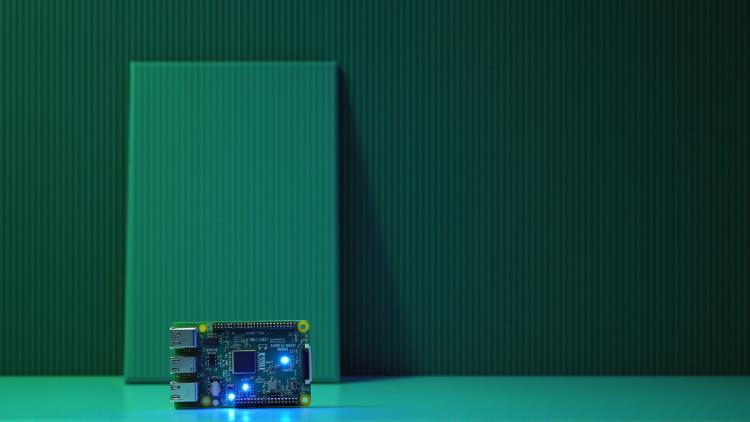
PicoClaw runs OpenClaw-compatible skills on a Raspberry Pi 5. We tested whether a $10 edge AI agent can deliver meaningful automation on hardware you can hold in your hand.

nanobot strips the AI agent concept down to 4,000 lines of Python. No skill marketplace, no social network for bots - just a clean, auditable agent that does what you tell it. We tested whether minimalism holds up.

We spent three weeks with OpenClaw, the open-source AI agent with 200K+ GitHub stars. Its skill ecosystem and autonomous automation are unmatched - but critical security flaws and cost surprises keep it from a recommendation.

Google's Gemini 3.1 Pro more than doubles its predecessor's reasoning scores and introduces adjustable thinking modes, but latency issues and preview-status quirks keep it from a clean sweep.
Google's Gemini 3 Deep Think trades speed for depth, delivering record-breaking reasoning benchmarks - but at a steep price.
