
Best AI Models for Voice and Speech - June 2026
ElevenLabs Scribe v2 leads ASR at 2.2% WER after a price cut to $3.67/1000 min, Microsoft MAI-Transcribe-1.5 debuted at #3, and Gemini 3.1 Flash TTS now tops the naturalness leaderboard.
 11 min read
TL;DR
- ASR winner: ElevenLabs Scribe v2 at 2.2% WER - and a price cut from $6.67 to $3.67/1000 min since March
- Microsoft's new MAI-Transcribe-1.5 entered at #3 with 2.4% WER and 5x transcription speed over comparable models
- TTS winner by Elo: Gemini 3.1 Flash TTS now leads the Artificial Analysis Arena; Mistral's Voxtral TTS is the open-weight challenger at 70ms TTFA and $16/M chars
- Ranking benchmarks: Artificial Analysis AA-WER v2.0 (ASR); Artificial Analysis Arena Elo (TTS)
Voice and speech is still two distinct leaderboards. Speech-to-text (ASR) has the cleaner story: an independent benchmark, real-world datasets, and scores that actually track production performance. Text-to-speech is messier. The Artificial Analysis Arena Elo score is the most credible quality signal available, but "most credible" still means blind human preference tests with unverified sample diversity. Latency is objective; naturalness isn't. This page covers both, with honest notes on where the numbers come from.
Since the March 2026 update, three things shifted materially: Microsoft launched MAI-Transcribe into the top three, ElevenLabs cut ASR pricing by 45%, and the TTS Elo leaderboard reshuffled with Gemini 3.1 Flash TTS pulling ahead.
Speech-to-Text Rankings
The Artificial Analysis AA-WER v2.0 leaderboard covers 51 models across AgentTalk, VoxPopuli, and Earnings22 datasets. Lower WER is better. Prices are per 1,000 minutes of audio.
| Rank | Model | Provider | AA-WER | Price (/1K min) | Verdict |
|---|---|---|---|---|---|
| 1 | Scribe v2 | ElevenLabs | 2.2% | $3.67 | Highest accuracy, now much cheaper |
| 2 | MAI-Transcribe-1.5 | Microsoft Azure | 2.4% | $6.00 | New entrant, 5x faster than peers |
| 3 | MAI-Transcribe-1 | Microsoft Azure | 2.6% | $6.00 | Solid option if 1.5 is overkill |
| 4 | Gemini 3.1 Pro (High) | 2.8% | $18.15 | Accurate but expensive | |
| 5 | Gemini 3 Flash (High) | 2.9% | $13.70 | Better value within Google's lineup | |
| 6 | Gemini 2.5 Pro | 2.9% | $11.39 | Still competitive at lower price | |
| 7 | Universal-3 Pro | AssemblyAI | 3.1% | $3.50 | Best features-to-price ratio |
| 8 | Solaria-3 | Gladia | 3.2% | $10.16 | Bundled diarization, 100+ languages |
| 9 | Voxtral Transcribe 2 | Mistral | ~4%† | $1.80 | Cheapest near-accurate option |
| 10 | Whisper Large v3 | OpenAI | ~7.4% | $0.36/hr | Open-source baseline, 99 languages |
| 11 | Nova-3 | Deepgram | ~18%‡ | $2.58 | Best streaming latency, worst accuracy |
| 12 | Cohere Transcribe | Cohere | 5.42%§ | Free (API) | Open-weight, #1 on HF Open ASR |
†Voxtral Transcribe 2 FLEURS score from Mistral's own evaluation; not yet in AA-WER leaderboard. ‡Deepgram's official batch WER is 5.26%; Artificial Analysis independent benchmark shows ~18% on mixed real-world audio. §Cohere Transcribe WER is from HuggingFace Open ASR Leaderboard, which uses different datasets than AA-WER.
One note on ElevenLabs: Scribe v1 is deprecated effective July 9, 2026. Any pipeline still pointing to scribe_v1 stops working on that date.
Text-to-Speech Rankings
The Artificial Analysis Arena ranks TTS models by blind human preference tests (Elo). Latency is measured as time-to-first-audio (TTFA). Pricing is per 1M characters.
| Rank | Model | Provider | Arena Elo | TTFA | Price (/1M chars) | Verdict |
|---|---|---|---|---|---|---|
| - | Fun-Realtime-TTS | Fun | ~1224 | Not published | Research preview | Best Elo, no public access |
| 1 | Gemini 3.1 Flash TTS | ~1222 | Not published | Via Gemini API | Top-ranked, 30 HD voices, 99 languages | |
| 2 | Realtime TTS-2 | Inworld | ~1208 | P90 <250ms | $35 on-demand | Highest-ranked GA model |
| 3 | Sonic 3.5 | Cartesia | ~1203 | ~82ms | Per credit | Fastest latency at quality tier |
| 4 | Grok TTS | xAI | ~1200 | Fast | $4.20 | New April 2026, inline expression tags |
| 5 | Flash v2.5 | ElevenLabs | - | 75ms | $50 | Real-time staple, 1,200+ voices |
| 6 | Voxtral TTS | Mistral | - | 70ms | $16 | Open-weight 4B, 68.4% win rate vs Flash v2.5 |
| 7 | gpt-4o-mini-tts | OpenAI | - | ~200ms | $15 | Best instruction-following TTS |
| 8 | ElevenLabs v3 | ElevenLabs | - | Not real-time | Plan-based | Highest quality, batch/async only |
Fun-Realtime-TTS tops the Elo table but has no public pricing or production access. The practical ranking starts with Gemini 3.1 Flash TTS.
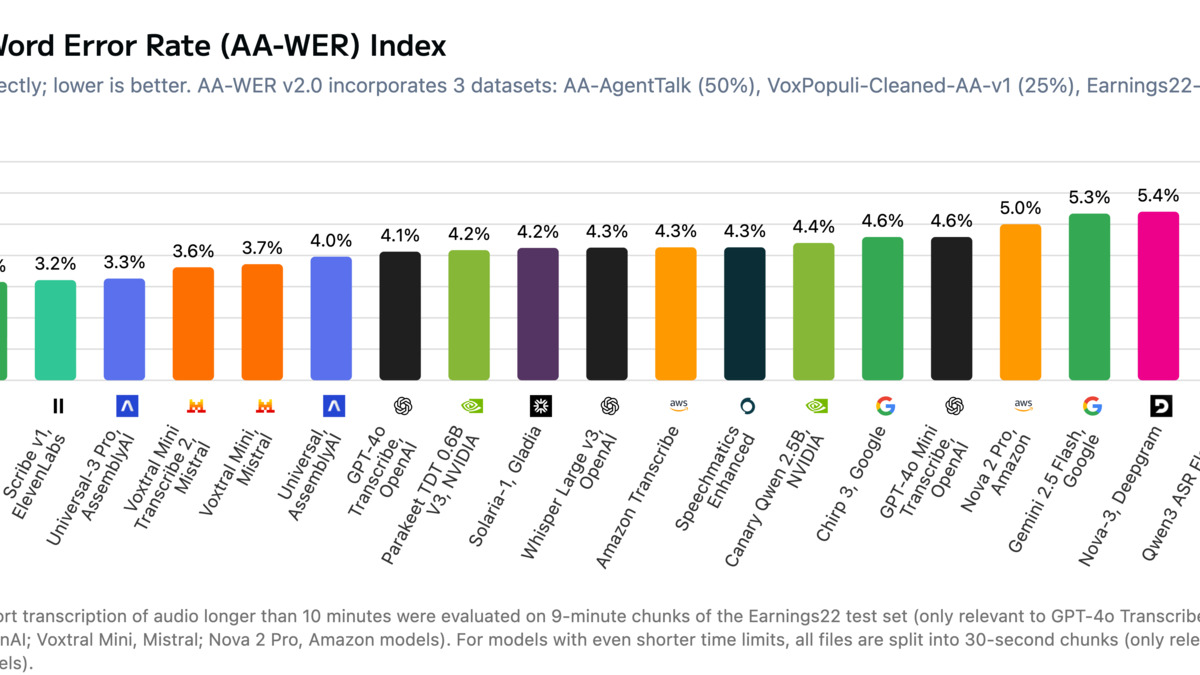 Speech-to-text accuracy vs. price for leading ASR APIs, updated June 2026 data. ElevenLabs and Microsoft now cluster at the top; Google offers the best cost-accuracy curve.
Source: artificialanalysis.ai
Speech-to-text accuracy vs. price for leading ASR APIs, updated June 2026 data. ElevenLabs and Microsoft now cluster at the top; Google offers the best cost-accuracy curve.
Source: artificialanalysis.ai
Detailed Analysis
Microsoft MAI-Transcribe-1.5 - The New Enterprise Default
Microsoft announced MAI-Transcribe-1.5 at Build 2026, and it entered directly at #2 on the AA-WER leaderboard. The 2.4% WER is close to Scribe v2's 2.2%, but the real differentiator is throughput: MAI-Transcribe-1.5 processes an hour of audio in under 15 seconds, roughly 5x faster than other models at the same accuracy tier. For high-volume batch jobs, that matters more than fractions of a WER point.
Pricing at $0.36/hr ($6.00/1000 min) sits above ElevenLabs and AssemblyAI but well below Google's premium Gemini 3.1 Pro option. The 43-language coverage with keyword biasing (30% WER reduction on domain-specific terms) makes it the natural choice for enterprise deployments that need speed with accuracy. MAI-Transcribe-1 at 2.6% WER is available at the same price if the 1.5 update adds no value for a given use case.
ElevenLabs - Scribe v2 Leads, Flash v2.5 Holds Real-Time TTS
ElevenLabs Scribe v2 holds the top ASR spot at 2.2% WER. The bigger story since March is the 45% price cut - from $6.67 to $3.67 per 1,000 minutes. That reduction closes the gap with AssemblyAI ($3.50/1000 min) and makes Scribe v2 a serious option for cost-sensitive production pipelines. Scribe v2 Realtime, launched January 2026, handles live transcription at under 150ms.
On TTS, Flash v2.5 remains the real-time workhorse at 75ms TTFA and $50/M chars. ElevenLabs v3 delivers the best voice quality available but isn't designed for real-time - use it for audiobooks, voiceovers, or pre-rendered IVR greetings. Don't confuse them in production pipelines. The AI voice generators comparison covers ElevenLabs in more depth.
Google - Strong Across Both Tracks
Google's ASR options span a wide price range: Gemini 3.1 Pro at $18.15/1000 min for 2.8% WER, down to Gemini 2.5 Pro at $11.39 for the same 2.9% WER. For the majority of teams, Gemini 2.5 Pro is the better pick - you give up 0.1 WER points and save 37%. Gemini 3.1 Flash-Lite drops to $5.83 at 3.4% WER if the accuracy bar is lower.
On TTS, Gemini 3.1 Flash TTS now leads the Artificial Analysis Arena Elo at roughly 1,222 - above ElevenLabs on quality rankings. It ships with 30 HD voices, 99-language auto-detection, and 32k token context. The Gemini Live API supports real-time bidirectional audio for conversational agents. Pricing through the Gemini API is usage-based; check the current Google AI pricing page for per-character rates.
Mistral - Voxtral Transcribe 2 and a TTS Entry
Mistral released two speech products in 2026. Voxtral Transcribe 2 is the cheapest competitive ASR option at $0.003/min ($1.80/1000 min). On FLEURS, it posts roughly 4% WER - vendor-reported, not yet on the AA-WER leaderboard. Mistral claims it processes audio 3x faster than ElevenLabs Scribe v2 while matching on accuracy at one-fifth the cost. At that price point, it's worth testing for batch workloads even if the independent benchmark picture is incomplete.
Voxtral TTS is more remarkable. It's an open-weight 4B parameter model at 70ms TTFA supporting 9 languages. Human blind tests put it at a 68.4% win rate against ElevenLabs Flash v2.5. At $16/M chars via API, it's the strongest open-weight TTS option available. Note the license: CC BY-NC 4.0, so commercial self-hosting requires a separate agreement with Mistral.
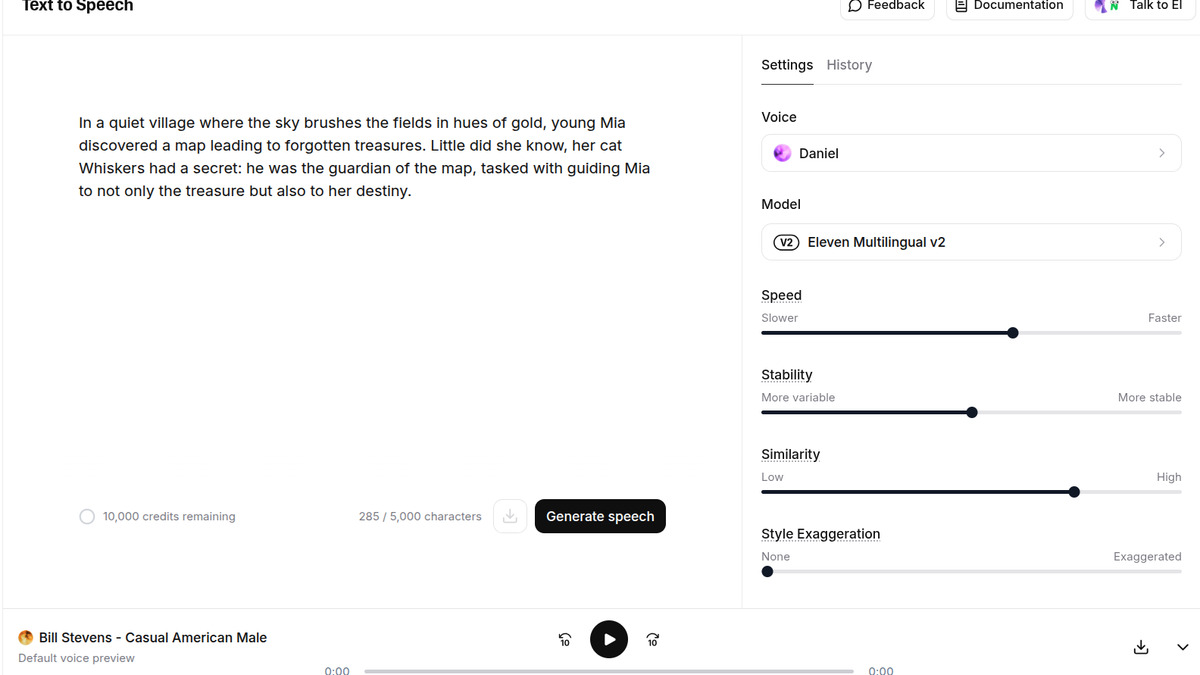 ElevenLabs' platform spans both ASR (Scribe v2, now at $3.67/1000 min) and TTS (Flash v2.5 for real-time, v3 for high-quality batch).
Source: nerdynav.com
ElevenLabs' platform spans both ASR (Scribe v2, now at $3.67/1000 min) and TTS (Flash v2.5 for real-time, v3 for high-quality batch).
Source: nerdynav.com
Open-Source ASR - Cohere Takes the Lead
The open-source ASR picture changed in March 2026. Cohere released Transcribe (cohere-transcribe-03-2026), a 2B-parameter Conformer model under Apache 2.0 that currently holds the #1 spot on the HuggingFace Open ASR Leaderboard at 5.42% average WER. It supports 14 languages and runs on consumer-grade GPUs. Cohere also offers it free through their API.
The runner-up list shows Qwen3-ASR-1.7B at 5.76% WER and NVIDIA Parakeet TDT 0.6B v2 at 6.05% - both significantly ahead of where Whisper Large v3 (7.44% WER) sat when it was the default open-source pick. For high-volume self-hosted batch workloads, Cohere Transcribe is now the first option to benchmark.
Whisper Large v3 remains relevant for language breadth (99 languages vs. Cohere's 14) and for the ecosystem - Whisper v3 Turbo at 6x faster than full Whisper, available via Groq at $0.04/hr, is still the cheapest overall option.
xAI - New TTS Entrant
xAI launched Grok STT and TTS APIs on April 18, 2026. Grok TTS ranks at approximately Elo 1,200 on the Artificial Analysis Arena - competitive with Cartesia and ElevenLabs Flash v2.5. Pricing at $4.20/M chars is notably lower than ElevenLabs ($50) or OpenAI TTS. The model supports inline expression tags like [laugh], [sigh], and [breath] plus wrapping tags for whisper and emphasis. It runs on the same stack as Grok Voice and Tesla vehicle audio. The AI voice agents guide covers xAI TTS in the agent stack context.
Methodology
ASR benchmark: Artificial Analysis AA-WER v2.0 combines three datasets with weighted averaging: AA-AgentTalk (50%), VoxPopuli-Cleaned-AA (25%), and Earnings22-Cleaned-AA (25%). The dataset mix focuses on conversational AI use cases. It currently covers 51 commercial and open-source models. This is the most credible independent ASR benchmark available.
TTS benchmark: The Artificial Analysis Arena uses blind human preference comparisons to produce Elo ratings - the same approach as Chatbot Arena for LLMs. Sample diversity and rater demographics aren't fully published, so treat rankings as directional. TTFA is measured independently and is the most objective TTS metric.
Data mismatch warning: Deepgram's officially published batch WER (5.26%) and Artificial Analysis's independent measurement (~18%) diverge by more than 3x. Both figures are plausible - they measure different audio conditions. Deepgram's internal test uses curated clean audio; AA-WER uses real-world conversational, parliamentary, and financial audio. When in doubt, run your own benchmark on audio representative of your actual use case.
What's not measured: Speaker diarization accuracy, punctuation quality, domain vocabulary (medical, legal, financial), streaming stability under load, and TTS emotional range. These affect production quality significantly but aren't captured in WER or Elo scores.
Historical Progression
Q2 2025 - OpenAI releases Whisper Large v3, reducing WER by 10-20% over v2. ElevenLabs and Deepgram dominate commercial ASR. Cartesia Sonic 3 launches with 40ms TTFA.
Q3 2025 - Deepgram releases Nova-3. ElevenLabs enters ASR with Scribe v1. Gemini 2.5 Flash TTS ships with 30 HD voices and Live API support.
Q4 2025 - Cohere's NVIDIA Canary Qwen 2.5B tops the HuggingFace Open ASR Leaderboard. Mistral releases Voxtral Small, the first non-specialist company in the ASR top three.
Q1 2026 - ElevenLabs launches Scribe v2 Realtime (150ms, January). Cohere open-sources Transcribe (March), taking #1 on the HF Open ASR Leaderboard at 5.42% WER under Apache 2.0. Gladia upgrades to Solaria-3.
Q2 2026 - Microsoft announces MAI-Transcribe-1 and MAI-Transcribe-1.5 at Build 2026, entering the top three of the AA-WER leaderboard right away. xAI launches Grok STT and TTS APIs (April). ElevenLabs cuts Scribe v2 pricing by 45%. Mistral releases Voxtral Transcribe 2 and Voxtral TTS. Inworld Realtime TTS-2 takes the #1 GA TTS spot on Artificial Analysis Arena (May).
The trend is clear: voice AI is no longer a specialist market. In 18 months, a generalist API provider (Google), an European LLM lab (Mistral), a hyperscaler (Microsoft), and a social media company (xAI) have all entered the top tiers of both ASR and TTS rankings. The moat that ElevenLabs and Deepgram built on pure voice expertise is narrowing.
 Self-hosted ASR in 2026 means Cohere Transcribe on consumer GPUs, not just Whisper on a beefy server.
Source: pexels.com
Self-hosted ASR in 2026 means Cohere Transcribe on consumer GPUs, not just Whisper on a beefy server.
Source: pexels.com
FAQ
What's the most accurate speech-to-text API right now?
ElevenLabs Scribe v2 at 2.2% WER on AA-WER v2.0 as of June 2026. Microsoft MAI-Transcribe-1.5 is close at 2.4% and processes audio 5x faster - worth considering for high-throughput batch jobs.
What's the cheapest ASR that's still good?
Voxtral Transcribe 2 at $0.003/min ($1.80/1000 min) is the cheapest option with near-top accuracy claims, though its numbers come from Mistral's own FLEURS evaluation rather than the independent AA-WER benchmark. AssemblyAI Universal-3 Pro at $3.50/1000 min is the cheapest option with a verified AA-WER score (3.1%).
Which TTS model has the lowest latency?
Cartesia Sonic 3.5 at ~82ms TTFA for the standard tier. ElevenLabs Flash v2.5 follows at 75ms. Voxtral TTS and Mistral's open-weight option both reach 70ms. For conversational agents, all three are well inside the 800ms full-pipeline budget.
Is open-source ASR competitive with paid APIs?
Yes for English and the 14 languages Cohere Transcribe supports. Cohere's open-weight model hits 5.42% WER on the HuggingFace benchmark at no API cost. It's roughly 3 WER points behind Scribe v2 on independent benchmarks - acceptable for many production use cases, especially with free self-hosting.
What changed most between March and June 2026?
Two things: Microsoft entered the top three in ASR (MAI-Transcribe-1.5 at 2.4% WER), and the TTS Elo leaderboard reshuffled with Gemini 3.1 Flash TTS at the top and two new entrants - Inworld Realtime TTS-2 and xAI Grok TTS - in the top five.
Does Whisper still hallucinate on bad audio?
Yes. Deepgram's published study found Whisper's median WER climbed above 53% on real-world phone calls with noise and silence padding. Any Whisper deployment needs silence detection and confidence thresholds. Cohere Transcribe doesn't yet have published real-world audio noise studies, so the same caution applies.
Sources:
- Artificial Analysis Speech-to-Text Leaderboard - AA-WER v2.0 scores, pricing, speed
- Artificial Analysis TTS Arena Leaderboard - Elo ratings
- MAI-Transcribe-1.5 Announcement - Microsoft
- Introducing Scribe v2 Realtime - ElevenLabs
- Voxtral Transcribe 2 - The Decoder
- Speaking of Voxtral (TTS) - Mistral AI
- Grok STT and TTS APIs - xAI
- Cohere Transcribe release - Cohere
- HuggingFace Open ASR Leaderboard
- AssemblyAI Universal-3 Pro - AssemblyAI
- Inworld Realtime TTS Benchmarks 2026 - Inworld
- Best TTS Models May 2026 - MarkTechPost
- ElevenLabs v3 vs Flash v2.5 - Waboom AI
- Deepgram Whisper v3 Real-World Results - Deepgram
✓ Last verified June 17, 2026

