
Best AI for Data Analysis - March 2026
Claude Opus 4.6 leads LiveSQLBench at 36.4% while ChatGPT's Code Interpreter dominates spreadsheet workflows - picking the right model depends on whether you need SQL, CSV analysis, or visualization.
 10 min read
TL;DR
- Claude Opus 4.6 tops LiveSQLBench with a 36.4% success rate on real-world SQL tasks, nearly 7 points ahead of the next model
- ChatGPT (GPT-5.4) with Code Interpreter remains the strongest option for spreadsheet uploads and quick data visualization thanks to its Python sandbox
- For specialized text-to-SQL, Snowflake's Arctic-Text2SQL-R1-32B hits 71.83% on BIRD - beating every general-purpose LLM at a fraction of the cost
The best AI model for data analysis in March 2026 depends on what "data analysis" means for your workflow. If you're writing SQL against production databases, Claude Opus 4.6 leads the LiveSQLBench leaderboard at 36.4% success rate on dynamically updated queries. If you're uploading CSVs and Excel files for quick exploration, ChatGPT's Advanced Data Analysis (now powered by GPT-5.4) still offers the smoothest end-to-end experience with its built-in Python execution environment. And if you need a model that lives inside your spreadsheet, Gemini's integration with Google Sheets scored 70.48% on SpreadsheetBench - state of the art for autonomous spreadsheet manipulation.
None of these models are perfect. Even the best performers fail on more than half of complex SQL tasks. But the practical gap between "good enough" and "useless" is wide, and picking the right tool saves hours of manual work.
SQL Generation Rankings
| Rank | Model | Provider | LiveSQLBench | BIRD (EX) | Price (Input/Output) | Verdict |
|---|---|---|---|---|---|---|
| 1 | Claude Opus 4.6 | Anthropic | 36.44% | - | $5/$25 | Best general-purpose SQL generator |
| 2 | Claude Sonnet 4.5 | Anthropic | 29.93% | - | $3/$15 | Strong SQL at 60% of Opus cost |
| 3 | Kimi 2.5 | Moonshot AI | 28.30% | - | $1/$4 | Competitive from a smaller lab |
| 4 | GPT-5.4 | OpenAI | - | ~76%* | $2.50/$20 | Solid all-rounder with tool use |
| 5 | Qwen3 Coder 480B | Alibaba | 24.59% | - | $2/$8 | Best open-weight large model |
| 6 | Gemini 3.1 Pro | - | 76.02%** | $2/$12 | Native Sheets integration | |
| 7 | Arctic-Text2SQL-R1-32B | Snowflake | - | 71.83% | Self-hosted | BIRD leader among open models |
| 8 | Arctic-Text2SQL-R1-7B | Snowflake | - | 68.47% | Self-hosted | Best 7B model for SQL |
| 9 | GLM 4.7 | Zhipu AI | 22.96% | - | $0.50/$2 | Budget option with decent accuracy |
| 10 | MiniMax M2.1 | MiniMax | 22.66% | - | $1/$5 | Reducing returns below this tier |
*GPT-based agent systems (AskData + GPT-4o) scored 81.95% on BIRD dev set with oracle knowledge. **CHASE-SQL + Gemini scored 76.02% on BIRD dev set.
Two benchmarks tell different stories here. LiveSQLBench tests models on fresh SQL problems across dynamically updated datasets from November 2024 through September 2026, making contamination nearly impossible. BIRD assesses execution accuracy on 95 real databases with complex schemas. The scores aren't directly comparable - LiveSQLBench is harder, which explains why even the top model sits at 36%.
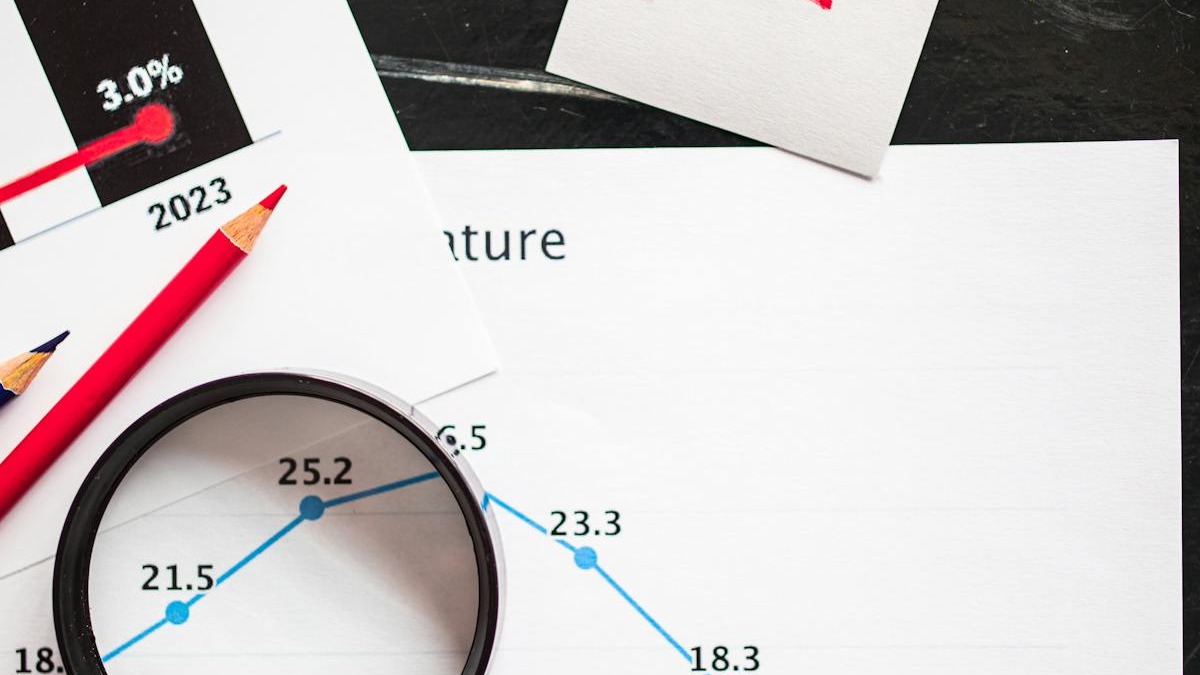 SQL generation benchmarks test whether AI-written queries return correct results on real databases - not just syntactically valid SQL.
Source: pexels.com
SQL generation benchmarks test whether AI-written queries return correct results on real databases - not just syntactically valid SQL.
Source: pexels.com
Detailed Analysis
Claude Opus 4.6 - The SQL Generation Leader
Opus 4.6's 36.44% on LiveSQLBench puts it nearly 7 points ahead of its own Sonnet 4.5 and 8 points ahead of Kimi 2.5. That margin is sizable on a benchmark where even small improvements require handling increasingly complex joins, subqueries, and database-specific syntax.
Beyond raw SQL generation, Opus 4.6 brings a 1 million token context window that changes how analysts can work with data. You can paste entire database schemas, documentation, and sample queries into a single prompt. Previous models forced you to summarize or truncate schema information - Opus 4.6 can hold hundreds of table definitions at once.
The tradeoff is price. At $5/$25 per million tokens, running Opus 4.6 on high-volume SQL generation workloads gets expensive fast. For teams that need the best accuracy on the first attempt - particularly with unfamiliar databases - the cost is justified. For repetitive, well-defined queries, Sonnet 4.5 at $3/$15 delivers 82% of the performance at 60% of the cost.
ChatGPT (GPT-5.4) - The Spreadsheet Workflow King
Where Claude leads in raw SQL accuracy, ChatGPT's Advanced Data Analysis mode leads in practical spreadsheet work. Upload a CSV or Excel file, describe what you want, and GPT-5.4 produces Python code, executes it in a sandboxed environment, and returns charts, tables, and statistical summaries. No configuration required.
GPT-5.4 includes the coding capabilities of GPT-5.3-Codex while improving how the model handles spreadsheets, presentations, and documents. It supports files up to 50 MB and can produce interactive charts (bar, pie, scatter, line) alongside static visualizations like heatmaps, box plots, and treemaps. The Python sandbox means it can run pandas, matplotlib, scikit-learn, and other data science libraries directly - something Claude's analysis tool handles with more limited JavaScript execution.
The weakness? ChatGPT's Code Interpreter sometimes hallucinates column names or misinterprets data types in messy spreadsheets. And for SQL generation specifically, it trails Claude significantly on LiveSQLBench. It's the right choice when you want to explore data visually without writing code; it's not the right choice when you need precise SQL against a production database.
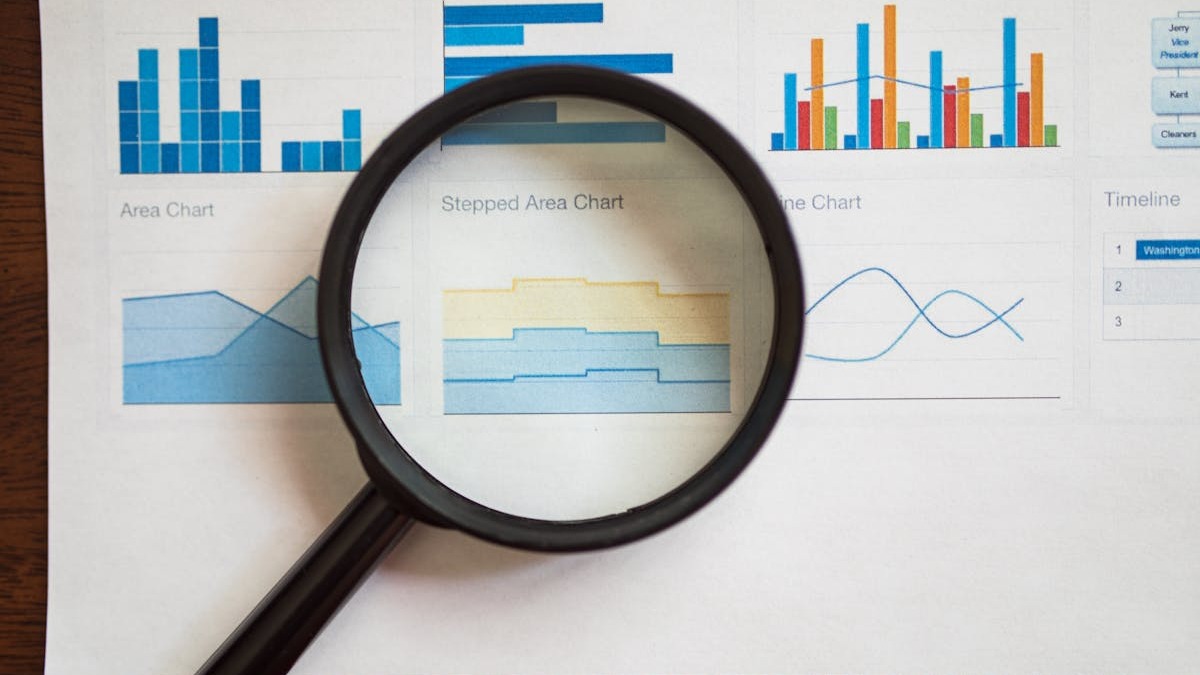 AI data visualization has shifted from basic bar charts to interactive dashboards created from natural language descriptions.
Source: pexels.com
AI data visualization has shifted from basic bar charts to interactive dashboards created from natural language descriptions.
Source: pexels.com
Gemini 3.1 Pro - The Sheets Native
Gemini 3.1 Pro takes a different approach to data analysis. Rather than uploading files to a chatbot, Gemini lives inside Google Sheets through the =AI() function, "Fill with Gemini" tools, and natural language prompts that create formulas, categorize data, and build visualizations without leaving the spreadsheet.
Google announced in March 2026 that Gemini in Sheets reached a 70.48% success rate on SpreadsheetBench, a public benchmark assessing models on autonomous spreadsheet manipulation in real-world scenarios. That score represents state of the art, reportedly passing all competitors and approaching human expert ability.
On the SQL side, Gemini-based agent systems (CHASE-SQL + Gemini) scored 76.02% on the BIRD benchmark dev set. Its 2 million token context window at $2/$12 per million tokens makes it cost-effective for processing large datasets. The limitation is that Gemini's strongest data analysis features are tightly coupled to the Google Workspace ecosystem - teams not on Google Sheets won't benefit from the native integration.
Snowflake Arctic-Text2SQL-R1 - The SQL Specialist
Snowflake's Arctic-Text2SQL-R1 family deserves special attention for teams that need high-accuracy text-to-SQL and can self-host. The 32B parameter model reached 71.83% execution accuracy on BIRD, beating every other open and proprietary model on that benchmark. The 14B variant hits 70.04%, and even the 7B model reaches 68.47% - matching the performance of models ten times its size.
These are purpose-built models trained with reinforcement learning using execution-accuracy rewards. They don't do general-purpose chat or data visualization. They convert natural language questions into SQL, and they do it well within their specialization. For data teams running Snowflake or similar warehouses, launching Arctic-Text2SQL locally eliminates per-query API costs entirely.
Spreadsheet and CSV Analysis Comparison
| Feature | ChatGPT (GPT-5.4) | Claude Opus 4.6 | Gemini 3.1 Pro |
|---|---|---|---|
| Max file upload | ~50 MB | 30 MB | Via Sheets (no limit) |
| Code execution | Python sandbox | JavaScript (limited) | In-sheet formulas |
| Interactive charts | Yes (bar, pie, scatter, line) | Limited | Via Sheets charts |
| Context window | 128K tokens | 1M tokens | 2M tokens |
| Statistical analysis | Full (pandas, scikit-learn) | Partial (code execution beta) | Via Sheets functions |
| ML model training | Yes | Yes (beta) | No |
| Best for | Quick exploration, visualization | Large schema reasoning, SQL | Sheets-native workflows |
Claude's code execution feature (still marked beta as of March 2026) narrows the gap with ChatGPT by allowing Python execution with uploaded files. But ChatGPT's sandbox is more mature, handles larger datasets more reliably, and supports a broader set of Python libraries. For most spreadsheet-first workflows, ChatGPT remains the practical default.
 The practical test for any data analysis AI isn't benchmark scores - it's whether the output saves an analyst time on real work.
Source: pexels.com
The practical test for any data analysis AI isn't benchmark scores - it's whether the output saves an analyst time on real work.
Source: pexels.com
Dedicated Data Analysis Tools
General-purpose LLMs aren't the only option. Several specialized data analysis tools have carved out niches:
Julius AI connects to Postgres, BigQuery, Google Drive, and Snowflake, handling datasets up to 32 GB. It runs natural language queries, produces visualizations, and can build basic forecasting models. SOC 2 Type II and GDPR compliant. Pricing starts at $37/month for Pro.
Quadratic takes a different approach - it's a spreadsheet that supports SQL, Python, and JavaScript in cells alongside traditional formulas. Trusted by over 200,000 users, it bridges the gap between spreadsheet workflows and code-based analysis. Free tier available.
Databricks Genie Code (rebranded from Databricks Assistant in March 2026) operates as an autonomous agent within the Databricks ecosystem. It handles multi-step data tasks including SQL generation, notebook authoring, and dashboard creation. Generally available for data science and engineering workloads.
These tools make sense when your analysis happens repeatedly against the same data sources. They handle connections, permissions, and scheduling that a standalone chatbot can't match.
Methodology
Rankings use two primary SQL benchmarks and one spreadsheet benchmark:
LiveSQLBench evaluates models on fresh SQL problems across dynamically updated datasets, with results spanning November 2024 through September 2026. Success rate is micro-averaged across datasets, weighted by sample count. Only models with complete results across all datasets appear on the leaderboard. This is the hardest public SQL benchmark, which is why even the top score sits below 40%.
BIRD (BIg Bench for LaRge-scale Database Grounded Text-to-SQL Evaluation) tests execution accuracy across 95 real databases with over 12,000 question-SQL pairs. A 2026 VLDB paper found annotation errors in some BIRD examples, so treat individual scores with caution. The benchmark has expanded with BIRD-Interact (dynamic multi-turn evaluation) and BIRD-Critic (debugging evaluation), but the original single-turn leaderboard remains the most widely cited.
SpreadsheetBench assesses models on real-world spreadsheet editing tasks. Google reported Gemini's 70.48% success rate on this benchmark, though independent verification from other model providers is limited.
A key caveat: agent-scaffolded systems (which add retrieval, self-correction, and multi-step reasoning on top of base models) consistently outperform raw model calls. The top BIRD score of 81.95% comes from AskData + GPT-4o with oracle knowledge - a full agent pipeline, not a single model call. When evaluating for production use, the scaffolding matters as much as the base model.
Historical Progression
Mid 2024 - GPT-4 and Claude 3.5 Sonnet established the first wave of reliable AI data analysis, with ChatGPT's Code Interpreter (then Advanced Data Analysis) setting the standard for spreadsheet workflows.
Early 2025 - Gemini 2.5 Pro introduced native Google Sheets integration with the =AI() function. BIRD benchmark scores for top agent systems crossed 75%.
Mid 2025 - Snowflake released Arctic-Text2SQL models, proving that small specialized models could outperform general-purpose LLMs on SQL generation.
Late 2025 - Claude Opus 4.5 brought extended context that changed schema-heavy SQL workflows. LiveSQLBench launched as a contamination-resistant alternative to BIRD.
March 2026 - Claude Opus 4.6 leads LiveSQLBench at 36.4%. Gemini hits 70.48% on SpreadsheetBench. Arctic-Text2SQL-R1-32B hits 71.83% on BIRD. The field has fractured into specialists rather than converging on a single winner.
The trend is clear: data analysis is splitting into distinct sub-capabilities where different models dominate. A single "best AI for data analysis" no longer exists. The right answer depends on whether you need SQL generation, spreadsheet manipulation, statistical analysis, or visualization - and increasingly, on which platform ecosystem you already use.
FAQ
What's the best free AI for data analysis?
Gemini in Google Sheets is free for Workspace users and scored 70.48% on SpreadsheetBench. For SQL, Snowflake's Arctic-Text2SQL-R1-7B is open-weight and free to self-host.
Can AI replace a data analyst?
Not yet. The best model (Claude Opus 4.6) succeeds on only 36% of LiveSQLBench tasks. AI accelerates analysis but still needs human oversight for complex joins, business logic, and data quality checks.
Is Claude or ChatGPT better for spreadsheets?
ChatGPT's Code Interpreter handles spreadsheet uploads more reliably with full Python execution. Claude excels when you need to reason over large schemas or create precise SQL. Different strengths for different tasks.
How accurate is AI-produced SQL?
It varies widely. Agent-scaffolded systems hit 82% on BIRD with oracle knowledge. Single model calls typically score 25-40% on the harder LiveSQLBench. Always review AI-generated SQL before running against production databases.
Which AI handles the largest datasets?
Julius AI supports up to 32 GB datasets. Among general LLMs, Gemini 3.1 Pro with its 2M token context window handles the most data in a single prompt. Claude Opus 4.6's 1M token window is the next largest.
How often do data analysis rankings change?
New models and updates ship every 4-6 weeks. Major benchmark shifts happen 2-3 times per year when a new model family launches. We update this page monthly with fresh benchmark data.
Sources:
✓ Last verified March 26, 2026

