
Best AI Models for Code Generation - July 2026
Claude Opus 5 matches near-frontier coding scores at half the price of Anthropic's own Mythos-class models - here's the full July 2026 ranking.
 10 min read
Source: pexels.com
TL;DR
- Claude Opus 5 leads SWE-bench Verified among generally available models at 96.0%, priced at $5/$25 per million tokens - half of what Anthropic's own Mythos-class models charge for a similar score
- GPT-5.6 Sol reportedly matches it at 96.2%, but OpenAI hasn't published an official number and access is still gated to roughly 20 partners
- GLM-5.2 is the open-weight standout: 62.1% on SWE-bench Pro under an MIT license, the highest Pro score outside the Claude and OpenAI tier
Three months ago, the story was SWE-bench Verified saturating in the high 70s and low 80s, with SWE-bench Pro stepping in as the real differentiator. In July 2026, the entire frontier moved up a full tier. Anthropic's Claude Fable 5 and Mythos 5 broke 95% on SWE-bench Verified in June, and Claude Opus 5 followed on July 24 by nearly matching that score at half the price. SWE-bench Verified is now saturated at the very top - four models cluster between 95% and 96.2% - which makes SWE-bench Pro, pricing, and access restrictions the things that actually separate a "best" pick from a merely available one.
The practical answer: Claude Opus 5 is the best model for code generation that you can actually buy today without a waitlist, at $5 input / $25 output per million tokens. If budget isn't the constraint and you can get access, Anthropic's restricted Mythos 5 edges it out on SWE-bench Pro. If you want an open-weight model, GLM-5.2 is the one posting real numbers under an MIT license.
Rankings Table
| Rank | Model | Provider | SWE-bench Verified | SWE-bench Pro | Price (Input/Output) | Verdict |
|---|---|---|---|---|---|---|
| 1 | Claude Opus 5 | Anthropic | 96.0% | 79.2% | $5/$25 | Best generally-available pick; near-Mythos coding at Opus 4.8 pricing |
| 2 | Claude Mythos 5 | Anthropic | 95.0% | 80.3% | $10/$50 | SWE-bench Pro leader, but capped to ~100 Glasswing partners |
| 3 | Claude Fable 5 | Anthropic | 95.0% | 80.0% | $10/$50 | Widest-available Mythos-class model; any API customer can buy it |
| 4 | GPT-5.6 Sol | OpenAI | 96.2%† | not published | $5/$30 | Third-party-reported leader; gated to ~20 approved partners |
| 5 | Gemini 3.1 Pro | 80.6% | 54.2% | $2/$12 | Best-value GA flagship while Gemini 3.5 Pro stays delayed | |
| 6 | DeepSeek V4-Pro | DeepSeek | 80.6% | not split out | $1.74/$3.48 | Cheapest frontier-class score, fully open weights |
| 7 | MiniMax M3 | MiniMax | 80.5%‡ | 59.0% | $0.60/$2.40 | Frontier-adjacent score at a fraction of the cost; self-reported |
| 8 | Qwen3.7-Max | Alibaba | 80.4% | 60.6% | $2.50/$7.50 | Leads Terminal-Bench 2.0 and SWE-bench Pro among closed flagships |
| 9 | Kimi K2.6 | Moonshot AI | 80.2% | 58.6% | $0.60/$2.50 | Cheapest fully-open-weight model with a verified Pro score |
| 10 | GLM-5.2 | Zhipu AI | not published | 62.1% | $1.40/$4.40 | Highest SWE-bench Pro score outside Claude and OpenAI; MIT license |
| 11 | Kimi K3 | Moonshot AI | not published | Coding Index 76.2§ | $3.00/$15.00 | Newest entrant; leads Artificial Analysis's Coding Index, weights still not public |
† Reported by third-party trackers (vals.ai); OpenAI hasn't published an official SWE-bench number for GPT-5.6 Sol ‡ MiniMax's own figure; TechTimes and other outlets flag it as not yet independently reproduced § Artificial Analysis composite Coding Index, not a SWE-bench score
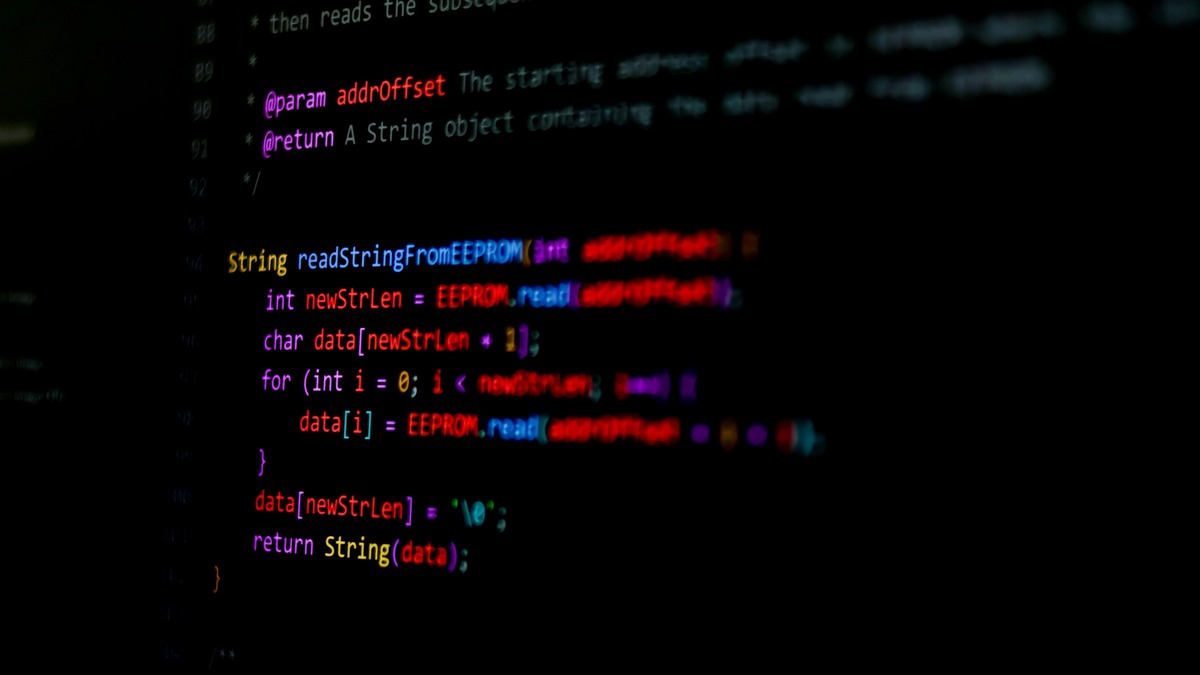 SWE-bench tasks require models to produce working patches for real GitHub issues, not just isolated code snippets.
Source: pexels.com
SWE-bench tasks require models to produce working patches for real GitHub issues, not just isolated code snippets.
Source: pexels.com
Detailed Analysis
Claude Opus 5 - The New Practical Pick
Claude Opus 5 launched July 24 at exactly Opus 4.8's old price - $5 input, $25 output per million tokens - while posting a 96.0% SWE-bench Verified score that lands within a point of Anthropic's restricted Mythos-class models. Anthropic isn't even claiming it's the smartest model in its own lineup; that title stays with Fable 5. What Opus 5 delivers instead is the best score-per-dollar of anything on this list that ships without a waitlist.
The one place it trails is SWE-bench Pro, where its 79.2% sits behind both Mythos 5 (80.3%) and Fable 5 (80.0%). For most engineering teams that gap won't matter - it's well within the range where scaffolding and prompt quality dominate the outcome more than the base model does. For teams specifically chasing the hardest multi-file, multi-repository tasks, the Mythos-class models still edge it out.
Claude Mythos 5 and Claude Fable 5 - The Ceiling, If You Can Reach It
Anthropic's June release of Claude Fable 5 and Claude Mythos 5 introduced a tier above Opus for the first time. Both hit 95.0% on SWE-bench Verified, and Mythos 5 posts the highest SWE-bench Pro score in the field at 80.3%, just ahead of Fable 5's 80.0%. The two models share pricing - $10 input, $50 output per million tokens - and architecture, but not availability.
Fable 5 is sold through the standard API to any customer willing to pay Mythos-class rates. Mythos 5 isn't: it's limited to roughly 100 partners inside Anthropic's Project Glasswing program, mostly for cybersecurity and biosecurity-adjacent research use cases. That restriction means its SWE-bench Pro lead, while real, isn't something most engineering teams can act on. Batch pricing on both models drops to $5/$25, matching Opus 5's standard rate for asynchronous jobs.
 Long-context, multi-file coding is where the top-tier Anthropic and Google models are now converging on near-identical SWE-bench Verified scores.
Source: pexels.com
Long-context, multi-file coding is where the top-tier Anthropic and Google models are now converging on near-identical SWE-bench Verified scores.
Source: pexels.com
GPT-5.6 Sol - Gated, Unverified, Possibly Irrelevant to You
OpenAI's GPT-5.6 Sol shipped in a limited preview restricted to roughly 20 government-vetted partners, with no official SWE-bench Verified or SWE-bench Pro number published at launch. Third-party trackers, most consistently vals.ai, report a 96.2% Verified score - which would make it the nominal leader of this entire table - but that figure hasn't been independently confirmed the way Anthropic's numbers have.
Treat the 96.2% the same way last quarter's article treated GPT-5.4's vendor-reported SWE-bench Pro score: as a ceiling claim from a restricted-access system, not a number you can currently reproduce. Until OpenAI widens access or publishes its own evaluation, GPT-5.6 Sol belongs in a different category from the other entries on this list - interesting, unconfirmed, and not available to most engineering teams regardless of its score.
GLM-5.2 - The Open-Weight Standout
Zhipu AI's GLM-5.2 is the model to watch if open weights matter to your stack. Its 62.1% on SWE-bench Pro clears GPT-5.5's 58.6% and its own predecessor GLM-5.1's 58.4% by a real margin - not a rounding error, and independently reported by multiple outlets tracking the benchmark. It ships under an MIT license with a 1M-token context window, on hardware trained entirely on Huawei Ascend chips rather than NVIDIA GPUs.
At $1.40 input / $4.40 output per million tokens, GLM-5.2 is cheap on paper. In practice it's verbose - it burns roughly 43,000 output tokens per coding task versus 16,000 for GPT-5.5 - so the effective cost per completed task lands closer to the frontier tier than the sticker price suggests. For teams that specifically need to self-host or fine-tune, that's still a reasonable trade. For teams optimizing raw dollars per API call, do the per-task math before committing.
 Open-weight models trained on non-NVIDIA hardware, like GLM-5.2's Huawei Ascend-trained architecture, are now posting frontier-adjacent coding scores.
Source: unsplash.com
Open-weight models trained on non-NVIDIA hardware, like GLM-5.2's Huawei Ascend-trained architecture, are now posting frontier-adjacent coding scores.
Source: unsplash.com
Gemini 3.1 Pro and DeepSeek V4-Pro - Best Value
Gemini 3.1 Pro remains the safest value pick among generally-available flagships: 80.6% on SWE-bench Verified, 91.7% on LiveCodeBench, and a 1M-token context window at $2/$12 per million tokens. Its successor, Gemini 3.5 Pro, was announced in May and repeatedly delayed - Google missed a June target and a rumored July 17 date, and today it still has no public model card or confirmed pricing. Until that changes, 3.1 Pro is still Google's shipping flagship.
DeepSeek V4-Pro matches Gemini's 80.6% Verified score at a fraction of the price - $1.74/$3.48 per million tokens - with fully open weights and a 93.5% LiveCodeBench score in its maximum reasoning mode. It's the strongest argument on this list for treating "open-weight" and "cheap" as separate axes: DeepSeek isn't the least expensive model here, but it delivers a truly frontier-adjacent score without any access restrictions.
Methodology
Rankings combine three signals, weighted by what they actually measure:
SWE-bench Verified - 500 human-confirmed GitHub issues requiring a patch that passes the project's existing test suite. This benchmark saturated at the 76-81% tier back in April 2026; the entire frontier has since moved up to a new ceiling around 95-96%, set by Anthropic's Mythos-class models and matched by Claude Opus 5. Scores below roughly 80% now sit a full tier behind the leaders, not within noise of them.
SWE-bench Pro - a harder, 1,865-task benchmark spanning 41 repositories in multiple languages. This is where the real separation happens once Verified saturates: Mythos 5's 80.3% versus Opus 5's 79.2% is a meaningfully different result even though both models look nearly identical on Verified.
Access and verification status - a model's number is only as useful as your ability to act on it. GPT-5.6 Sol's 96.2% and Kimi K3's Coding Index lead are both third-party or vendor-reported figures from systems with restricted or incomplete public availability. Claude Mythos 5's SWE-bench Pro lead is real but locked to ~100 partners. None of these are fabricated numbers, but they carry a different confidence level than a score you can reproduce today by calling a public API.
Four models now cluster within 1.2 points of each other at the top of SWE-bench Verified. The benchmark that separated the field in April no longer does - which is exactly what happened to SWE-bench Verified itself a year earlier.
None of these benchmarks measure developer productivity directly. A model can lead SWE-bench Pro while trailing on LiveCodeBench because the two test different skills: codebase navigation and patch generation versus algorithmic reasoning under contamination-resistant conditions.
Historical Progression
March 2025 - Claude 3.5 Sonnet held the SWE-bench lead at roughly 49%, with GPT-4o close behind.
January 2026 - Four models crossed 78% on SWE-bench Verified simultaneously: Claude Opus 4.5, GPT-5.2, Gemini 3 Pro, and MiniMax M2.5.
April 2026 - SWE-bench Verified plateaus at 76-81% across the frontier. SWE-bench Pro and LiveCodeBench become the primary differentiators. DeepSeek V4 enters with aggressive pricing.
June 9, 2026 - Anthropic launches Claude Fable 5 and Mythos 5, the first models to break 90% on SWE-bench Verified, introducing a restricted-access Mythos-class tier above Opus. GLM-5.2 and MiniMax M3 ship the same month.
July 16, 2026 - Moonshot AI releases Kimi K3, claiming a Coding Index lead over Fable 5 and GPT-5.6 Sol, though public weights remain undelivered past Moonshot's own July 27 target.
July 24, 2026 - Claude Opus 5 launches at Opus 4.8's old price while nearly matching Mythos-class coding scores, undercutting Anthropic's own restricted-access tier on cost.
The pattern repeats every few months: a benchmark saturates, a harder variant takes over as the real signal, and pricing becomes the tiebreaker once scores converge. SWE-bench Verified did this once already between early 2025 and April 2026. It's now doing it again at a much higher ceiling.
FAQ
What's the best model for code generation right now?
Claude Opus 5 is the best generally-available option: 96.0% on SWE-bench Verified at $5/$25 per million tokens. GPT-5.6 Sol reportedly scores higher but remains restricted to about 20 partners.
What's the cheapest model that's still competitive for coding?
Kimi K2.6 at $0.60/$2.50 per million tokens scores 80.2% on SWE-bench Verified with fully open weights - the best confirmed value in the field.
Is open-source competitive for code generation?
GLM-5.2 posts 62.1% on SWE-bench Pro under an MIT license, the highest score outside the Claude and OpenAI tier. Alibaba's Qwen3.7-Max, by contrast, went closed-weight this cycle, narrowing the open field.
Should I trust GPT-5.6 Sol's reported 96.2% score?
Treat it as unverified. OpenAI hasn't published an official SWE-bench number, and access is limited to roughly 20 partners, so the figure comes from third-party trackers rather than a reproducible public evaluation.
Why is Claude Mythos 5 restricted if it has the best coding score?
Anthropic limits Mythos 5 to about 100 partners in its Project Glasswing program, largely for security and biosecurity research use cases. Its SWE-bench Pro lead is real but not something most engineering teams can currently buy.
How often do rankings change?
Every 4-6 weeks something meaningful shifts. Three new model tiers - Anthropic's Mythos-class, GPT-5.6, and Kimi K3 - launched within the last two months alone. Check the lastVerified date on this page and the SWE-bench coding agent leaderboard before locking in a choice.
Sources:
- SWE-bench Verified
- LLM Stats - SWE-bench Verified Leaderboard
- Vals AI - SWE-bench Verified
- Scale AI SEAL Leaderboard - SWE-bench Pro
- Artificial Analysis - LiveCodeBench
- Anthropic - Introducing Claude Fable 5 and Claude Mythos 5
- Digital Applied - Claude Opus 5 launch benchmarks and pricing
- AIwiz - GPT-5.6 Sol benchmarks and pricing
- Apidog - GLM-5.2 benchmarks and pricing
- The Decoder - Kimi K3 benchmarks and hallucination trade-off
- TechTimes - MiniMax M3 open-weight coding model
- Digital Applied - Qwen's closed-flagship pivot
✓ Last verified July 29, 2026

