

Gemini 3.5 Flash: Real Speed, Selective Benchmarks
Google's Gemini 3.5 Flash is genuinely fast at 289 tok/s and competitive on agentic tasks - but the benchmark portfolio has gaps worth knowing before you build on it.
They summarize our coverage. We write it.
Newsletters like this one rebroadcast our headlines - often without the full review, the source reading, or the analysis underneath. Our weekly briefing sends the work they paraphrase, straight from the desk, before they get to it.
Free, weekly, no spam. One email every Tuesday. Unsubscribe anytime.

AI Infrastructure & Open Source Reporter
Sophie is a journalist and former systems engineer who covers AI infrastructure, open-source models, and the developer tooling ecosystem. She spent three years as a site reliability engineer at a cloud provider in Seattle before transitioning to tech journalism, which gives her writing an unusual level of technical depth - she understands distributed systems, GPU clusters, and inference optimization from the inside.
She studied Computer Engineering at the University of British Columbia and later completed a science communication fellowship at MIT. Her engineering background means she can read a model card, spot a misleading benchmark, and explain why quantization matters - all in the same paragraph.
At Awesome Agents, Sophie covers AI infrastructure news: new model releases, open-source launches, developer tools, deployment trends, and the hardware that makes it all run. She has a soft spot for underdog open-source projects that punch above their weight and a sharp eye for when a "breakthrough" is really just better marketing.
Based in Seattle, WA.
Google's Gemini 3.5 Flash is genuinely fast at 289 tok/s and competitive on agentic tasks - but the benchmark portfolio has gaps worth knowing before you build on it.

Chinese AI providers now handle over 60% of all tokens routed through OpenRouter, up from less than 2% just a year ago.
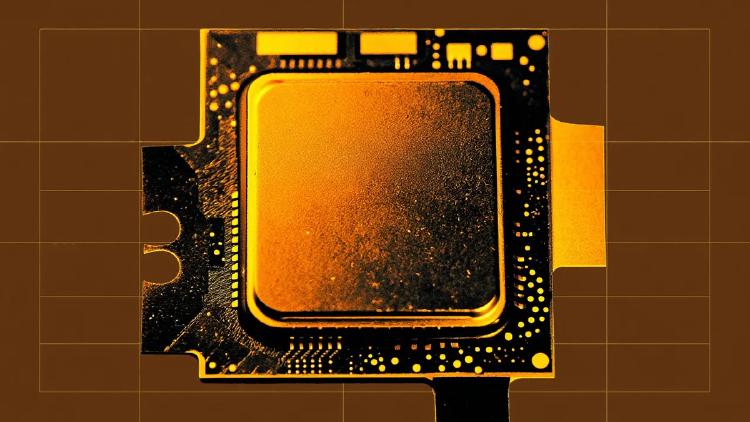
NVIDIA delivered first Vera CPUs to Anthropic, OpenAI, and SpaceX on May 17-19 as Q1 FY2027 earnings hit $81.6B, with $20B in standalone Vera CPU orders on the books for 2026.

SpaceX's IPO filing discloses that Anthropic will pay $1.25 billion per month for compute across both Colossus data centers through May 2029, totaling roughly $45 billion.

An internal OpenAI reasoning model produced an original proof disproving the Erdős unit distance conjecture, the first time AI autonomously solved a major open problem in mathematics.

Google shipped WebMCP as an early preview at I/O 2026, a proposed open web standard that lets websites expose structured tools to browser-based AI agents without DOM scraping or fragile visual automation.
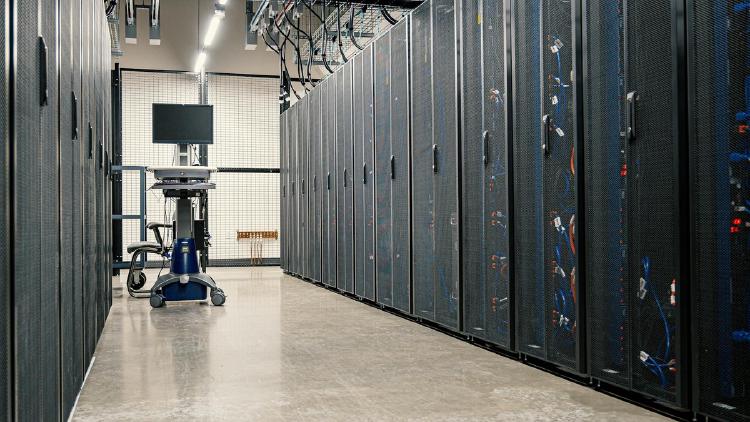
Dell Technologies World 2026 centers on sovereign AI: OpenAI Codex, Google Gemini, Grok, and Palantir are all coming on-prem via Dell AI Factory, alongside new PowerRack hardware deployable in 6.5 hours.

Google unveiled three Android XR smart glasses form factors at I/O 2026, backed by Samsung, XREAL, Warby Parker, and Gentle Monster as launch partners.

IBM Research tests 25 agent configurations across 6 real-world benchmarks and finds backbone model choice matters 58x more than agent framework design.

South Korean startup LetinAR raises $18.5M to scale its PinTILT optical modules, which already power AI glasses and AR helmets as shipments hit 8.7 million units globally in 2025.

OpenAI's Codex coding agent arrives on iPhone and Android as a remote control for desktop sessions, with QR code pairing and live terminal output for its 4 million weekly users.

Raindrop's MIT-licensed Workshop streams every token and tool call from your AI agent to a local browser dashboard, then lets Claude Code write and fix evaluations automatically.
