

Anthropic Launches @ClaudeDevs on X for Developer Updates
Anthropic launched @ClaudeDevs, a dedicated X account run by the Claude development team for changelogs, API releases, community updates, and technical deep dives.
They summarize our coverage. We write it.
Newsletters like this one rebroadcast our headlines - often without the full review, the source reading, or the analysis underneath. Our weekly briefing sends the work they paraphrase, straight from the desk, before they get to it.
Free, weekly, no spam. One email every Tuesday. Unsubscribe anytime.

AI Infrastructure & Open Source Reporter
Sophie is a journalist and former systems engineer who covers AI infrastructure, open-source models, and the developer tooling ecosystem. She spent three years as a site reliability engineer at a cloud provider in Seattle before transitioning to tech journalism, which gives her writing an unusual level of technical depth - she understands distributed systems, GPU clusters, and inference optimization from the inside.
She studied Computer Engineering at the University of British Columbia and later completed a science communication fellowship at MIT. Her engineering background means she can read a model card, spot a misleading benchmark, and explain why quantization matters - all in the same paragraph.
At Awesome Agents, Sophie covers AI infrastructure news: new model releases, open-source launches, developer tools, deployment trends, and the hardware that makes it all run. She has a soft spot for underdog open-source projects that punch above their weight and a sharp eye for when a "breakthrough" is really just better marketing.
Based in Seattle, WA.
Anthropic launched @ClaudeDevs, a dedicated X account run by the Claude development team for changelogs, API releases, community updates, and technical deep dives.
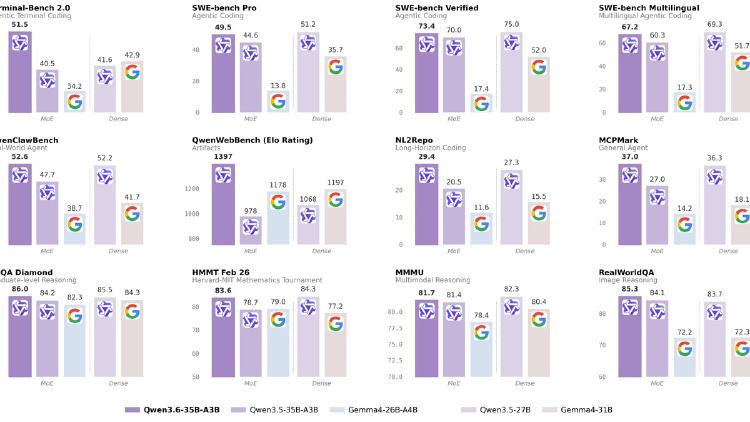
Alibaba's Qwen 3.6-35B-A3B activates only 3B of its 35B parameters per token, scores 73.4% on SWE-bench Verified, handles video and images, and ships under Apache 2.0.

OpenAI's April 2026 Agents SDK update adds sandboxed execution environments and three-layer guardrails for enterprises building long-horizon agentic systems.

A 755-point Hacker News thread and a 139-upvote GitHub issue document Claude Code Pro Max 5x users exhausting their quota in 1.5 hours. An independent investigation with 1,500 logged API calls reveals the math behind the drain.

The Caveman plugin for Claude Code cuts 65-87% of output tokens by stripping filler words and using terse fragment-based language. Its new Classical Chinese mode pushes compression even further.
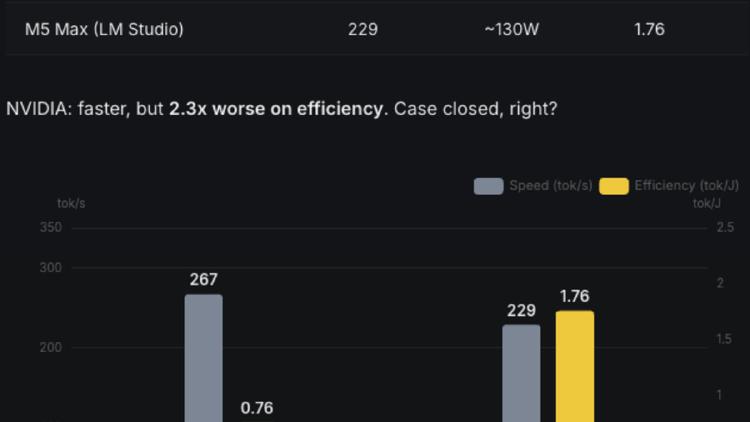
Two researchers fused all 24 layers of Qwen 3.5-0.8B into a single CUDA kernel launch, making a five-year-old RTX 3090 deliver 1.8x the throughput of an M5 Max at equal or better efficiency. The gap was software, not silicon.

Google launched a free native Gemini app for Mac with screen sharing, window context, image and video generation, and a global Option+Space shortcut - built in pure Swift with 100+ features in under 100 days.

Google is launching Skills in Chrome - save any Gemini prompt as a reusable one-click workflow that runs across tabs, with a prebuilt library and slash-command access.
Anthropic rebuilt Claude Code inside the desktop app with an integrated terminal, in-app file editing, a new diff viewer, side chats, SSH on Mac, and parallel session management - plus Routines for headless automation.

HappyHorse-1.0 topped the Artificial Analysis Video Arena with a 52-Elo gap over Seedance 2.0 - but the 'open source' model has no public weights, no inference code, and no API.
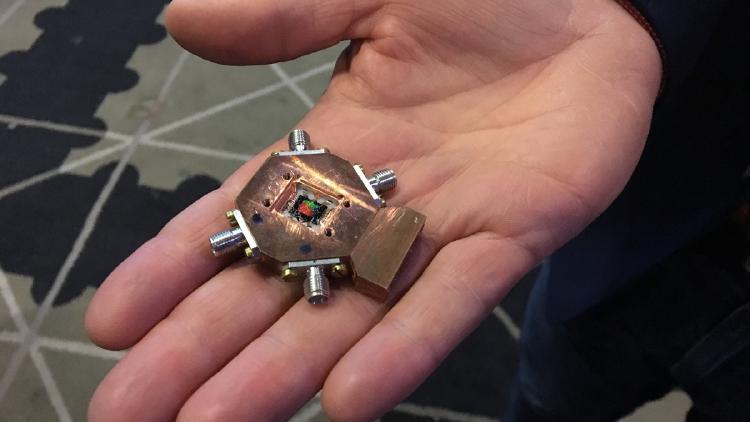
NVIDIA releases two open-source AI models for quantum hardware - a 35B vision-language model that cuts calibration time from days to hours, and CNN decoders that outpace the standard by 2.5x.

Linux 7.0 ships an official AI code policy: disclose AI tool usage with an Assisted-by tag, keep humans on the hook for every line, and stop submitting slop.
