
Kimi K2.6 - Open Weights, 300 Agents, Top Coding Score
Moonshot AI releases Kimi K2.6 under Modified MIT with open weights on HuggingFace, 300-agent swarm execution, and the highest SWE-Bench Pro score among open models.
They summarize our coverage. We write it.
Newsletters like this one rebroadcast our headlines - often without the full review, the source reading, or the analysis underneath. Our weekly briefing sends the work they paraphrase, straight from the desk, before they get to it.
Free, weekly, no spam. One email every Tuesday. Unsubscribe anytime.

AI Infrastructure & Open Source Reporter
Sophie is a journalist and former systems engineer who covers AI infrastructure, open-source models, and the developer tooling ecosystem. She spent three years as a site reliability engineer at a cloud provider in Seattle before transitioning to tech journalism, which gives her writing an unusual level of technical depth - she understands distributed systems, GPU clusters, and inference optimization from the inside.
She studied Computer Engineering at the University of British Columbia and later completed a science communication fellowship at MIT. Her engineering background means she can read a model card, spot a misleading benchmark, and explain why quantization matters - all in the same paragraph.
At Awesome Agents, Sophie covers AI infrastructure news: new model releases, open-source launches, developer tools, deployment trends, and the hardware that makes it all run. She has a soft spot for underdog open-source projects that punch above their weight and a sharp eye for when a "breakthrough" is really just better marketing.
Based in Seattle, WA.
Moonshot AI releases Kimi K2.6 under Modified MIT with open weights on HuggingFace, 300-agent swarm execution, and the highest SWE-Bench Pro score among open models.

NVIDIA's Spatial Intelligence Lab released Lyra 2.0, a 14B model that turns a single photograph into a navigable 3D environment - but the weights carry a research-only license.
Factory closed a $150M Series C at a $1.5B valuation to expand its Droids - autonomous agents that handle the full software development lifecycle, not just code generation.

A Korean CTO ran a 13-step agent harness against 100+ major open-source repos over three days, landing 500+ commits and 130+ PRs - some merged by Kubernetes, Hugging Face, and Ollama maintainers. Then GitHub banned his account for spam, confirming that platform abuse detection cannot yet tell a disciplined harness from a bot.

Z.AI updated its GLM Coding Plan usage policy. Non-coding requests now trigger aggressive throttling, and three violations mean a permanent ban - which explains the wave of 1302 and 1303 rate-limit errors users have been hitting this week.

We pulled 11,447 MCP servers from four registries, ran the GitHub and OSV APIs against them, and tried to install the top 100. Nearly a third haven't been touched in six months.

Vercel confirms an April 19 intrusion that pivoted from compromised OAuth tokens at AI office-suite startup Context.ai into a Vercel employee's Google Workspace, then into internal systems holding non-sensitive environment variables for a limited set of customer projects.
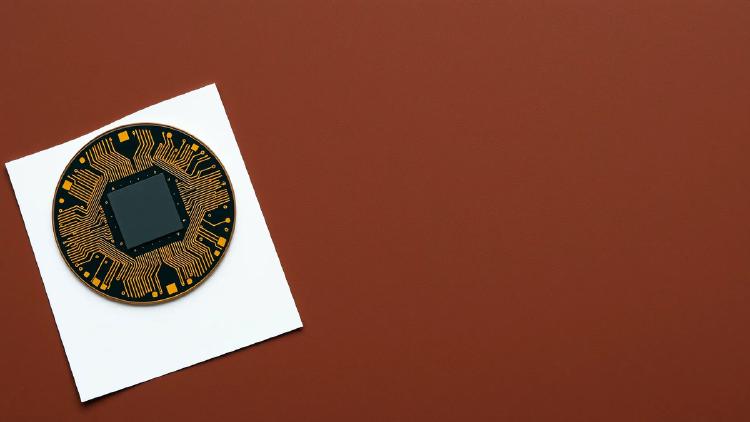
TSMC posted $35.9B in Q1 2026 revenue, a 40.6% year-over-year jump, with AI and HPC now accounting for 61% of wafer sales - and CoWoS packaging still fully booked.

Kye Gomez open-sourced OpenMythos, a PyTorch reconstruction that hypothesizes Anthropic's Mythos is a Recurrent-Depth Transformer with Mixture-of-Experts routing and Multi-Latent Attention.

MZLA Technologies launches Thunderbolt, an open-source self-hostable AI client targeting enterprises locked into Copilot, ChatGPT Enterprise, and Claude - with local SQLite storage and full model freedom.

Ox Security found that MCP's STDIO transport executes arbitrary OS commands before validating the server, exposing 200K+ instances across every major AI coding tool.
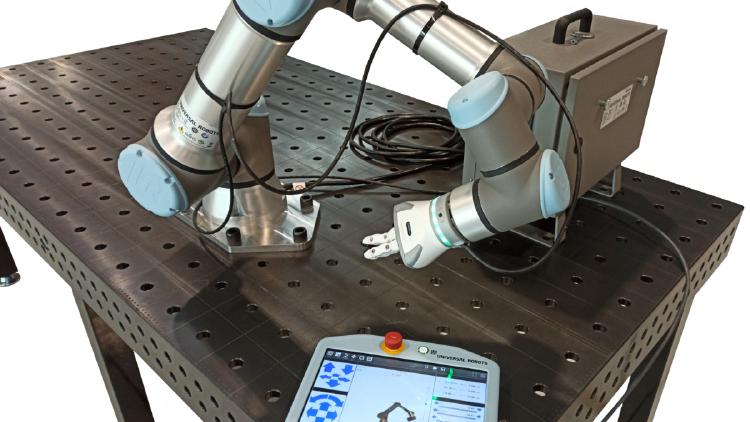
Physical Intelligence's π0.7 robot model can generalize to tasks it was never explicitly trained on, matching fine-tuned specialist models through compositional skill recombination.
