

How to Use AI for Social Media Content Creation
A beginner's guide to using AI tools like ChatGPT and Canva to write captions, plan posts, and save time on social media.

AI Education & Guides Writer
Priya is an AI educator and technical writer whose mission is making artificial intelligence approachable for everyone - not just engineers. She spent five years as a product manager at an edtech company in Bangalore before moving to the Bay Area, where she began writing about AI for mainstream audiences.
She holds an MBA from the Indian School of Business and a Bachelor's in Electronics Engineering from BITS Pilani. Her product management background gives her a sharp eye for how AI tools actually fit into people's workflows, not just how they perform on benchmarks.
At Awesome Agents, Priya writes guides, tutorials, and explainers aimed at beginners and non-technical professionals. She covers everything from prompt engineering basics to building your first AI agent. Her articles are consistently the most-shared on the site because she never assumes you already know the jargon.
She also co-hosts a monthly "AI Office Hours" livestream where readers can ask questions about getting started with AI tools.
Based in San Francisco, CA.
A beginner's guide to using AI tools like ChatGPT and Canva to write captions, plan posts, and save time on social media.

A practical, step-by-step guide to using AI chatbots and budgeting apps to manage your money, without handing over sensitive data.

GStack turns Claude Code into a virtual dev team with 28 slash commands for planning, review, QA, security, and deployment - all open source and free.

A practical guide to migrating from LangChain to CrewAI, covering concept mapping, code examples, tool compatibility, and common pitfalls.

A step-by-step guide to building your first app with AI coding tools, even if you have zero programming experience.

A practical guide to choosing between RAG and fine-tuning for your AI project, with cost comparisons, latency trade-offs, and a decision framework.

A practical guide to switching from Midjourney to FLUX, covering quality differences, local setup, API options, LoRA fine-tuning, and cost savings.

A practical guide to using AI tools for task prioritization, sprint planning, meeting notes, and risk detection in project management.

A practical guide to switching from Claude Code to OpenAI Codex CLI, covering command mapping, sandbox differences, feature parity, and workflow adjustments.

A developer's guide to migrating from AWS Bedrock to Azure OpenAI Service, covering SDK changes, model mapping, pricing differences, and authentication gotchas.

A practical guide to using AI tools for writing, summarizing, and managing business emails in 2026 - from built-in features to standalone assistants.

A practical guide to switching from Cursor to Windsurf IDE, covering settings migration, Cascade vs Composer differences, pricing savings, and workflow adjustments.

A practical guide to picking the right AI model for your needs, comparing ChatGPT, Claude, Gemini, Perplexity, and Copilot across writing, coding, research, and more.

Multimodal AI can see, hear, and read at once - here's how it works and why it matters for everyday users.

A practical guide to AI research tools that help you find papers, summarize findings, and write better academic work in less time.

Fine-tuning trains a pre-built AI model on your own data so it learns your specific task, tone, or domain - here is how it works, what it costs, and when to use it.

A large language model is an AI system trained on billions of words to understand and generate human language. Learn how LLMs work, what they can do, and how to pick the right one.

A step-by-step beginner's guide to using AI tools to optimize your resume, write cover letters, prep for interviews, and negotiate your salary.

Switch from OpenAI's GPT-4 API to self-hosted Llama 4 with near-zero code changes, but plan carefully for hardware, EU licensing, and real context window limits.

A plain-English guide to how ChatGPT, Claude, and Gemini remember you - what gets stored, how to manage it, and what to keep private.

A practical, step-by-step guide to using ChatGPT, Claude, and other AI tools as a personal tutor to learn any skill faster - no coding required.

A developer's guide to moving from GitHub Copilot to Cursor IDE, covering settings migration, feature mapping, agent workflows, and pricing differences.

How to migrate your RAG pipeline from LangChain to LlamaIndex, with side-by-side code examples for document loading, indexing, querying, and agents.

How to move your vector search workload from Pinecone to PostgreSQL with pgvector, including schema mapping, data migration, and cost savings of up to 75%.

A practical guide to switching from ChatGPT Plus to Claude Pro, covering feature differences, memory transfer, usage limits, and workflow adjustments.

A practical guide to switching from OpenAI's chat completions to Anthropic's Messages API, covering endpoint mapping, tool use differences, and pricing.

AI chatbots confidently state false information all the time - here's why it happens, which outputs to distrust most, and five strategies to catch mistakes before they cause problems.

A practical guide to building an AI voice agent using platforms like Vapi, Retell, and LiveKit - covering architecture, setup steps, and cost estimates.
A practical guide to using AI tools like ChatGPT and Claude for data analysis, covering data cleaning, visualization, and statistical insights.

A practical guide to AI agents for business leaders covering ROI frameworks, vendor options, implementation costs, and real-world case studies.

A beginner-friendly explanation of AI embeddings - the technique that turns text into numbers so machines can understand meaning, power search, and enable RAG.

A step-by-step guide to building AI-powered automations using no-code platforms like Make, Zapier, n8n, and Dify - no programming required.

A beginner-friendly guide to AI context windows: what they are, why they matter, and how to use them to get better results from any AI chatbot.

A plain-English guide to AI reasoning models - what they are, how they think step by step, and when you should actually use one.

A hands-on guide to Metal compute programming on Apple Silicon. Covers architecture, unified memory, real code examples in MSL and Swift, and how Metal compares to CUDA.
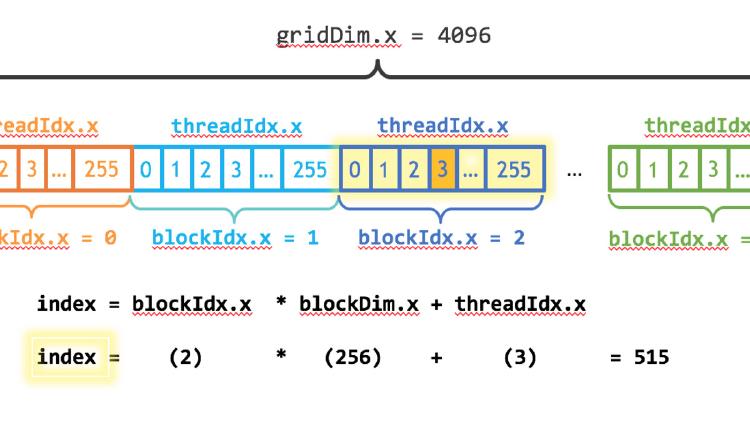
A hands-on guide to CUDA programming for developers who know how to code but have never written a GPU kernel. Covers architecture, memory, real code examples, and Metal comparison.

From Claude 101 to MCP Advanced to Agent Skills - Anthropic's free curriculum on Skilljar covers everything from basic prompting to production deployments on AWS Bedrock and Google Vertex AI.
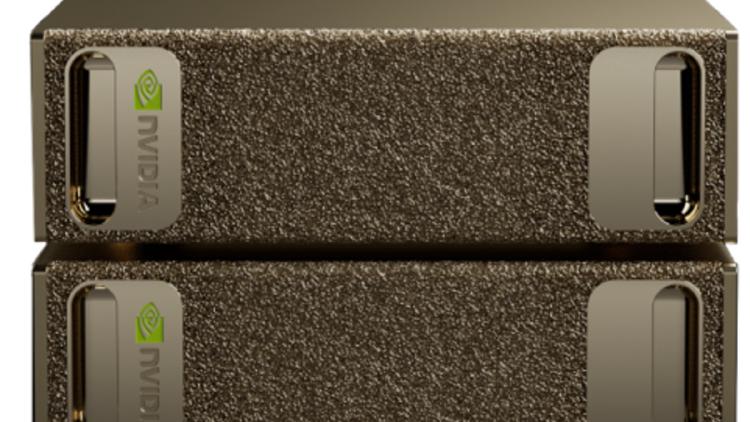
A complete guide to setting up the NVIDIA DGX Spark - from unboxing and first boot to running LLM inference, fine-tuning models, and optimizing performance.

A complete guide to building, marketing, and scaling a one-person SaaS business using AI coding tools in 2026

Learn how to use deep research features in ChatGPT, Gemini, Claude, and Perplexity to get comprehensive, cited reports on any topic in minutes.

OpenClaw ships with authentication disabled and binds to all interfaces. This step-by-step guide covers every hardening measure you need - from authentication and sandboxing to MCP security and network isolation - backed by real CVEs and security research.

A beginner-friendly guide to the Model Context Protocol (MCP) - the universal standard that lets AI tools connect to your apps, files, and services.
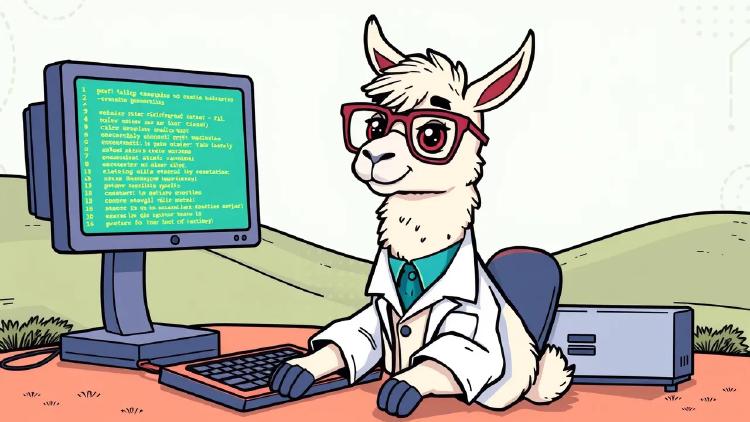
A practical, hands-on guide for software developers who want to finetune open-source LLMs and distill larger models into smaller, faster ones - covering techniques, tools, datasets, and cloud GPU options.

A beginner-friendly explanation of Retrieval-Augmented Generation (RAG) - the technique that lets AI pull in real facts before answering your questions.

Vibe coding lets you build software by describing what you want in plain English. Here is everything you need to know to get started, even with zero coding experience.

How to build a professional AI-assisted coding environment that costs nothing - the best free editors, extensions, inference providers, and local models combined into setups that rival $20/month subscriptions.

A practical guide to choosing the right large language model in 2026, covering task types, budgets, context windows, and the open vs proprietary debate.

A plain-English guide to AI benchmarks like MMLU, GPQA, SWE-Bench, and Chatbot Arena Elo, explaining what they measure and why no single score tells the whole story.

A beginner's guide to AI coding assistants in 2026, covering GitHub Copilot, Cursor, Claude Code, and Aider with practical setup instructions and realistic expectations.

A comprehensive comparison of open-source and proprietary AI models, helping you decide when to use Llama, Qwen, or DeepSeek versus GPT-5, Claude, or Gemini.
A comprehensive roundup of the best free and freemium AI tools available in 2026, organized by category. Start using AI today without spending a dime.
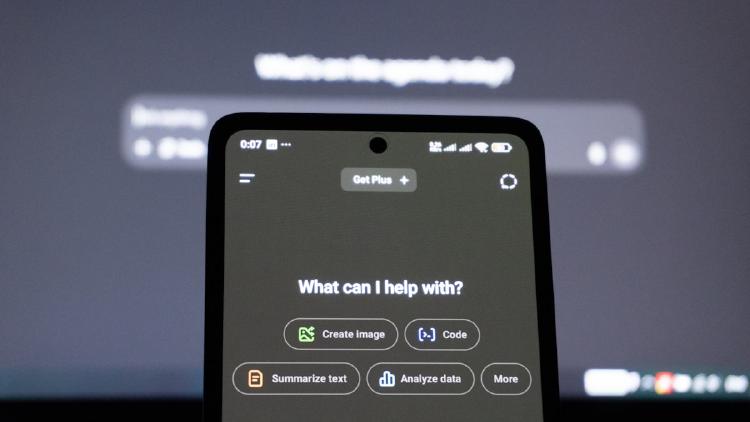
Head-to-head comparison of ChatGPT, Claude, and Gemini in 2026. Pricing, strengths, weaknesses, and best use cases for each AI assistant.
A beginner-friendly explanation of AI agents, covering what makes them different from chatbots, real-world examples, key frameworks, and the growing agent economy.
Apple is reportedly planning to integrate OpenAI's GPT-5 into Apple Intelligence across iOS 26, iPadOS 26, and macOS Tahoe, with major implications for Siri and the broader Apple AI strategy.

A beginner's introduction to AI image generation covering Midjourney, DALL-E, Stable Diffusion, and FLUX, with practical prompt tips and ethical considerations.

Compare the best AI writing tools of 2026: ChatGPT, Claude, Gemini, Jasper, Grammarly, Notion AI, and Copy.ai. What AI writing does well and where humans still lead.

Practical tips and techniques for writing better AI prompts, covering specificity, context, few-shot examples, personas, and common mistakes to avoid.

Analysis of how the MMLU benchmark gap between open-source and proprietary AI narrowed from 17.5 to 0.3 percentage points in a single year, reshaping the industry landscape.

The AI agent market reached $7.6 billion in 2025 with 49.6% projected annual growth. Gartner confirms 40% of enterprises will have dedicated AI agent teams by end of 2026.
