

Qwen3.6-Max-Preview
Alibaba's first closed-weights flagship Qwen ships with a 256K context window, tops six agentic coding benchmarks, and ranks third on the Artificial Analysis Intelligence Index.
They summarize our coverage. We write it.
Newsletters like this one rebroadcast our headlines - often without the full review, the source reading, or the analysis underneath. Our weekly briefing sends the work they paraphrase, straight from the desk, before they get to it.
Free, weekly, no spam. One email every Tuesday. Unsubscribe anytime.

AI Benchmarks & Tools Analyst
James is a software engineer turned tech writer who spent six years building backend systems at a fintech startup in Chicago before pivoting to full-time analysis of AI tools and infrastructure. His engineering background means he doesn't just read the spec sheet - he runs the benchmarks, profiles the latency, and checks whether the marketing claims hold up under real workloads.
He studied Computer Science at the University of Illinois at Urbana-Champaign, where he first got hooked on natural language processing during a senior research project on sentiment analysis. He later completed a certificate in data journalism from Northwestern's Medill School.
At Awesome Agents, James owns the leaderboards and tool comparison coverage. He maintains the site's benchmark tracking methodology and is the person who actually runs the numbers before publishing any ranking. He is also an open-source advocate and contributes to several projects in the LLM inference space.
Based in Chicago, IL.
Alibaba's first closed-weights flagship Qwen ships with a 256K context window, tops six agentic coding benchmarks, and ranks third on the Artificial Analysis Intelligence Index.

OpenAI's first domain-specific reasoning model for biology and drug discovery, launched April 16 2026 as a US-only research preview with a 0.751 BixBench score.

Moonshot AI's Kimi K2.6 is a 1T-parameter MoE with 32B active per token, 256K context, a 300-agent swarm running 4,000 coordinated steps, and the top SWE-Bench Pro score among open-weight models at 58.6%.
Complete buying guide for AI home workstations in 2026 - pre-built machines and DIY builds for running local LLMs from 3B to 70B+ models, with benchmarks, part lists, and price-tier comparisons.

A data-driven comparison of 14 managed and open-source fine-tuning platforms, with verified pricing, supported methods, and a decision matrix to pick the right tool for your workload.
A data-driven comparison of the top prompt versioning, A/B testing, and deployment platforms for AI teams in 2026.

Rankings of LLMs and dedicated MT systems across FLORES-200, WMT24/25, TICO-19, and MT-GenEval benchmarks with BLEU, COMET, and human evaluation scores.

Rankings of the best audio language models on MMAU, MMAU-Pro, and other benchmarks covering speech reasoning, music understanding, and environmental sound identification.

A data-driven comparison of the top AI-powered video editing tools in 2026, covering auto-captions, clip generation, dubbing, silence removal, and pricing across 15 tools.

A data-driven comparison of the best AI email assistants in 2026, covering draft writing, triage, summaries, pricing, and privacy across 15 tools.
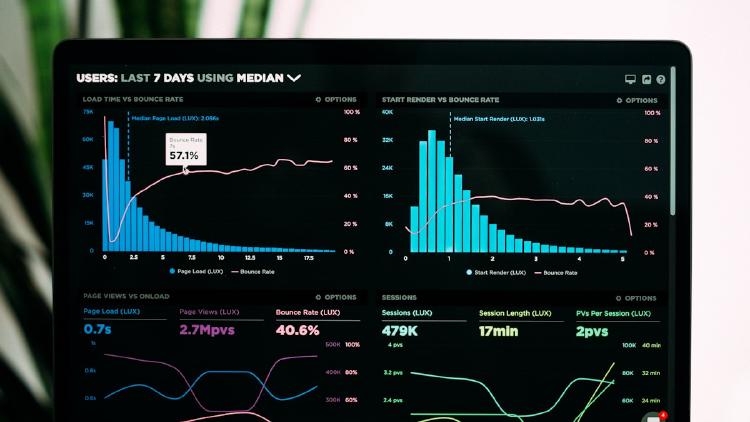
Comprehensive ranking of the top large language models in April 2026, combining reasoning, coding, knowledge, human preference, and cost-adjusted value across 12 frontier and open-weight models. Updated with Claude Opus 4.7 and Qwen 3.6.
A ranked comparison of 19 data labeling and annotation platforms for computer vision, NLP, and RLHF - with verified pricing, honest trade-offs, and a worker-treatment flag on Scale's Remotasks workforce.
