

Muse Spark 1.1
Meta's second Muse model ships a public API at $1.25/$4.25 per million tokens, a 1M-token context window, and the top score on Meta's own tool-use benchmarks.
They summarize our coverage. We write it.
Newsletters like this one rebroadcast our headlines - often without the full review, the source reading, or the analysis underneath. Our weekly briefing sends the work they paraphrase, straight from the desk, before they get to it.
Free, weekly, no spam. One email every Tuesday. Unsubscribe anytime.

AI Benchmarks & Tools Analyst
James is a software engineer turned tech writer who spent six years building backend systems at a fintech startup in Chicago before pivoting to full-time analysis of AI tools and infrastructure. His engineering background means he doesn't just read the spec sheet - he runs the benchmarks, profiles the latency, and checks whether the marketing claims hold up under real workloads.
He studied Computer Science at the University of Illinois at Urbana-Champaign, where he first got hooked on natural language processing during a senior research project on sentiment analysis. He later completed a certificate in data journalism from Northwestern's Medill School.
At Awesome Agents, James owns the leaderboards and tool comparison coverage. He maintains the site's benchmark tracking methodology and is the person who actually runs the numbers before publishing any ranking. He is also an open-source advocate and contributes to several projects in the LLM inference space.
Based in Chicago, IL.
Meta's second Muse model ships a public API at $1.25/$4.25 per million tokens, a 1M-token context window, and the top score on Meta's own tool-use benchmarks.
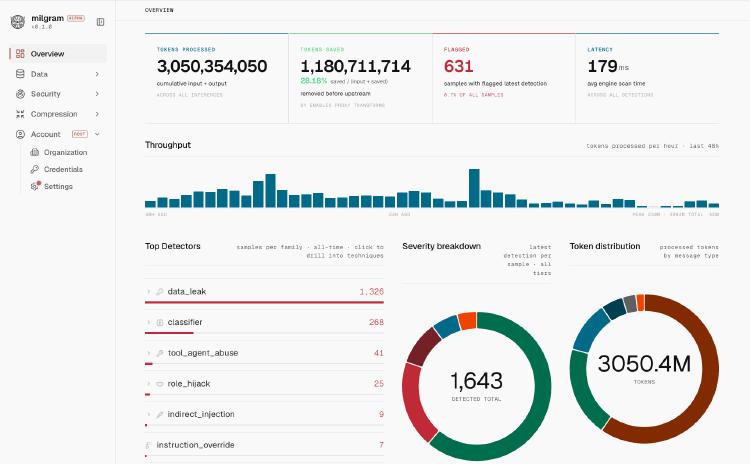
We tested four enterprise LLM firewalls - Milgram, Lakera Guard, Palo Alto Prisma AIRS and Prompt Security - on prompt injection detection, data leakage prevention, enforcement and inference cost.

Microsoft's first in-house cybersecurity model is a 137B sparse MoE fine-tune that drives its MDASH vulnerability harness to a self-reported 95.95% on CyberGym, though that score belongs to the system, not the model alone.
Google DeepMind's cheapest paid Gemini tier prices input at $0.30/M and output at $2.50/M tokens, more than doubling OSWorld-Verified and Terminal-Bench 2.1 scores over Gemini 3.1 Flash-Lite while trailing GPT-5.4 mini on raw coding benchmarks.

Verified July 27: Claude Opus 5 lands at Opus 4.8 pricing ($5/$25) while claiming near-Fable-5 quality, Gemini 3.6 Flash cuts output pricing 17%, and Grok's whole lineup turns out to carry a 2x long-context surcharge nobody's headline price mentions.
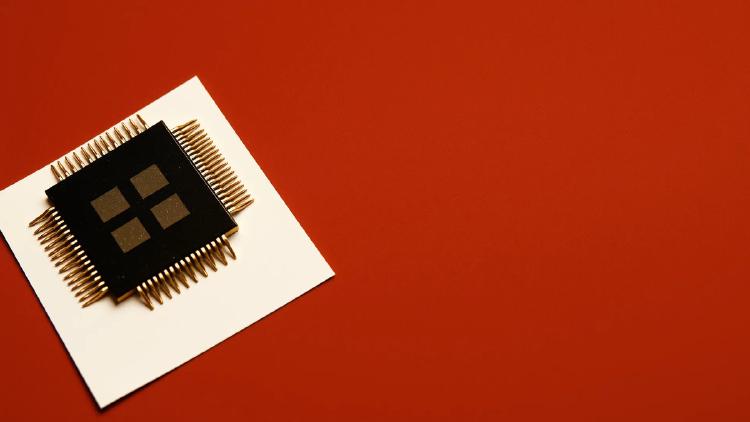
VIDRAFT quantizes its Darwin-36B-Opus MoE model into a 35B GGUF that runs on stock llama.cpp with no GPU, trading GPQA Diamond score for CPU and phone portability.

Anthropic's July 2026 release prices near-Fable-5 coding and agentic performance at Opus 4.8 rates, doubling Frontier-Bench scores and landing within 0.5 points of Fable 5 on CursorBench at half the cost.

Cognition's proprietary coding model powering Devin, scoring 42.3% on FrontierCode 1.1 Main at $1.97/task via Cerebras inference at 1000 tokens/sec.
InclusionAI's Ling-3.0-flash packs 124B parameters into a 5.1B-active hybrid-linear MoE that Ant Group claims matches its 1T flagship - but shipped with zero independently verifiable benchmark numbers.

Alibaba's flagship open-weight vision-language MoE beats every proprietary model on DocVQA at 96.5% and MathVista at 85.8%, but trails GPT-5.4 and Gemini 3.1 Pro on broad MMMU-Pro reasoning.
DeepSeek-VL2 is DeepSeek's open-weight Mixture-of-Experts vision-language model, activating just 4.5B of its 27B parameters to hit 93.3% on DocVQA and beat GPT-4o on OCRBench.
Alibaba's dense 72B vision-language model tops the open-weight DocVQA leaderboard at 96.4% and remains the default self-hosted choice for document and chart understanding.
