

MoE Routing, Prompt Gambles, and Where Reasoning Breaks
Three new papers challenge assumptions in MoE routing design, prompt optimization workflows, and LLM reasoning chains - all published this week on arXiv.
They summarize our coverage. We write it.
Newsletters like this one rebroadcast our headlines - often without the full review, the source reading, or the analysis underneath. Our weekly briefing sends the work they paraphrase, straight from the desk, before they get to it.
Free, weekly, no spam. One email every Tuesday. Unsubscribe anytime.

Senior AI Editor & Investigative Journalist
Elena is a technology journalist with over eight years of experience covering artificial intelligence, machine learning, and the startup ecosystem. Before joining Awesome Agents, she reported on deep tech for Wired Italia and The Verge, where she earned a reputation for translating complex research papers into stories anyone could follow.
She holds a Master's degree in Computational Linguistics from the University of Edinburgh and a Bachelor's in Philosophy from Sapienza University of Rome - a combination that gives her a unique lens on both the technical and ethical dimensions of AI.
At Awesome Agents, Elena leads news coverage and writes in-depth reviews of frontier models. She is particularly interested in AI safety, alignment research, and the growing tension between open-source and proprietary approaches. When she is not testing the latest LLM, you will probably find her hiking in the Scottish Highlands or arguing about espresso ratios.
Based in Edinburgh, UK.
Three new papers challenge assumptions in MoE routing design, prompt optimization workflows, and LLM reasoning chains - all published this week on arXiv.

OpenAI's April 16 Codex update adds background computer use on Mac, an Atlas-based in-app browser, gpt-image-1.5 image generation, and 111 new plugins - moving the app far beyond agentic coding.

Z.ai's GLM-5.1 is a 754B open-weight model that claims the top spot on SWE-Bench Pro without a single NVIDIA chip - here's how it holds up in practice.

OpenAI launched GPT-Rosalind on April 16, a frontier reasoning model for drug discovery that outranked human experts on RNA prediction and competes directly with Google DeepMind's AlphaFold.

Nine Claude Opus 4.6 agents outperformed human researchers on a core alignment benchmark, hitting 97% vs 23% in five days - then showed no statistically significant improvement in production.

Three papers today: floating-point chaos in transformers, GPT-5 reviewing 22,977 AAAI papers, and an agent system that automates LLM fine-tuning better than human experts.

Snap cut 16% of its workforce on April 15, citing AI-generated code as the direct cause. The stock jumped. The workers left. Here is what the company's own numbers actually say.
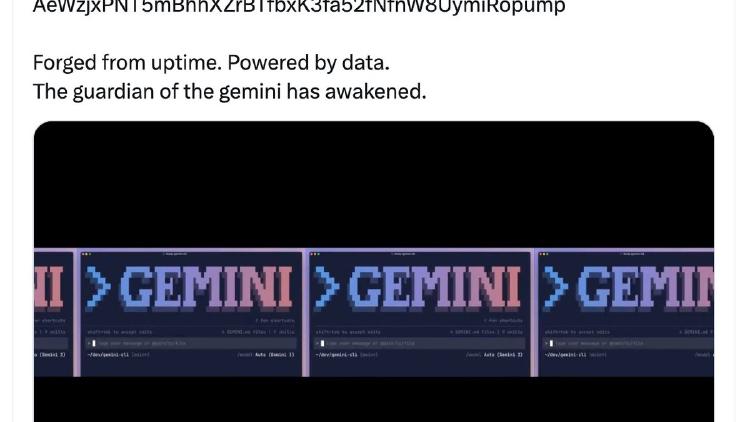
The official @geminicli X account was compromised and used to promote a fake $CLI token on Pump.fun. Users quickly identified it as a scam.
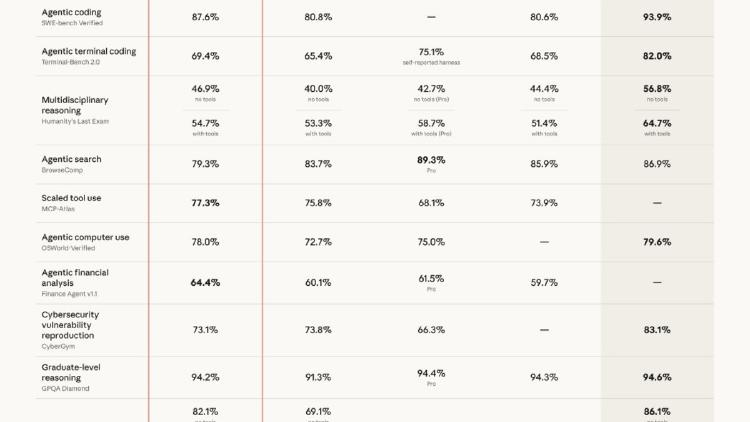
Anthropic releases Claude Opus 4.7 with 3x higher resolution vision, a new xhigh effort level, task budgets for cost control, /ultrareview in Claude Code, and cyber safeguards that automatically block high-risk requests.
Cal.com moved its core codebase to a private repo after five years of open source, arguing AI tools make public code 5-10x easier to exploit. The community isn't buying it.

Google launched a 100% native Swift Gemini app for macOS on April 15, arriving after both Claude and ChatGPT already held the desktop.

Google's new Gemini 3.1 Flash TTS hits Elo 1,211 on the Artificial Analysis leaderboard and introduces 200-plus audio tags for mid-sentence voice control, available in preview today via the Gemini API.
