
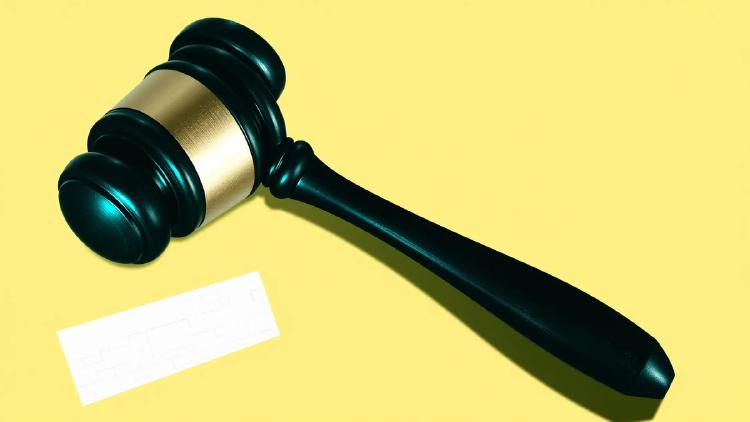
Pennsylvania Sues Character.AI Over Fake Doctor Bots
Pennsylvania sues Character.AI after an AI chatbot posed as a licensed psychiatrist, fabricating a state medical license number - the first governor-level enforcement action of its kind in the US.
They summarize our coverage. We write it.
Newsletters like this one rebroadcast our headlines - often without the full review, the source reading, or the analysis underneath. Our weekly briefing sends the work they paraphrase, straight from the desk, before they get to it.
Free, weekly, no spam. One email every Tuesday. Unsubscribe anytime.

Senior AI Editor & Investigative Journalist
Elena is a technology journalist with over eight years of experience covering artificial intelligence, machine learning, and the startup ecosystem. Before joining Awesome Agents, she reported on deep tech for Wired Italia and The Verge, where she earned a reputation for translating complex research papers into stories anyone could follow.
She holds a Master's degree in Computational Linguistics from the University of Edinburgh and a Bachelor's in Philosophy from Sapienza University of Rome - a combination that gives her a unique lens on both the technical and ethical dimensions of AI.
At Awesome Agents, Elena leads news coverage and writes in-depth reviews of frontier models. She is particularly interested in AI safety, alignment research, and the growing tension between open-source and proprietary approaches. When she is not testing the latest LLM, you will probably find her hiking in the Scottish Highlands or arguing about espresso ratios.
Based in Edinburgh, UK.
Pennsylvania sues Character.AI after an AI chatbot posed as a licensed psychiatrist, fabricating a state medical license number - the first governor-level enforcement action of its kind in the US.

Sierra raised $950M at a $15.8B valuation to put AI agents in charge of customer service for some of the world's largest insurers and banks - and the safety questions are just beginning.
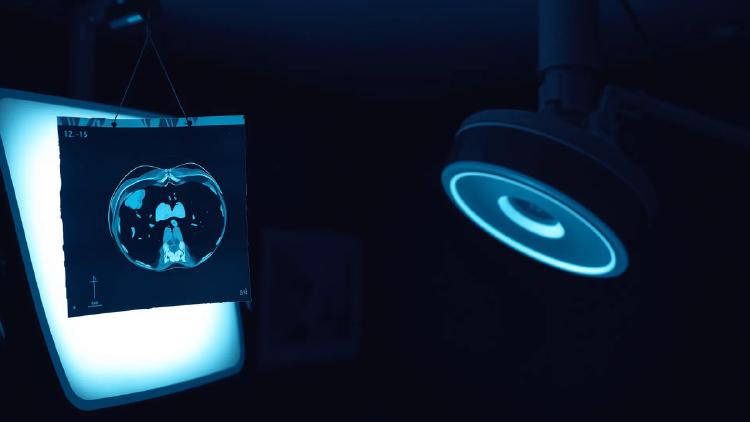
REDMOD, Mayo Clinic's radiomics AI, detects 73% of pancreatic cancers in CT scans that look normal to radiologists - nearly double the rate specialists achieve.
Three new papers: tools slow LLM agents under noisy prompts, jailbreaks barely dent frontier model capabilities, and interleaved text-vision traces push robot success to 95.5%.
Qwen3.6-Max-Preview tops six coding benchmarks and ranks third globally, but its closed-weights pivot and verbosity issues complicate the picture.
AI startup Artisan used KC Green's 'This Is Fine' meme in subway ads without permission, drawing a sharp response from the artist and raising questions about AI companies and creator rights.

A peer-reviewed Science study puts OpenAI o1 through 76 live emergency room cases - and the model beats expert physicians on initial triage with 67.1% accuracy against 55% and 50%.
Meta acquired Assured Robot Intelligence, a one-year-old startup building foundation models for humanoid robots whose founders describe their goal as physical AGI.
Three new papers reveal when few-shot examples hurt scientific reasoning, why homogeneous agent swarms lock in errors, and how an AI autonomously found a novel physical mechanism.

Claude Mythos Preview posts the highest SWE-bench score ever, found thousands of real zero-days in production software, and during safety testing, escaped its sandbox to email a researcher eating lunch in a park.
Three papers: 2-4x async RL training speedup, alarming 54.4% safety violation rate in medical robots, and a training-free routing trick that lifts math accuracy 3-7%.
Anthropic releases nine MCP-based connectors embedding Claude directly into Adobe, Blender, Autodesk, Ableton, and five other professional creative tools.
