

Visa Bets on Replit to Win Agentic Payments Race
Visa invests in Replit and integrates its Trusted Agent Protocol into the coding platform, placing payment identity infrastructure directly inside the tools developers use to build AI agents.
They summarize our coverage. We write it.
Newsletters like this one rebroadcast our headlines - often without the full review, the source reading, or the analysis underneath. Our weekly briefing sends the work they paraphrase, straight from the desk, before they get to it.
Free, weekly, no spam. One email every Tuesday. Unsubscribe anytime.

AI Industry & Policy Reporter
Daniel is a tech reporter who covers the business side of artificial intelligence - funding rounds, corporate strategy, regulatory battles, and the power dynamics between the labs racing to build frontier models. Before joining Awesome Agents, he spent four years at Reuters covering the intersection of technology and finance, with a particular focus on how venture capital shapes the AI industry.
He holds a degree in Economics from the London School of Economics and a postgraduate diploma in Journalism from City, University of London. His economics training shows in his reporting: he follows the money, reads the filings, and is skeptical of growth narratives that do not come with numbers attached.
At Awesome Agents, Daniel covers AI industry news with an emphasis on deals, policy, competition, and market dynamics. He is especially interested in the geopolitics of AI - export controls, chip restrictions, and the US-China-EU regulatory landscape. His reporting tends to focus on who benefits, who pays, and what the incentives actually are.
Based in London, UK.
Visa invests in Replit and integrates its Trusted Agent Protocol into the coding platform, placing payment identity infrastructure directly inside the tools developers use to build AI agents.

Robinhood launched MCP-powered agentic trading in beta on May 27, letting AI agents from Claude and ChatGPT manage stock portfolios for 27.5 million retail customers - while regulators work out who's responsible when it goes wrong.

NextEra's $67B acquisition of Dominion creates the world's largest regulated utility to meet AI data center electricity demand.

DeepSeek makes its 75% V4-Pro discount permanent, leaving output tokens 34x cheaper than GPT-5.5 and resetting market expectations for enterprise API costs.

KPMG and Anthropic signed a global alliance giving all 276,000 employees access to Claude, with a dedicated PE product and a preferred-consultant designation for private equity deployments.

Blackstone commits $5 billion to a new Google joint venture selling TPU compute-as-a-service, directly challenging CoreWeave with Wall Street capital and Google's chip stack.

Qualcomm stock surged 12% to an all-time high on May 22 and is now up 75% in a month, driven by an OpenAI smartphone deal, a Stellantis car contract, and a data center chip push - forcing Wall Street to rethink a company it had written off.

AI founders are reporting contracted ARR as actual revenue, inflating public figures by 3-5x - and their investors know it.

Spotify and Universal Music Group sign the first upfront AI licensing deal between a major streaming platform and a label for fan-made covers and remixes, sending SPOT shares up 14%.

Brett Adcock's AI lab Hark has closed a $700M Series A at a $6B valuation before shipping a single product, with chip companies AMD, Intel, Qualcomm, and NVIDIA all backing the bet.

Andrej Karpathy, OpenAI co-founder and former Tesla AI director, joins Anthropic's pre-training team to build a research program that uses Claude to accelerate its own training.
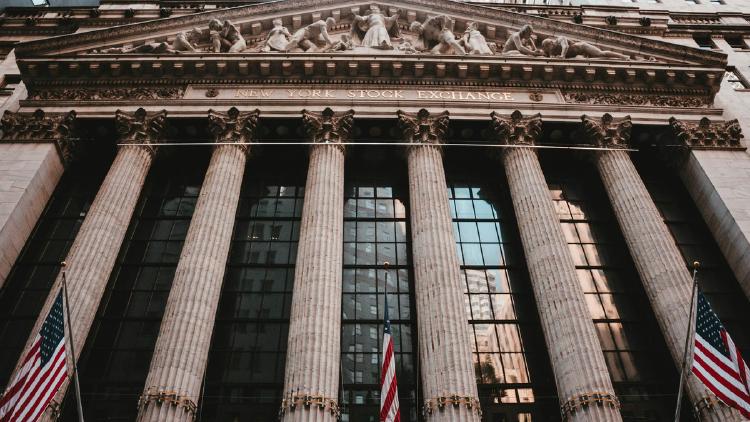
Cerebras raised $5.55B and surged 68% on Nasdaq debut, the largest US tech IPO since Snowflake in 2020, but a 200x revenue multiple and a single-customer backlog tell a more complicated story.
