
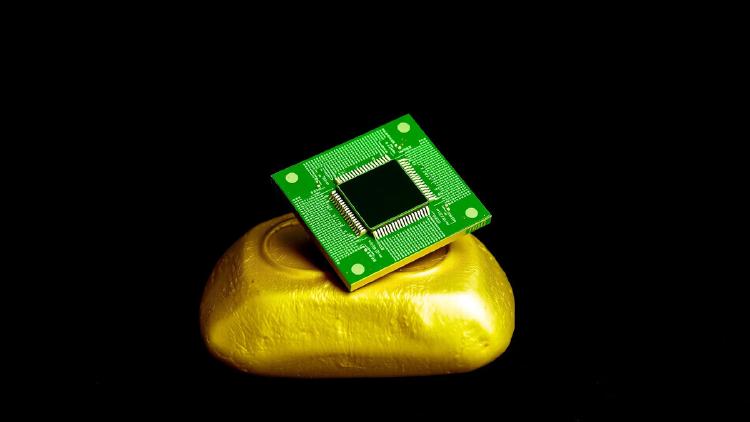
General Compute's $400M Loan Bypasses Nvidia GPUs
General Compute borrowed $400 million from Upper90 against a fleet of SambaNova SN50 inference chips, the first major AI infrastructure loan not collateralized by Nvidia hardware.
They summarize our coverage. We write it.
Newsletters like this one rebroadcast our headlines - often without the full review, the source reading, or the analysis underneath. Our weekly briefing sends the work they paraphrase, straight from the desk, before they get to it.
Free, weekly, no spam. One email every Tuesday. Unsubscribe anytime.

AI Industry & Policy Reporter
Daniel is a tech reporter who covers the business side of artificial intelligence - funding rounds, corporate strategy, regulatory battles, and the power dynamics between the labs racing to build frontier models. Before joining Awesome Agents, he spent four years at Reuters covering the intersection of technology and finance, with a particular focus on how venture capital shapes the AI industry.
He holds a degree in Economics from the London School of Economics and a postgraduate diploma in Journalism from City, University of London. His economics training shows in his reporting: he follows the money, reads the filings, and is skeptical of growth narratives that do not come with numbers attached.
At Awesome Agents, Daniel covers AI industry news with an emphasis on deals, policy, competition, and market dynamics. He is especially interested in the geopolitics of AI - export controls, chip restrictions, and the US-China-EU regulatory landscape. His reporting tends to focus on who benefits, who pays, and what the incentives actually are.
Based in London, UK.
General Compute borrowed $400 million from Upper90 against a fleet of SambaNova SN50 inference chips, the first major AI infrastructure loan not collateralized by Nvidia hardware.

Beijing's new World AI Cooperation Organization signed up 29 nations in Shanghai, weeks after Washington's rival Pax Silica bloc grew to roughly two dozen. Kazakhstan joined both.

Moonshot AI's Kimi K3 jumped 17 spots to #1 on LMArena's Frontend Code Arena, but the win comes with a tripled price tag and a weaker showing on broader intelligence benchmarks.
Ex-Google DeepMind researcher Andrew Dai raised $55M at a $300M valuation for Elorian, a visual AI lab with no product yet, joining a growing list of frontier labs priced on pedigree alone.

Anthropic, Blackstone, and Hellman & Friedman have launched Ode, a $1.5 billion AI implementation firm betting that deploying models beats building them.

Bengaluru's Emergent raised $130M at a $1.5 billion valuation, five times January's price, betting AI coding agents sell better to small businesses than to developers.

Commerce official Jeffrey Kessler confirms H200 AI chip shipments to China have begun, but calls the volume 'trivial' as lawmakers spar over export-control gaps.

Nebius will sell Reflection AI over $1 billion in Nvidia GB300 compute through 2029, the open-source AI lab's second billion-dollar infrastructure deal in three weeks.

Nvidia has joined Gradium's seed round while holding a stake in rival ElevenLabs, tying its GPUs to both leaders in the race to own voice AI.

OpenAI backed an Illinois bill shielding AI labs from mass-harm lawsuits, reversed course under public pressure, and watched the state sign a tougher audit law instead.

OpenAI and Google provided AI services to Singapore affiliates of Alibaba, Baidu, and Tencent - all three on the Pentagon's 1260H list of companies with alleged military ties.

The Commerce Department reclassified the UAE to Country Group A:5, giving NVIDIA, AMD, and Cerebras a clear path to supply AI chips and servers without per-shipment export licenses.
