
Socher's AI Lab Signs $410M AWS Deal, No Strings
Richard Socher's Recursive Superintelligence signed a $410 million multi-year AWS compute deal with no equity stake, a rare cash-only structure in an industry built on circular financing.
They summarize our coverage. We write it.
Newsletters like this one rebroadcast our headlines - often without the full review, the source reading, or the analysis underneath. Our weekly briefing sends the work they paraphrase, straight from the desk, before they get to it.
Free, weekly, no spam. One email every Tuesday. Unsubscribe anytime.

AI Industry & Policy Reporter
Daniel is a tech reporter who covers the business side of artificial intelligence - funding rounds, corporate strategy, regulatory battles, and the power dynamics between the labs racing to build frontier models. Before joining Awesome Agents, he spent four years at Reuters covering the intersection of technology and finance, with a particular focus on how venture capital shapes the AI industry.
He holds a degree in Economics from the London School of Economics and a postgraduate diploma in Journalism from City, University of London. His economics training shows in his reporting: he follows the money, reads the filings, and is skeptical of growth narratives that do not come with numbers attached.
At Awesome Agents, Daniel covers AI industry news with an emphasis on deals, policy, competition, and market dynamics. He is especially interested in the geopolitics of AI - export controls, chip restrictions, and the US-China-EU regulatory landscape. His reporting tends to focus on who benefits, who pays, and what the incentives actually are.
Based in London, UK.
Richard Socher's Recursive Superintelligence signed a $410 million multi-year AWS compute deal with no equity stake, a rare cash-only structure in an industry built on circular financing.

DeepSeek suspended a second funding round targeting a valuation above $70 billion after comments attributed to founder Liang Wenfeng went viral, days before a planned mainland China IPO.
Nvidia is negotiating to backstop $250 billion in financing for OpenAI's 10-gigawatt Ohio data center, plus another $350 billion for the chips going inside it, reviving the circular financing debate.

Nvidia, SK Group, Samsung and Broadcom signed close to a trillion dollars in AI chip and memory deals in San Francisco, and the memory shortage behind them means someone outside the room ends up paying.

Cognition paid a low nine-figure sum for texting assistant Poke, its second acquisition in a year, betting that how an AI agent talks matters as much as what it can do.
Twenty-five companies signed an open letter urging the White House not to restrict Chinese open-weight AI models, using Jensen Huang's first-ever X post to deliver it.
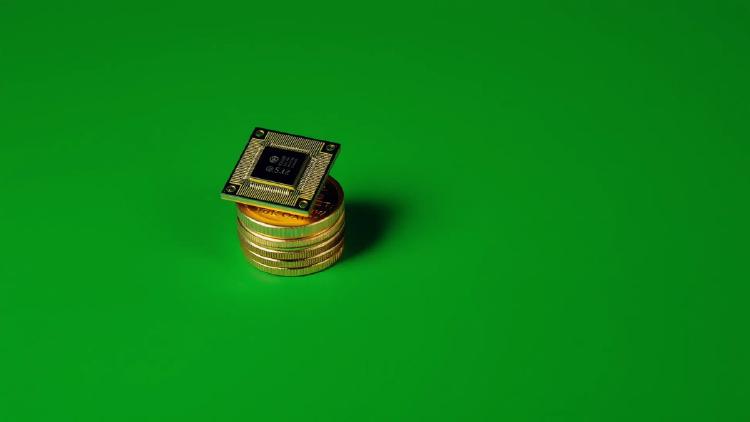
Etched raised $300M at a $10.3B valuation, doubling its price tag in seven months, even though its transformer-only Sohu chip has yet to ship in volume.

Reddit is weighing an end to its $60M Google AI deal as AI Overviews gut publisher traffic, betting the standoff forces a renewal worth far more.

Travis Kalanick's robotics holding company Atoms raised $1.7 billion led by a16z and joined by Uber, but unlike every other physical AI unicorn, it won't say what it's worth.

Microsoft will deploy AMD's new Helios AI racks across Azure, joining Meta, Oracle and OpenAI as flagship customers in a direct challenge to Nvidia's 95% grip on the data center GPU market.

Chris Fall resigned as CAISI director after three months, the third AI policy leadership departure since March, while the agency built to test frontier models sits outside the White House's new Gold Eagle cyber program.

Apple closed at $4.88 trillion on July 17, ending Nvidia's 15-month reign as the world's most valuable company, as Wall Street rotates from AI infrastructure toward consumer distribution.
